
Reviewed · PRAGUE COMMUNISM HISTORY TOURS
Prague Communism and World War II Walking Tour
Prague’s 20th-century story comes alive when you connect its streets to the events that shaped them. On this walk, you move from the Old Town Bridge Tower toward New Town and Wenceslas Square, hearing about Nazi occupation, the Soviet takeover, the 1968 invasion, and the Velvet Revolution of 1989. The best guides, including Tomas and Martin, add personal memories and family stories that no monument can provide.
I like the clear chronological route and the way it turns familiar places into political landmarks. I also like the chance to hear about life under communism from Czech guides who remember the period, or who learned about it directly from parents and relatives. The main drawback is that this is a history walk rather than a specialist tour of wartime hideouts, tunnels, or the Jewish Quarter, so you may want another tour if those are your top priorities.
Key points to know
- Follow Prague’s political story from 1930s democracy to 1989 freedom, with stops in the Old Town, New Town, and Wenceslas Square.
- Hear about Operation Anthropoid, the wartime mission that killed senior Nazi official Reinhard Heydrich.
- See Wenceslas Square through the events of 1968 and 1989, including the Soviet invasion and the Velvet Revolution.
- Expect a conversational guide, with past guides such as Tomas, Martin, Maria, Dominick, and Zdenek praised for answering questions and sharing local insight.
- Allow for real walking, since some groups have continued for longer than the advertised two hours.
- Pay $30.12 per person for a small-group experience capped at 25 people, with free cancellation up to 24 hours before departure.
Prague’s 20th-century story begins beside the Charles Bridge
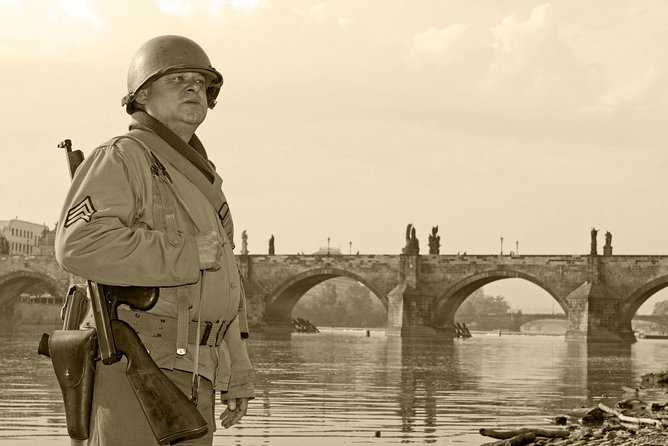
The walk starts at Křižovnické náměstí, in front of the Old Town Bridge Tower. This is a smart meeting point: central, easy to reach by public transport, and close to one of Prague’s most famous views.
Before the group heads into the city, you look across the river toward Prague Castle, the seat of Czech rulers and presidents. That view gives your guide an opening to explain how power has shifted through Prague over the past century. The castle once represented national authority, while the city below saw democracy replaced by occupation, dictatorship, and finally a return to freedom.
One striking detail is the former presence of the enormous Stalin statue. The monument, once the largest statue of Joseph Stalin in the world, stood on Letná Hill across the river. It is gone now, but its story shows how communist power used public space to display loyalty to Moscow.
This first stop lasts about 15 minutes, so do not expect a long architectural lecture. Its value is orientation. You get the basic map of Prague and the political framework for the walk ahead.
More communism history tours in Prague:
- Prague: Communism History and Nuclear Bunker Guided Tour
★ 4.7 · 2,417 reviews - Prague Communism History and Nuclear Bunker Tour
★ 5.0 · 1,742 reviews - Communism & Nuclear Bunker Tour + 70s Canteen Lunch (own expense)
★ 5.0 · 1,036 reviews
New Town explains the road from democracy to dictatorship
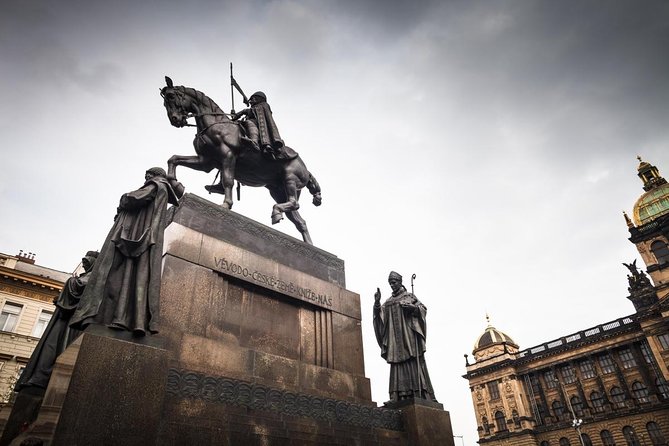
The New Town section carries much of the tour’s historical weight. Here, the guide explains how the Czech lands moved from the Austrian monarchy to an independent Czechoslovak state after World War I.
The new republic was democratic and economically strong. The guide also places it in the difficult political setting of the 1930s, when Czechoslovakia was one of the last functioning democracies in Central and Eastern Europe after 1933. That context matters. It prevents the common mistake of treating communist rule as a natural or inevitable part of Czech history.
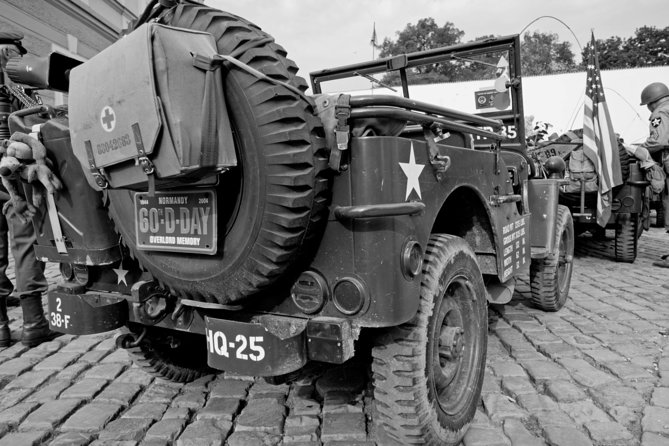
The Second World War changed everything. Under the Nazi Protectorate of Bohemia and Moravia, Czech society faced occupation, repression, and the loss of political freedom. The tour also covers Operation Anthropoid, the Allied-backed mission carried out by Czechoslovak parachutists against Reinhard Heydrich, a senior Nazi official.
You will hear about the operation as part of the larger wartime story, but this tour is not presented as a dedicated visit to the parachutists’ hideouts or underground sites. If you are especially interested in the final stand at the Church of St. Cyril and St. Methodius, you should plan a separate visit.
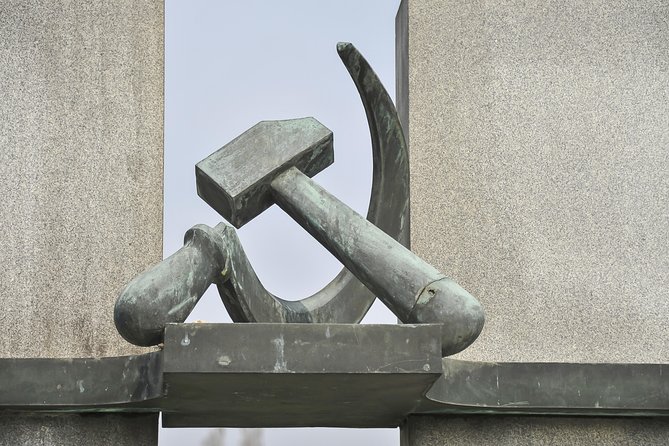
The New Town section also explains what happened after the war. The Soviet Union gained greater control over Czechoslovakia, and the Communist Party seized power in 1948. The country moved from a democratic system to a hard dictatorship. The guide describes the methods used to control daily life and the lasting effect of Soviet influence.
This is where a strong guide makes a real difference. Tomas, Martin, and other guides have been praised for explaining not just official events, but also ordinary life behind the Iron Curtain. You may hear about school drills, shortages, rules, family decisions, and the small ways people adapted to a system they could not openly challenge.
Wenceslas Square turns history into a street scene
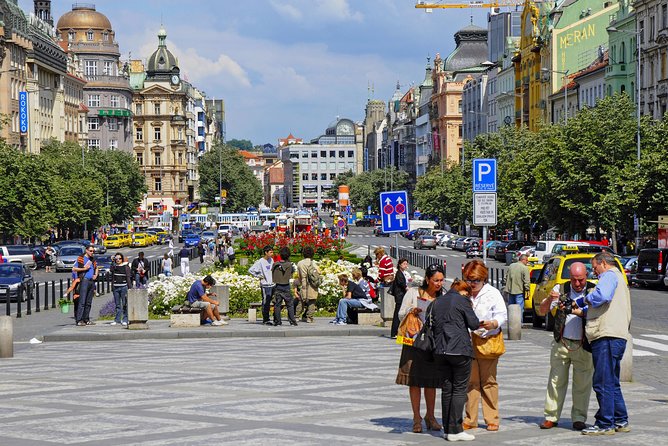
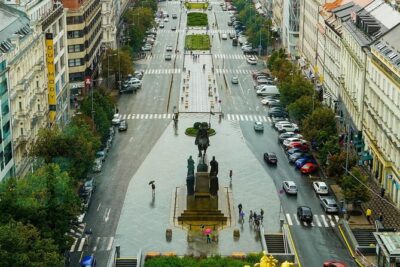
The longest part of the walk takes place around Wenceslas Square, or Václavské náměstí. Allow roughly an hour here, since this broad avenue has been the setting for some of Prague’s most important public demonstrations.
The guide first takes you to the Prague Spring of 1968. Under Alexander Dubček, reformers tried to create a more open form of socialism, with greater freedom of speech and less state control. The Soviet Union and its allies responded by sending tanks into Czechoslovakia.
Wenceslas Square became one of the most visible scenes of resistance. Soviet forces fired on the National Museum, and the marks of the invasion remain part of the square’s story. The guide connects the buildings around you to the tense days when citizens confronted tanks with arguments, signs, and acts of defiance.
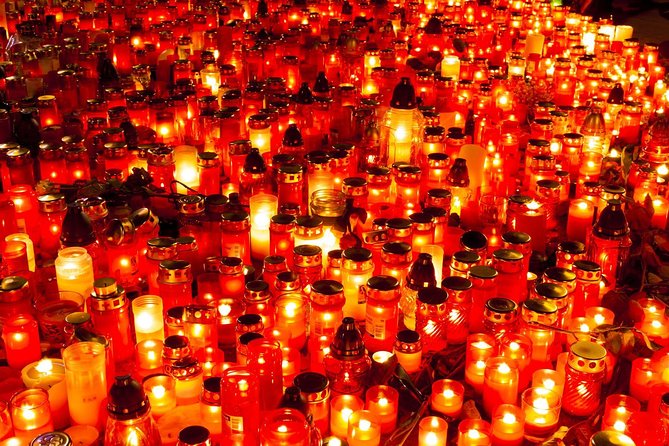
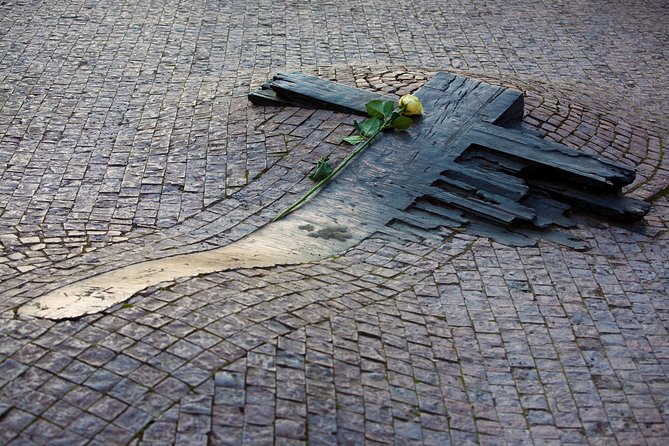
The tour also discusses Jan Palach and Jan Zajíc, young students who set themselves on fire in 1969 in protest against the occupation and the fading of reform. Their deaths are difficult to hear about, but they help explain the despair that followed the crushed Prague Spring. This is not presented as a simple tale of heroes and villains. You also learn how the government responded, how public resistance weakened, and how people adapted during the long years that followed.
The 1970s and 1980s receive attention as well. The guide describes the system of political control and the social mood that developed under what became known as normalization. You see how the city’s public spaces carried memories of protest even when open political opposition was dangerous.
The Velvet Revolution arrives through personal stories
The final section leads into the Velvet Revolution of 1989. Here, the tour becomes especially powerful when your guide has a direct connection to the events.
One guide, for example, took part as a student demonstrator during the Velvet Revolution. That kind of account can make the events feel less like a distant textbook chapter. You hear about students, police violence, the demonstrations on Národní třída, and the rapid collapse of communist authority.
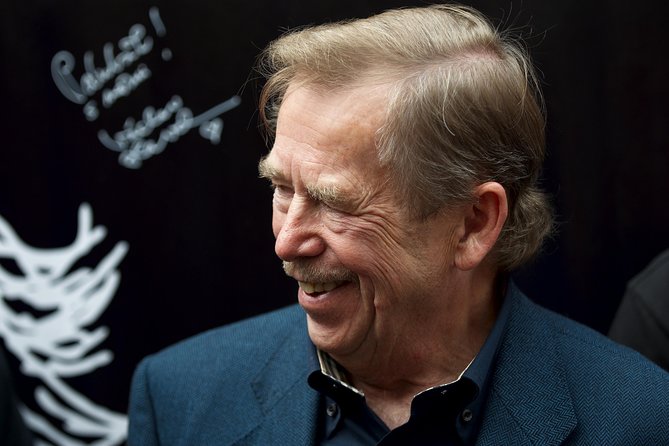
The story includes Václav Havel, the playwright and dissident who became the first president of the post-communist Czech Republic. The guide explains how students, artists, workers, and ordinary citizens helped turn scattered protests into a national movement.
The mood does not remain solemn. Guides also include humorous and unusual stories from the first years after freedom. That lighter material matters because political change is not only made of speeches and dramatic images. It also affects shopping, travel, work, jokes, entertainment, and the small freedoms people notice after years of restriction.
The walk ends in central Prague. The exact finishing point is described as Prague city centre, with Wenceslas Square serving as the main final area. From here, you can continue exploring on foot, find food and beer, or visit the Museum of Communism for a more object-based look at the period.
More World War II tours in Prague:
- Prague: WWII Guided Tour & The Crypt of Operation Anthropoid
★ 4.7 · 1,030 reviews - WWII in Prague Tour & The Crypt of Operation Anthropoid
★ 5.0 · 817 reviews - Small-Group World War 2 & Operation Anthropoid Tour in Prague
★ 5.0 · 231 reviews - Prague: World War 2 and Operation Anthropoid Walking Tour
★ 4.8 · 193 reviews
What the guide can add that a museum cannot
The strongest part of this tour is the conversation. Several guides have been singled out for clear English, patience, and a willingness to answer difficult questions. Tomas has led walks that stretched beyond the advertised time, and Martin has been praised for explaining both major events and everyday Czech life.
Maria has also extended a walk when the group wanted more detail. Dominick handled questions from a visitor with a strong background in history, while other guides have offered practical suggestions for food and places to visit after the walk.
That does not mean every departure will become a private tour or last three hours. The advertised duration is about two hours, and the group can include as many as 25 people. Still, the format allows room for questions, especially when the group is small.
I would ask questions as you walk. This subject is full of useful details that do not fit neatly into a speech. Ask how the regime affected schoolchildren, how people responded to Soviet troops, or what changed after 1989. The guide’s answer may be the part you remember most.
What this walk covers, and what it leaves out
This is a broad orientation to Prague’s Nazi and communist periods. It is best understood as a city walk built around political turning points.
You can expect discussion of:
- The end of Habsburg rule and the creation of Czechoslovakia
- The strength of the prewar democratic republic
- Nazi occupation and the Protectorate of Bohemia and Moravia
- Operation Anthropoid
- The communist takeover after World War II
- Soviet influence and political repression
- The Prague Spring and the 1968 invasion
- Jan Palach and Jan Zajíc
- Václav Havel and the Velvet Revolution
- The demonstrations on Národní třída
The Jewish Quarter is not a major focus. One disappointed visitor expected more explanation there, but the tour only passes that area briefly. If Jewish Prague and wartime persecution are your main interests, choose a specialist Jewish Quarter or World War II tour instead.
You also should not book this expecting a museum visit or access to wartime tunnels. Admission tickets are not included because the tour is conducted outdoors, and food and drinks are your responsibility.
Is $30.12 a fair price?
At $30.12 per person, this is a fair price for a two-hour guided walk in central Prague, especially if your guide is able to provide personal context and answer questions. You are paying less for entry to a site and more for interpretation, route planning, and the chance to understand what the streets mean.
The value rises when the group is small. A private-style walk has taken place when only two people booked, and some guides have spent extra time with interested groups. You should not count on that, but it is a useful possibility.
The price feels less compelling if you already know Czech 20th-century history well and want access to specific interiors or memorial sites. In that case, a museum visit or specialist WWII tour may give you more new material.
The tour is offered in English and includes a professional guide. The mobile ticket is convenient, and free cancellation is available up to 24 hours before the start time. If you cancel later, the payment is not refunded.
Practical advice before you go
The meeting point is Křižovnické náměstí, beside the Old Town Bridge Tower. Start time is 10:00 am. Arrive with enough time to locate the tower and identify your guide in the busy center.
Wear comfortable shoes. The route covers several central areas, and one group described it as a lot of walking. The surface is urban and manageable for most people, but the distance matters if you prefer short sightseeing stops.
Bring water, especially in warm weather. There is no food or drink included, and the tour does not function as a café stop. You can easily arrange lunch or a beer afterward in central Prague.
Children must be accompanied by an adult. Most people can take part, and the tour is near public transportation. The maximum group size is 25, although actual group sizes can vary.
Who will get the most from this Prague walk
I would choose this tour if you want a quick but serious introduction to modern Czech history. It suits first-time visitors who have seen the Old Town and want to understand the country beyond medieval streets, baroque churches, and castle views.
It is also a good choice for history buffs who prefer a guide-led discussion rather than a museum label. The walk links places you might otherwise pass without noticing, from the view of Prague Castle to the National Museum and the public spaces of Wenceslas Square.
You may want another option if you want a detailed study of Operation Anthropoid, the Jewish Quarter, or the physical sites where resistance fighters hid. This walk gives those subjects context, but it cannot treat each one as a full specialist visit in two hours.
Should you book the Prague Communism and World War II Walking Tour?
Book it if you want a compact introduction to Prague’s troubled 20th century, with a strong chance of hearing local stories and asking questions. The route is central, the price is reasonable, and the best guides bring unusual value through personal or family connections to communist-era life and the Velvet Revolution.
Skip it if you want museum access, underground wartime locations, or a tour focused mainly on Jewish Prague. For everyone else, this is a useful first or second-day activity. It gives you the political key to a city that is easy to admire but much more rewarding once you understand what happened here after 1938.
FAQ
Where does the Prague Communism and World War II Walking Tour start?
It starts at Křižovnické náměstí, beside the Old Town Bridge Tower in central Prague.
What time does the tour begin?
The stated start time is 10:00 am.
How long does the walking tour last?
The advertised duration is approximately two hours. Some guides have continued longer when the group had extra questions or strong interest.
Where does the tour end?
The tour ends in Prague city centre, with Wenceslas Square forming the main final area described for the route.
What language is the tour offered in?
The tour is offered in English.
What historical periods does the tour cover?
It covers the Nazi occupation during World War II, the communist takeover, Soviet influence, the Prague Spring, the 1968 invasion, the years of normalization, and the Velvet Revolution of 1989.
Does the tour discuss Operation Anthropoid?
Yes. The guide explains Operation Anthropoid and its role in the wartime struggle against Nazi rule.
Does the tour visit the Jewish Quarter in detail?
No. The route may pass near the Jewish Quarter, but it is not a main focus of the tour.
Is food or drink included?
No. Food and drinks are not included.
How many people can join the tour?
The maximum group size is 25 people.
Can children join the tour?
Yes, but children must be accompanied by an adult.
Is cancellation free?
Yes. You can cancel for a full refund up to 24 hours before the experience start time. Changes or cancellations made less than 24 hours in advance are not accepted for a refund.
More Walking Tours in Prague
- Prague: 3-Hour Walking Tour of Old Town & Prague Castle
★ 4.7 · 5,696 reviews - Prague: Ghost Walking Tour Where Legends Come To Life
★ 4.4 · 5,253 reviews - Prague: Jewish Quarter Walking Tour with Admission Tickets
★ 4.7 · 3,729 reviews - Prague Guided Walking Tour and Cruise with Authentic Czech Lunch
★ 5.0 · 3,627 reviews
Just added around Prague
- WWII and Communism History in Prague’s Old Town Private Tour★ 5.0 · 4 reviews
- World War II 4WD Tour from Prague with Lunch★ 4.4 · 3 reviews
- Prague: Historical Walking Tour with Focus on World War 2★ 4.3 · 12 reviews
- Unique salt cave in Prague★ 4.9 · 10 reviews
- Walking tour of Prague in French : Nové Město★ 4.9 · 16 reviews
- Walking tour of Prague in french: Old Town & Charles Bridge★ 4.9 · 62 reviews
- Prague: Market Tour and Traditional Czech Cooking Class★ 4.7 · 19 reviews
- Ultimate Unlimited Beer Pong with Czech Beer★ 4.6 · 5 reviews
Prague Communism History Tours, compared.
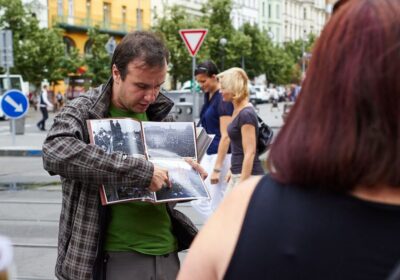
Communism History and Nuclear Bunker Guided Tour
Read our review →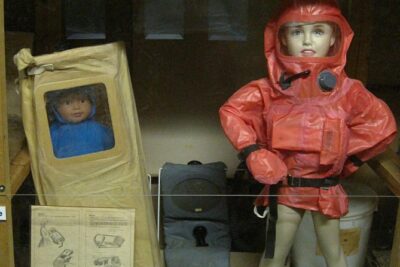
Prague Communism History and Nuclear Bunker Tour
Read our review →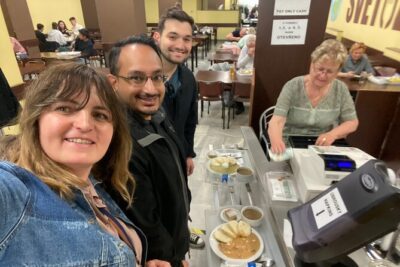
Communism & Nuclear Bunker Tour + 70s Canteen Lunch (own expense)
Read our review →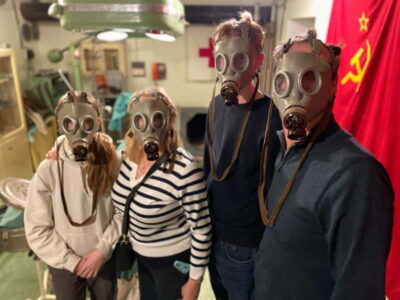
Communism and Bunker Tour with 70s Canteen Lunch
Read our review →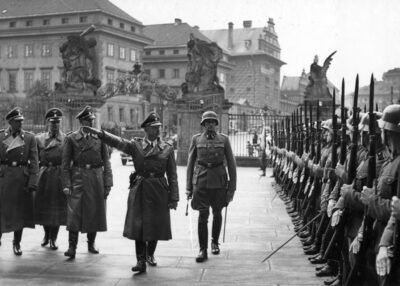
Second World War & Communism (Tip-based 3 hour tour)
Read our review →Browse the lists this tour appears in