
Reviewed · PRAGUE COMMUNISM HISTORY TOURS
Prague: World War II and Communist History Tour
Prague’s recent past comes alive most sharply at the places where people took enormous risks. On this 2.5-hour walk, you trace the Nazi occupation, the Czech resistance, the assassination of a senior Nazi security official, Communist rule, and the Velvet Revolution of 1989.
I like two things right away. The tour connects events into one clear story, rather than treating World War II and Communism as separate history lessons. I also like the guides’ storytelling style. Adam, Tony, Zach, Sean, Amanda, and others have been praised for making difficult subjects easy to follow without sanding away their darker edges.
The main consideration is that this is more of a story-led city walk than a museum tour. Some locations have few visible reminders of what happened there, so your experience depends heavily on the guide. You will also cover a fair amount of ground, and the tour may last a little longer than the advertised 150 minutes.
Key points at a glance
- Follow the story from Nazi occupation to the Velvet Revolution: The tour links the wartime resistance, Communist coup, Prague Spring, Warsaw Pact invasion, Normalization, Charta 77, and 1989 revolution.
- Visit places tied to Operation Anthropoid: The route includes the area and church associated with the Czech resistance soldiers who hid after the assassination of a senior Nazi security official.
- See Prague beyond the postcard view: Stops include the Municipal House, Jewish Quarter, Wenceslas Square, and Dancing House, showing how modern Prague sits on top of a troubled twentieth-century past.
- Expect an English-speaking storyteller: Guides such as Adam, Tony, Zach, and Amanda have been praised for clear explanations, humor, and strong answers to questions.
- Allow 2.5 hours or more: The pace is walkable but serious, with many stops and long explanations. One past participant found the tour ran longer than listed.
- Good value at $34: For a small-group historical walk covering two major eras, the price is fair, especially if you want context that a standard Old Town tour usually skips.
Why this recent history matters in Prague
Prague can easily become a parade of Gothic towers, Baroque churches, and handsome squares. That is part of its appeal, but the city’s twentieth-century story explains much of what you see and feel beyond the postcard view.
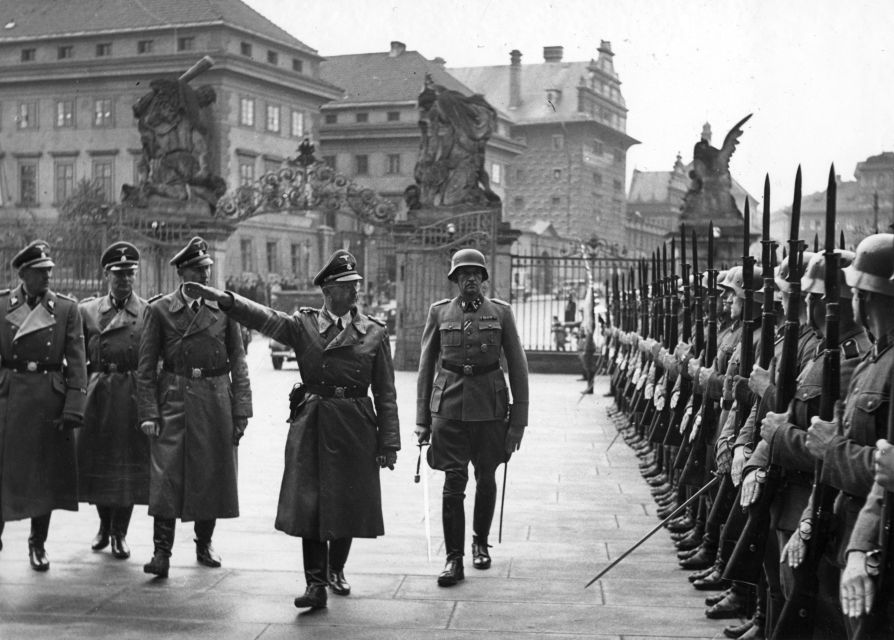
The tour begins with the Nazi occupation and the destruction of Czechoslovakia’s political freedom. The country had been one of Europe’s more industrialized and progressive states. Nazi rule turned that confidence into fear, surveillance, and violence.
From there, the story moves into the postwar years and the Communist takeover. You hear how the promise of a better society became a system of control, censorship, political persecution, and restricted personal freedom.
The value of the tour is not simply learning dates. You begin to see Prague’s squares as places where ordinary people gathered, waited, protested, celebrated, and faced armed power. That human scale is what makes the walk memorable.
More communism history tours in Prague:
- Prague: Communism History and Nuclear Bunker Guided Tour
★ 4.7 · 2,417 reviews - Prague Communism History and Nuclear Bunker Tour
★ 5.0 · 1,742 reviews - Communism & Nuclear Bunker Tour + 70s Canteen Lunch (own expense)
★ 5.0 · 1,036 reviews
Starting at Týnská 639/4 in the Old Town
The meeting point is at Týnská 639/4 in Staré Město, Prague 1. This puts you in the heart of the Old Town, close to the Týn Church and the lanes around the Old Town Square.
Arrive with enough time to find the address. The Old Town is easy to reach, but its narrow streets and closely packed buildings can make a specific doorway less obvious than it appears on a map.
The opening portion is useful because it places the twentieth century into the setting you are already exploring. You are not being taken to an isolated historical site. Instead, you begin among the same streets that witnessed occupation, political pressure, public gatherings, and dramatic changes in power.
The English-speaking guide sets the tone. Past guides have included Adam, Tony, Zach, Sean, Amanda, Kevin, and Analisa. The names change, so you should not book around a particular person, but the strongest pattern is clear: this experience depends on a guide who can tell a long story without losing the group.
The Municipal House and the end of democratic confidence
The Municipal House is one of Prague’s grandest public buildings, and it makes a striking early reference point. Its elegant appearance can distract you from the political changes that swept through the country around it.
Here, the tour helps explain how Nazi occupation disrupted a modern state and how national independence was crushed. The building itself is not a World War II museum, so do not expect a large display devoted to the period. Its importance on this route comes from the story attached to the city around it.
This is a good example of how the tour works. The guide supplies the meaning, while the city supplies the setting. You listen, look around, and begin to imagine how quickly a familiar public place can acquire a different meaning under an authoritarian government.
If you prefer tours with a physical exhibit at every stop, this may feel light on objects and plaques. If you enjoy learning through place and narrative, the approach works well.
The Jewish Quarter and the weight of occupation
The route skirts the old Jewish area, giving you an important reminder that Nazi persecution was not an abstract policy imposed somewhere else. Prague’s Jewish community was caught in the machinery of Nazi rule, deportation, and murder.
You may already have visited the Jewish Quarter’s synagogues and cemetery on a separate visit. This tour adds a different layer. Rather than focusing mainly on religious buildings and Jewish cultural life, it places the quarter within the wider political story of occupation and resistance.
That makes this stop especially useful if you have already taken a general Old Town walk. One participant described it as a strong follow-up to a broad Prague tour and a self-guided visit to the Jewish Quarter.
The subject matter is painful, and the tour does not try to make it comfortable. The guide’s job is to explain what happened while showing how the occupation affected the city as a whole. Expect a serious tone, even when the guide uses occasional humor to keep the group engaged.
More World War II tours in Prague:
- Prague: WWII Guided Tour & The Crypt of Operation Anthropoid
★ 4.7 · 1,030 reviews - WWII in Prague Tour & The Crypt of Operation Anthropoid
★ 5.0 · 817 reviews - Small-Group World War 2 & Operation Anthropoid Tour in Prague
★ 5.0 · 231 reviews - Prague: World War 2 and Operation Anthropoid Walking Tour
★ 4.8 · 193 reviews
Resistance, assassination, and the church refuge
One of the most gripping sections concerns the Czech resistance and the assassination of a senior Nazi security official. The operation was carried out by Czech resistance fighters, and the retaliation that followed was brutal.
The tour connects this episode with the church and crypt where resistance soldiers hid. Past participants have described visiting the Cyrill and Methodius Church and its crypt as a particularly powerful moment. Another person interested in Operation Anthropoid found the visit to the church especially poignant.
This is one of the few parts of the route where the physical setting carries a strong, immediate connection to the events. The church is not simply a backdrop for a lecture. It helps you understand the confined choices facing the resistance fighters and the scale of the danger around them.
The tour does not treat the assassination as a clean adventure story. It also addresses Nazi retribution and the human cost. That balance matters. You get the courage of the operation, but also the consequences for civilians and the wider resistance network.
Some departures have included a museum visit or a tram ride to save walking time. Those details may vary, so treat them as possible features rather than guaranteed parts of every tour. The stated inclusion is the 2.5-hour walking tour.
Wenceslas Square and the Communist takeover
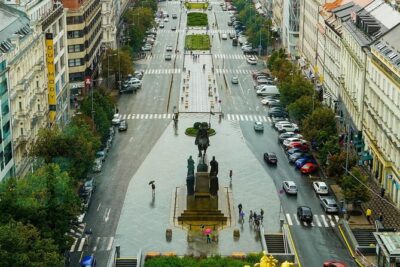
Wenceslas Square is one of the most important public spaces in modern Czech history. It is broad, central, and made for mass gatherings, which explains why it repeatedly appears in the country’s political story.
Here you hear about the Communist coup and the disappointment that followed. The tour explains how postwar hopes and political promises gave way to one-party rule, surveillance, censorship, and persecution.
The square also helps you understand how public space can become a political stage. It has hosted official ceremonies, demonstrations, moments of fear, and moments of joy. The same open area can feel entirely different depending on who controls it and why the crowd has gathered.
This is a strong stop for anyone who knows only the simplified version of the Cold War. The guide moves beyond the label of Communism and explains how policies affected daily life, public speech, culture, and personal choices.
Prague Spring and the Warsaw Pact invasion
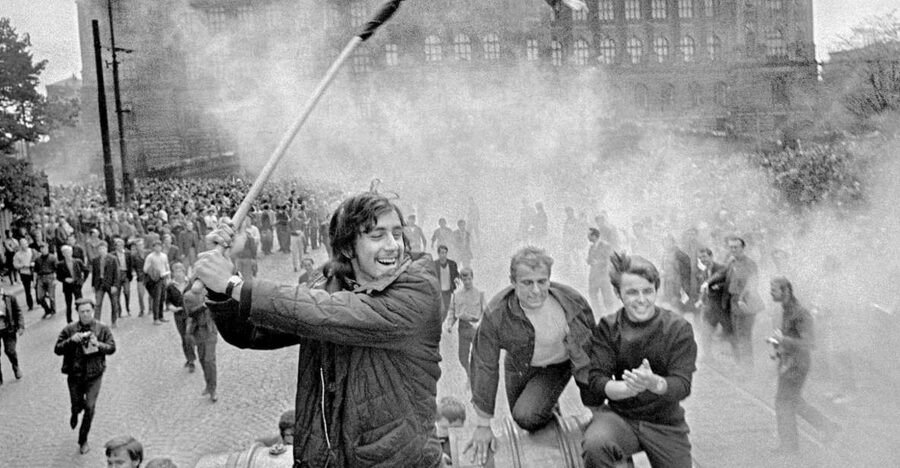
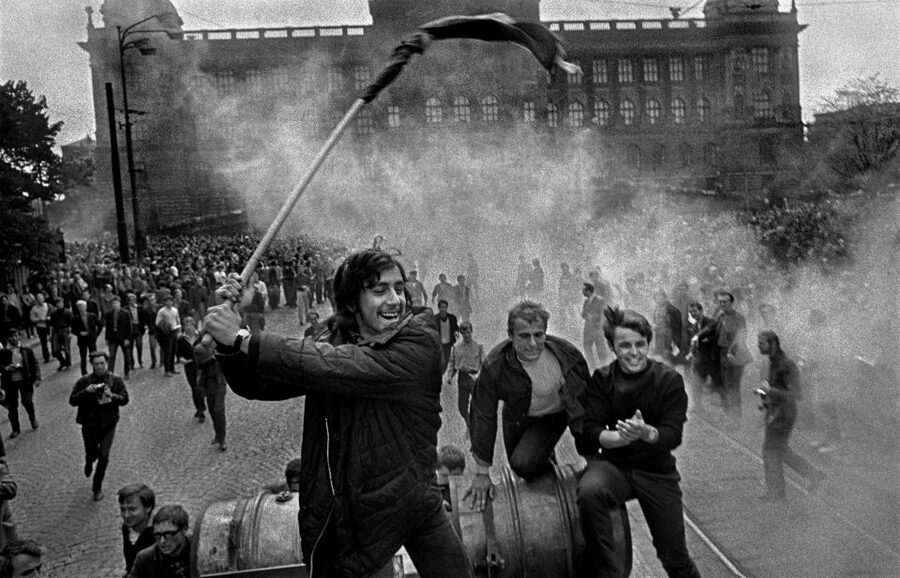
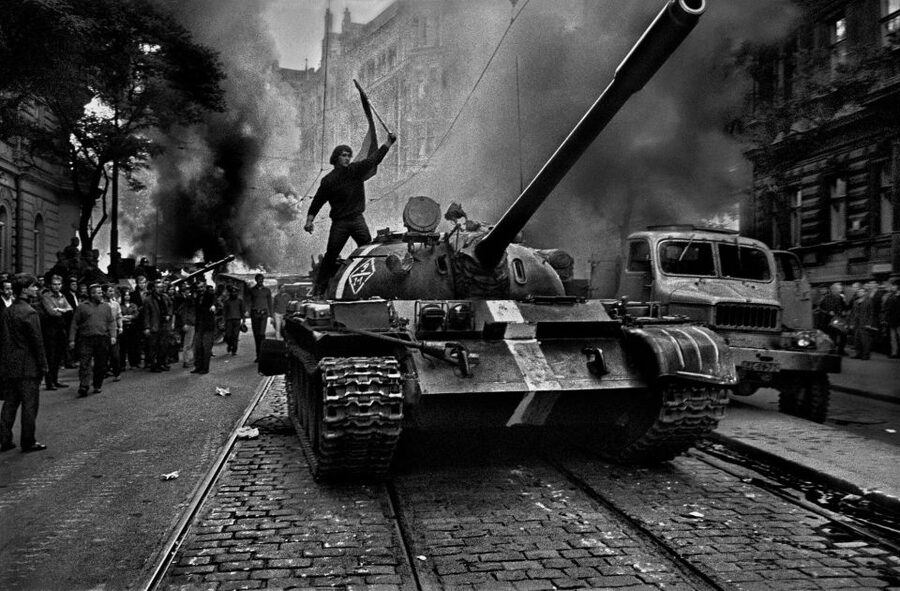
The story then turns to the Prague Spring, the reform movement that briefly offered the possibility of a more open form of socialism. The mood of hope did not last. The Warsaw Pact invasion ended the experiment and brought a harder period of control.
The guide describes the emotional swing from optimism to shock. That shift is important because it explains why later dissent carried such personal risk. People had experienced the possibility of change, then watched foreign troops and political leaders shut it down.
You will hear how the invasion shaped Czech memory and public behavior. The consequences were not limited to one dramatic night. They continued through the years that followed, affecting work, education, culture, and political expression.
Because the tour moves through the city rather than relying on a single museum exhibition, the guide’s explanation is central here. A strong guide gives you a clear sequence of events and shows how one decision led to the next.
Normalization, the Plastic People, and Charta 77
The years of Normalization receive attention as well. This period is often less familiar to visitors than the invasion itself, but it explains the long, gray aftermath of political repression.
You learn how the government tightened control and punished people who challenged the official line. The persecution of the Plastic People of the Universe shows how music and culture could become political acts. A band did not have to lead an armed revolt to attract state pressure.
The discussion of Charta 77 then introduces the dissident movement and the people who refused to accept silence as the price of ordinary life. The tour connects these cultural and political stories rather than presenting them as isolated facts.
This is where the experience becomes especially useful for understanding Václav Havel. He was not simply a future president who appeared at the end of the story. The tour presents him as part of an unusual group of writers, artists, musicians, and dissidents who helped challenge the system.
The Velvet Revolution and the road to 1989
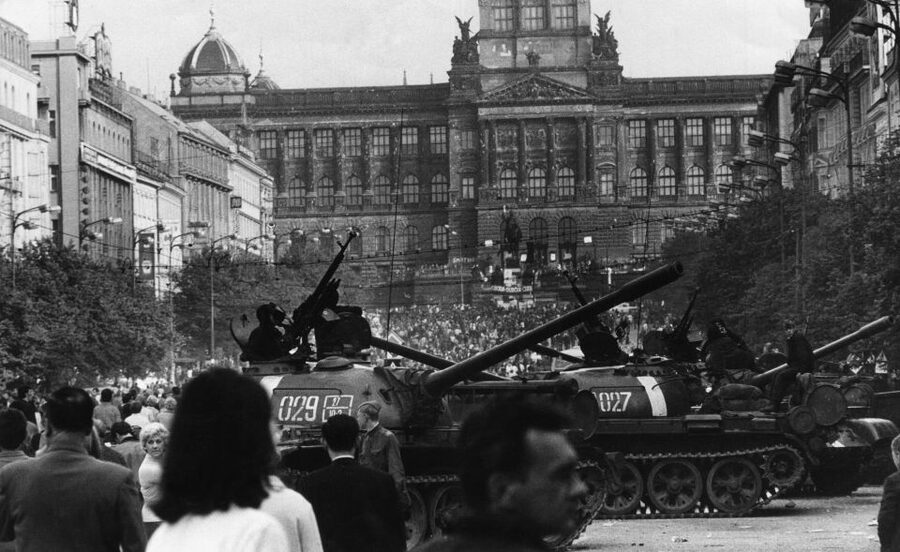
The final section reaches the Velvet Revolution, when mass demonstrations helped sweep Havel and other dissidents into power. Wenceslas Square again becomes central, now as a place of public hope rather than Communist control.
The guide shows how quickly the mood of a city can change when fear begins to break. You hear about the people who gathered, the demand for political change, and the nonviolent character of the revolution.
This ending gives the tour a necessary lift. The earlier sections are full of occupation, repression, and disappointment. The Velvet Revolution does not erase those years, but it shows that the story did not end with permanent silence.
I like that the tour treats 1989 as the result of years of pressure and dissent. The revolution was dramatic, but it was not created from nothing. The resistance stories, cultural opposition, and public frustration all lead toward this final chapter.
Dancing House and Prague’s changing identity
The Dancing House provides a visual contrast to the older parts of the route. Its modern design reflects a different Prague, one shaped by the post-Communist period and a changing public identity.
The building is not necessarily a major museum stop for the history covered here. Its value comes from the contrast between architecture and politics. You move from stories of control and restricted expression to a city that presents itself in a freer, more contemporary way.
This also helps prevent the tour from becoming a narrow march through grim sites. Prague is not frozen in its twentieth-century tragedies. The city changed, and the route shows that change through its buildings and public spaces.
Still, you should not expect every stop to offer a dramatic memorial. Some locations are simply ordinary streets with extraordinary stories attached to them. The guide has to make that connection clear, and the best guides do so with detail, humor, and a strong sense of sequence.
The guides make or break the experience
The most consistently praised feature is the guide. Adam is described as entertaining and highly informed. Tony is praised for answering questions and adding useful suggestions for bars and restaurants. Zach is repeatedly singled out for turning history into a vivid story.
Amanda, Analisa, Sean, Kevin, and others have also been described as energetic, clear, and engaging. One guide continued confidently in pouring rain, while another kept a group interested during a hot, oppressive day.
That range of conditions tells you something practical. The tour is not built around comfortable indoor stops, so weather can affect it. Bring suitable clothing and shoes, especially if rain is possible. The route is manageable, but standing outside while listening for long periods can feel tiring.
Group size can vary. One participant enjoyed a small group that felt almost private and made questions easy. You should be prepared for a different group on your date, but the format does allow questions and discussion.
Value, timing, and who should book
At $34 per person, this is a fair price for a 150-minute guided walk through several parts of central Prague. You are paying for the guide’s interpretation, not for a long list of paid admissions.
The price is particularly good if you want a connected explanation of World War II and Communist rule. A standard city tour may show you the major buildings but skip the occupation, resistance, Prague Spring, Normalization, and Velvet Revolution.
The value is less obvious if you want a museum-heavy experience with extensive indoor exhibits. The route is primarily outdoors, and some stops rely on narration because little visible evidence remains at street level.
I would choose this tour for:
- First-time visitors who want modern Czech history alongside the famous sights
- Anyone interested in World War II resistance or Operation Anthropoid
- History and politics enthusiasts
- Visitors who have already taken a basic Old Town or Castle tour
- People who prefer stories, public spaces, and local perspective to a formal lecture
I would be cautious if you have limited walking time, dislike long explanations, or want a tour focused only on architecture. The subject matter is also serious, so this is not a light sightseeing stroll.
Free cancellation up to 24 hours before the start and reserve-now, pay-later booking make it easier to fit into a changing itinerary. The meeting point is in central Prague, and the tour is offered in English with a live guide.
Should you book the Prague history walk?
Book it if you want to understand what happened in Prague between the Nazi occupation and the Velvet Revolution, not just see where it happened. The strongest part is the way the guide links resistance, political repression, culture, public protest, and the eventual return of freedom.
Go in expecting a walking lecture supported by real places, not a chain of elaborate exhibits. If you find a guide in the style of Adam, Tony, Zach, or Amanda, you are likely to get a lively and carefully told account. At $34, it is a smart choice for anyone who wants Prague’s twentieth century explained with clarity, humanity, and a little well-timed humor.
FAQ
How long does the tour last?
The advertised duration is 150 minutes, or 2.5 hours. One past participant said the tour lasted longer than listed, so avoid scheduling something immediately afterward.
What language is the tour offered in?
The tour is conducted in English by a live guide.
Where does the tour meet?
It meets at Týnská 639/4 in Staré Město, Prague 1, Czech Republic.
Which Prague sights are included?
The route includes the Municipal House, the Jewish Quarter, Dancing House, and Wenceslas Square, along with other locations connected to World War II and Communist-era events.
Does the tour visit a church or resistance site?
The tour covers the Czech resistance and the church and crypt associated with resistance soldiers who hid there. A past tour also included a museum visit, but the stated inclusion is the 2.5-hour walking tour, so extra stops may vary.
How much does the tour cost?
The listed price is $34 per person. You can cancel up to 24 hours in advance for a full refund, and reserve now while paying later.
More History Tours in Prague
- Prague: Oldtown, Medieval Underground & Dungeon History Tour
★ 4.2 · 8,244 reviews - Prague Old Town, Medieval Underground and Dungeon Historical Tour
★ 4.5 · 3,227 reviews - Prague: Historic City Center Bus Tour with Top Sights
★ 4.4 · 2,360 reviews - Prague Historic Pub Tour with Drinks Included
★ 5.0 · 2,084 reviews
Just added around Prague
- Prague: Historical Walking Tour with Focus on World War 2★ 4.3 · 12 reviews
- WWII and Communism History in Prague’s Old Town Private Tour★ 5.0 · 4 reviews
- World War II 4WD Tour from Prague with Lunch★ 4.4 · 3 reviews
- Unique salt cave in Prague★ 4.9 · 10 reviews
- Walking tour of Prague in French : Nové Město★ 4.9 · 16 reviews
- Walking tour of Prague in french: Old Town & Charles Bridge★ 4.9 · 62 reviews
- Ultimate Unlimited Beer Pong with Czech Beer★ 4.6 · 5 reviews
- Prague: Market Tour and Traditional Czech Cooking Class★ 4.7 · 19 reviews
Prague Communism History Tours, compared.
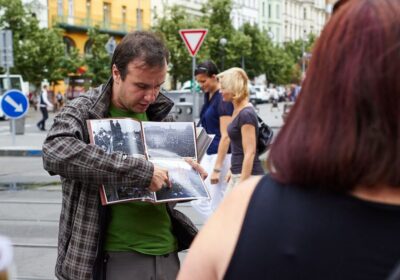
Communism History and Nuclear Bunker Guided Tour
Read our review →
Prague Communism History and Nuclear Bunker Tour
Read our review →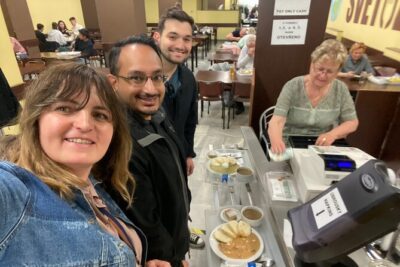
Communism & Nuclear Bunker Tour + 70s Canteen Lunch (own expense)
Read our review →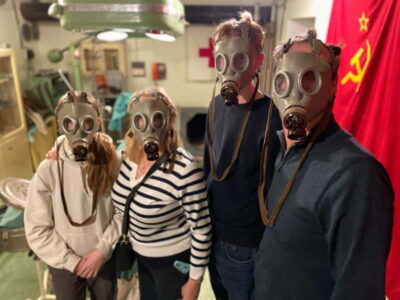
Communism and Bunker Tour with 70s Canteen Lunch
Read our review →
Second World War & Communism (Tip-based 3 hour tour)
Read our review →
Browse the lists this tour appears in