
Reviewed · PRAGUE WORLD WAR II TOURS
Small-Group World War 2 & Operation Anthropoid Tour in Prague
Prague’s WWII story is not found in one battlefield or ruined quarter. It unfolds in ordinary streets, former offices, shops, hotels, and apartment buildings. This tour connects those places to the 1939 to 1945 occupation, then brings the story to a powerful close in the crypt where the men behind Operation Anthropoid made their final stand.
I like two things here: the real locations make the history easier to grasp, and the final visit to St. Cyril and Methodius Cathedral gives the walk a solemn, physical ending. Guides such as Allen, Daniel, Dana, Richard, Robin, Pablo, Martin, and Rafek have been praised for strong English, careful explanations, and real enthusiasm for Czech history. The main consideration is that this is a serious, information-heavy walk with plenty of standing. If you prefer a quick sightseeing stroll, three hours may feel long.
Key points to know before booking
- The tour begins outside Týnská 627/7 at 1:30 p.m., not inside the ticket shop.
- Operation Anthropoid is the central story, but the tour first explains the political and economic conditions that led to Nazi occupation.
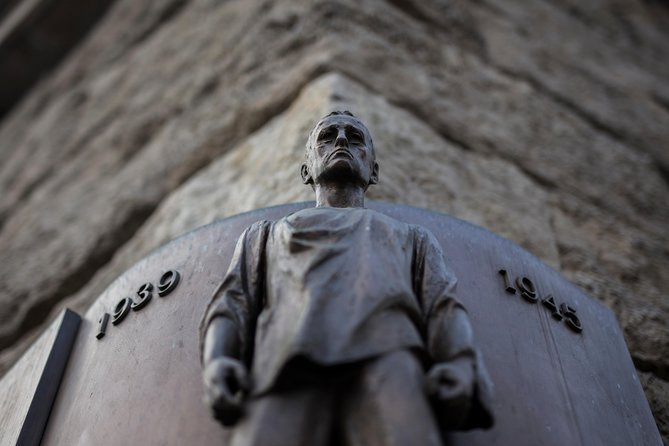
- The route ends at St. Cyril and Methodius Cathedral, including the crypt and the National Memorial to the Heroes of the Heydrich Terror.
- Expect photos, names, dates, and detailed storytelling, not a sequence of large WWII ruins or battle sites.
- The group can include up to 30 people, although poor weather may make it much smaller.
- Wear comfortable shoes and plan for standing, since most of the experience is outdoors and on foot.
Why Operation Anthropoid matters in Prague
The tour begins with the broad forces that shaped Czechoslovakia before the war. At U Budovce, your guide explains how the Treaty of Versailles, the collapse of several old European powers, the creation of new countries, runaway inflation, the Great Depression, and rising nationalism created an unstable political climate.
This opening may feel removed from the assassination of Reinhard Heydrich, but it gives you the needed setting. You learn why Hitler gained support, why the Sudeten German question became so explosive, and how the weakness of the European democracies helped Nazi Germany expand.
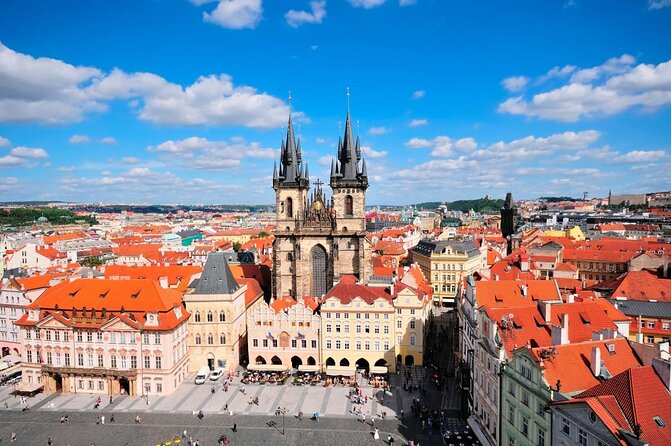
At Stone Bell House, the story moves toward the Munich Agreement and the dismemberment of Czechoslovakia. You hear about the Sudeten German Party and the creation of the Protectorate of Bohemia and Moravia. A view of a Gothic church adds a reminder that these events took place in a beautiful, functioning city, not on a distant military map.
This part is more lecture-like than scenic. You will not find a large memorial at every stop. The guide supplies much of the meaning, often using historic photographs to show what has changed and what has not.
More World War II tours in Prague:
- Prague: WWII Guided Tour & The Crypt of Operation Anthropoid
★ 4.7 · 1,030 reviews - WWII in Prague Tour & The Crypt of Operation Anthropoid
★ 5.0 · 817 reviews - Prague: World War 2 and Operation Anthropoid Walking Tour
★ 4.8 · 193 reviews
Old Town Hall and the Prague Uprising
At Staroměstská radnice, the guide points out the section of Old Town Hall damaged during the Prague Uprising in May 1945. This is one of the better stops for connecting the city you see today with the final days of German occupation.
You learn about daily life under Nazi rule, then follow the uprising that helped bring the occupation to an end on May 8. The emphasis is not only on soldiers. It also covers civilians, barricades, improvised resistance, and the confusion of a city trying to free itself.
The nearby view of the Gothic church is attractive, but the building itself is not the main reason for the stop. Think of this section as a history talk in the middle of Old Town, with Prague’s architecture providing the setting.
Celetná Street and the start of Heydrich’s reign
On Celetná Street, the focus turns to the harsh tightening of Nazi control. Your guide covers the execution of Czech students on November 17, 1939, and the closure of Czech universities. You also hear about Konstantin von Neurath, the first Reich Protector, and the appointment of Reinhard Heydrich on September 27, 1941.
Heydrich’s arrival changed the mood and machinery of the occupation. He was placed in charge of the Protectorate and became known for brutal repression. The tour explains why his appointment mattered and how it led the exiled Czechoslovak government in London to consider a direct attack.
This is also where the walk shows its limits. You are seeing streets and buildings rather than preserved interiors tied to every event. If you need a museum display at each stop, you may find the route spare. If you enjoy placing political events on the actual city map, it works well.
Safe houses and the resistance network
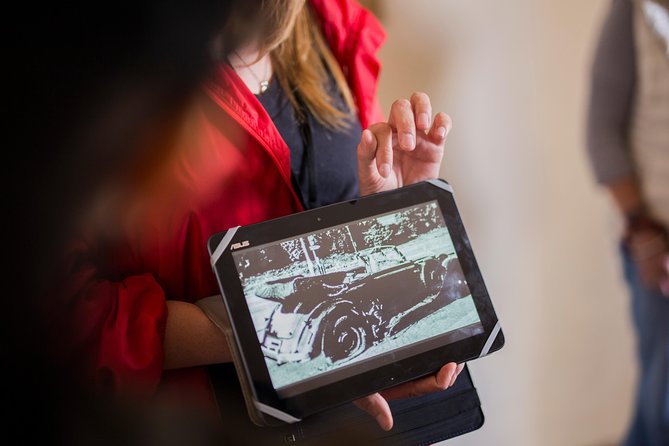
At Melantrichova, the guide explains what came before Operation Anthropoid. The discussion includes the government in exile in London, Operation Benjamin, and the resistance missions Silver A and Silver B.
You also see the building connected with the apartment of Josef and Marie Svatoš. It served as one of the resistance hideouts. Details like this give the story a human scale. Resistance work depended on ordinary apartments, trusted families, coded messages, and people willing to risk arrest or execution.
This is one of the moments when a good guide makes a major difference. Allen and Daniel, in particular, have been praised for explaining the Czech struggle before, during, and after the war. Rafek has also been credited with using photographs, family memories, and careful explanation to make the period easier to picture.
The information can come quickly. You will hear many names, operations, and connections, so this is a good place to ask questions or make a quick note on your phone.
Same city, a completely different afternoon:
- Prague: 50-Minute Sightseeing Evening Cruise
★ 4.2 · 33,780 reviews - Prague: Medieval Dinner with Unlimited Drinks
★ 4.4 · 19,847 reviews - Prague: Skip-the-line Castle Ticket and Optional AudioGuide
★ 4.3 · 11,121 reviews - Prague: Castle Tour with Local Guide and Entry Ticket
★ 4.6 · 10,422 reviews
The assassination near the Baťa store
At the Baťa department store, your guide explains the assassination of Heydrich and points out how the location relates to the event. The building was used to exhibit objects found at the assassination scene.
The attack took place in 1942 and was carried out by Czechoslovak paratroopers sent from Britain. The operation was code-named Anthropoid. The tour covers how the men were brought into the country, how the resistance network helped them, and how the plan unfolded.
The word assassination can make the event sound simple. The walk explains the planning, the danger, and the terrible consequences that followed. The physical site may not look dramatic today, which is why the guide’s account and period images matter.
Wenceslas Square and the destruction of Lidice
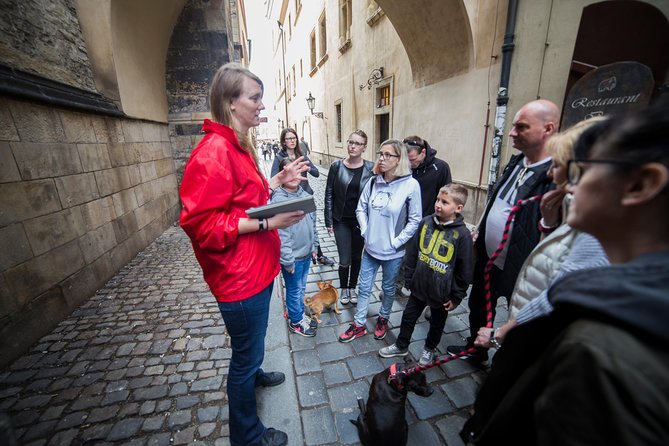
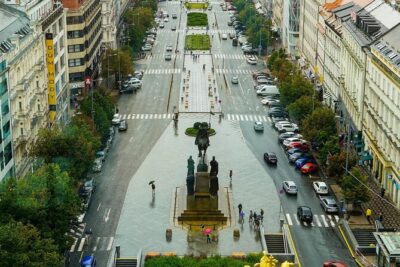
At Wenceslas Square, you hear about Lidice, the village destroyed by the Nazis after Heydrich’s assassination. On June 10, 1942, the men of the village were executed and the women were sent to concentration camps. Lidice ceased to exist as a community.
This is among the tour’s most painful sections. It shows that Operation Anthropoid was not an isolated military action. The Nazi response reached far beyond the men who carried out the attack and punished civilians in a calculated act of terror.
The stop also gives you a broader understanding of occupation. The tour is not simply about a famous plot. It is about the cost paid by families, students, villagers, and anyone connected to the resistance.
Petschek Palace and the Gestapo
The route continues past the Esplanade Hotel, once favored by Nazi officials, before reaching Petschek Palace. The palace served as a Gestapo headquarters where Czechoslovaks were interrogated, tortured, and killed.
This stop connects the resistance story with the machinery used to destroy it. On June 16, 1942, Karel Čurda entered the building and betrayed his comrades. His actions became a turning point in the hunt for the men responsible for Heydrich’s death.
The palace is an important place to see, but the experience remains mainly exterior storytelling. Your guide fills in the events that occurred inside. If you are sensitive to accounts of torture and execution, know that the tour does not soften this part of the history.
You then pass the National Museum and continue along Vodičkova Street. The guide discusses the unsuccessful operations Tin and Bioscop, showing that resistance activity included many attempts, not only the mission that became famous.
Karlovo náměstí and Prague under attack
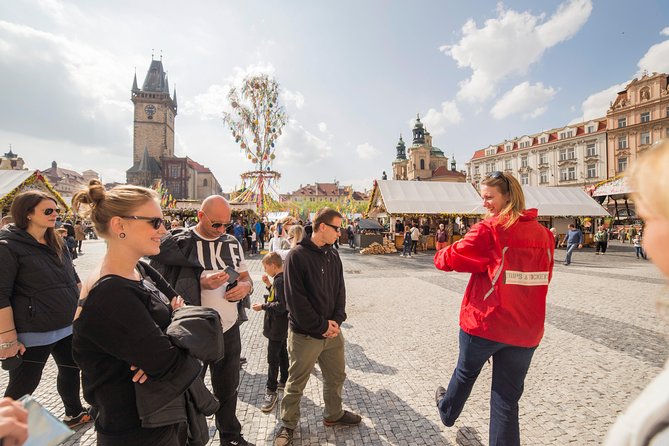
At Karlovo náměstí, the subject shifts to the bombing of Prague in 1945. This helps correct a common impression that the city passed through the entire war untouched.
Prague did not experience the same scale of street fighting and destruction as some European capitals, but it still faced air raids, occupation, arrests, and the violence of the final uprising. This stop also prepares you for the walk’s closing theme: the city’s efforts to end German rule in the final months of the war.
The route contains a lot of explanation between visually dramatic points. One person found the material too monotonous and left early, while many others praised the guides’ storytelling and energy. That contrast is useful: your enjoyment will depend partly on the guide’s delivery and partly on how much detail you want.
St. Cyril and Methodius Cathedral
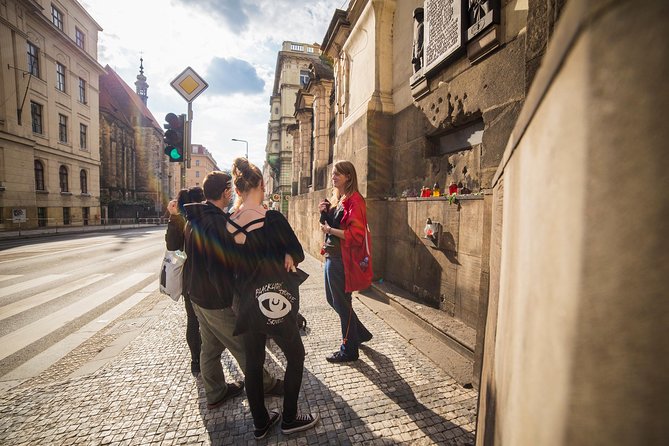
The most important part of the experience begins when you reach St. Cyril and Methodius Cathedral on Resslova Street. Admission to the church is included, and the guide visits the building with you.
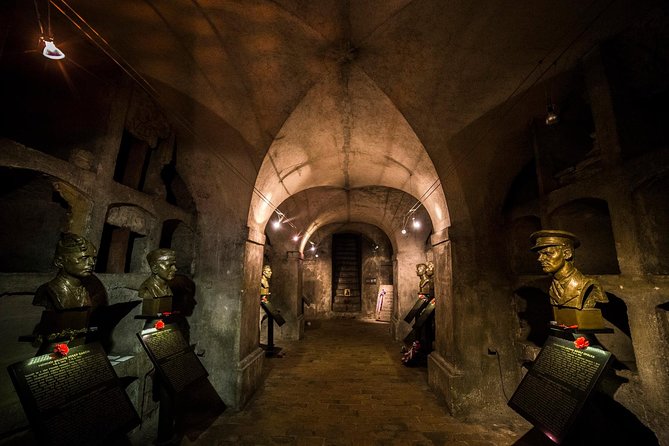
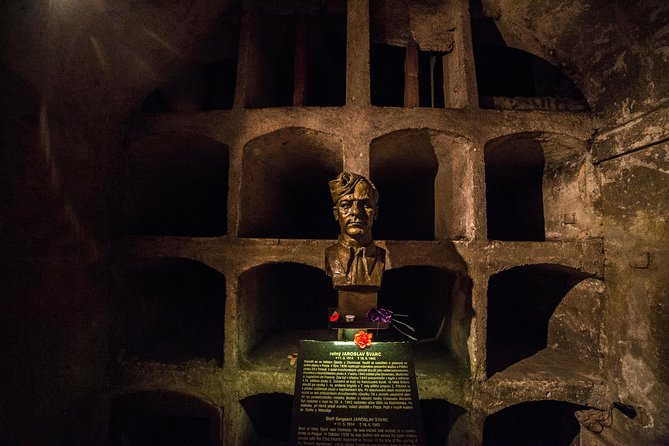
This is where the Operation Anthropoid story reaches its emotional center. After the assassination, the paratroopers and members of the resistance used the church as a hiding place. The crypt and surrounding memorial preserve the memory of the men who were trapped there.
The church is atmospheric without needing much decoration. The narrow spaces, stone walls, and knowledge of what happened there make the visit feel very different from the earlier street stops. You are no longer looking at a building connected to an event. You are standing inside one of the final places where the resistance fighters held out.
The crypt and the National Memorial
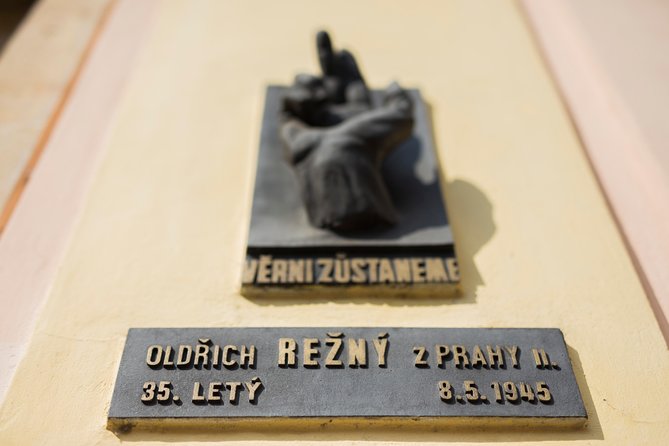
The tour ends at the National Memorial to the Heroes of the Heydrich Terror, including the crypt where the Czech paratroopers paid the ultimate price. This final visit is included in the $33.88 cost, and it is the strongest reason to choose the guided walk instead of simply reading about Operation Anthropoid.
You can visit the crypt independently, but the preceding three hours give it context. By the time you arrive, you understand the political crisis before the war, the occupation, the resistance network, the attack on Heydrich, the betrayal, and the Nazi reprisals.
The memorial is not a cheerful attraction. It is quiet, serious, and appropriate for adults and older children who can handle wartime subjects. The tour is not recommended for small children.
What the $33.88 price buys you
At $33.88 per person, this is a fair price for a three-hour walking tour that includes a local guide and entry to the cathedral and memorial. You are paying for a connected explanation of places that would otherwise look like ordinary Prague streets, along with help navigating between them.
The value is strongest if you are interested in WWII, Czech resistance, or modern European history. The guide handles the route, places events in order, and brings photographs and stories into locations that can be hard to understand on your own.
The value is weaker if you want a sightseeing tour with frequent interior visits or lots of scenic stops. Much of the tour consists of standing while the guide explains events. The group may contain up to 30 people, so hearing clearly can matter, especially on busy streets.
Timing, meeting point, and practical advice
The walk starts at 1:30 p.m. outside the building at Týnská 627/7 in Prague 1. Meet outside rather than inside the shop. The tour ends at the Orthodox Cathedral of Saints Cyril and Methodius at Resslova 9a in Prague 2.
Allow enough time to find the starting point. One poor experience resulted from arriving late after confusion about the location, and the group left after waiting. The meeting point is in central Prague, but you should still check the map carefully before setting out.
The tour lasts about three hours and ends in central Prague. It is near public transportation, but you should expect a moderate level of walking and standing. Comfortable shoes are more useful than dress shoes, and a weather-ready layer is sensible since much of the route is outside.
The experience is offered in English with a mobile ticket. Children under six are free, children must have an adult with them, and service animals are allowed. Food, drinks, hotel pickup, and hotel drop-off are not included.
Who will enjoy this walk most
I would choose this tour if you want the story of Prague’s WWII years explained in a clear sequence. It suits history fans, readers of the Operation Anthropoid story, and anyone who wants more than the usual Old Town sightseeing circuit.
It can also work for someone who is not a history specialist, provided you are comfortable with a serious subject and a lot of spoken information. One guide, Allen, received praise for making the material accessible even to someone who did not consider herself a history fan.
I would skip it if you dislike long talks, struggle with extended standing, or want a tour centered on architecture and pretty views. The city’s buildings are the setting, not the main event.
Should you book it?
Book this tour if the resistance story and the assassination of Reinhard Heydrich interest you, especially if you want to finish in the actual church crypt tied to the final stand. The strongest guides bring care, clear English, period photographs, and a sense of the human cost.
Before booking, accept that the route is detailed and sometimes grim. Arrive early at Týnská 627/7, wear comfortable shoes, and give yourself time to listen. For $33.88, the combination of a structured historical walk and included access to the cathedral and memorial is good value for the right audience.
FAQ
Where does the World War II tour in Prague begin?
The tour begins outside the building at Týnská 627/7 in Prague 1, near Old Town. The meeting time is 1:30 p.m., and you should meet outside rather than inside the shop.
Where does the tour end?
The tour ends at the Orthodox Cathedral of Saints Cyril and Methodius at Resslova 9a in Prague 2, where you visit the church and the memorial crypt.
How long does the tour last?
The walking tour lasts approximately three hours, including the visits to St. Cyril and Methodius Cathedral and the National Memorial to the Heroes of the Heydrich Terror.
Is entry to the church included?
Yes. The local guide and the visit to St. Cyril and Methodius Cathedral are included. The itinerary also includes a visit to the memorial and crypt.
Is the tour suitable for young children?
The tour includes serious WWII history and is not recommended for small children. Children up to six years old are free, and all children must be accompanied by an adult.
How many people can join the group?
The maximum group size is 30 people. The actual group may be smaller, including in poor weather.
Can I cancel for a full refund?
You can cancel up to 24 hours before the experience begins for a full refund. Cancellations or changes made less than 24 hours before the start time are not accepted for a refund.
Just added around Prague
- Prague: Historical Walking Tour with Focus on World War 2★ 4.3 · 12 reviews
- WWII and Communism History in Prague’s Old Town Private Tour★ 5.0 · 4 reviews
- World War II 4WD Tour from Prague with Lunch★ 4.4 · 3 reviews
- Unique salt cave in Prague★ 4.9 · 10 reviews
- Walking tour of Prague in French : Nové Město★ 4.9 · 16 reviews
- Walking tour of Prague in french: Old Town & Charles Bridge★ 4.9 · 62 reviews
- Prague: Market Tour and Traditional Czech Cooking Class★ 4.7 · 19 reviews
- Ultimate Unlimited Beer Pong with Czech Beer★ 4.6 · 5 reviews
Prague World War II Tours, compared.
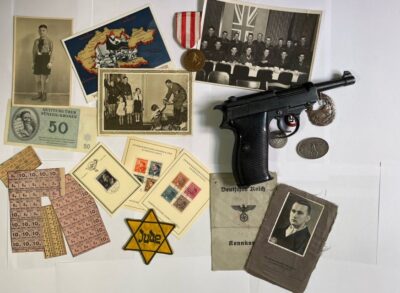
WWII Guided Tour & The Crypt of Operation Anthropoid
Read our review →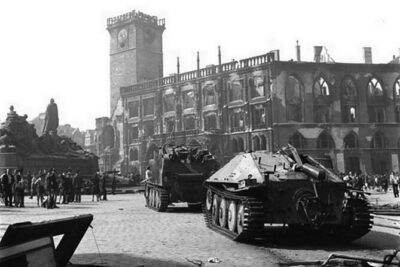
WWII in Prague Tour & The Crypt of Operation Anthropoid
Read our review →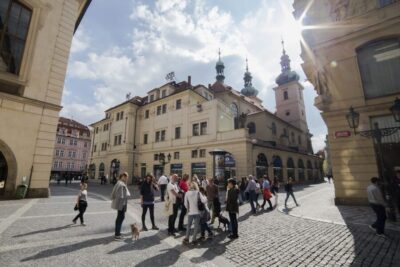
World War 2 and Operation Anthropoid Walking Tour
Read our review →
Second World War & Communism (Tip-based 3 hour tour)
Read our review →Browse the lists this tour appears in