
Reviewed · PRAGUE COMMUNISM HISTORY TOURS
Prague: Communists and World War II Tour
Prague’s modern story is written across ordinary streets: Národní Street, Wenceslas Square, and the route from Charles Bridge toward New Town. This two-hour walk links World War I, the creation of Czechoslovakia, Nazi occupation, Communist rule, the Soviet occupation, Jan Palach, and the Velvet Revolution in one steady narrative.
I like the way the tour connects political events to places you can actually see, and I like that guides such as Barbara, Martin, Otakar, Dana, and Inna have been praised for answering questions rather than simply reciting dates. The main drawback is that this is a talk-heavy history walk, with limited sightseeing in the usual postcard sense. One participant also found the film at the Museum of Communism repetitive.
- The route ties major events to Národní Street and Wenceslas Square, two central places in Prague’s modern political story.
- You hear how World War I helped create Czechoslovakia, then follow the country through Nazi rule and Communism.
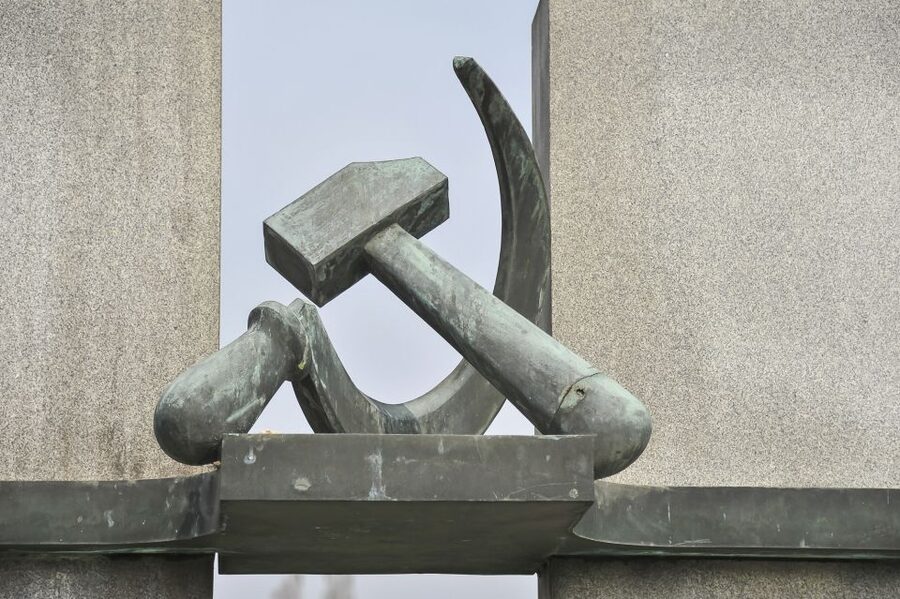
- A 30-meter Stalin statue forms one of the tour’s starkest symbols, alongside discussion of the Communist Revolution and Soviet occupation.
- Jan Palach, banned books, Milada Horáková, and the Velvet Revolution bring personal courage into the political story.
- The local guide is the real center of the experience, with English, German, and Russian tours available.
- At $29 for two hours, the walk offers good value if you want context, not just a parade of landmarks.
Prague’s 20th century begins at Charles Bridge
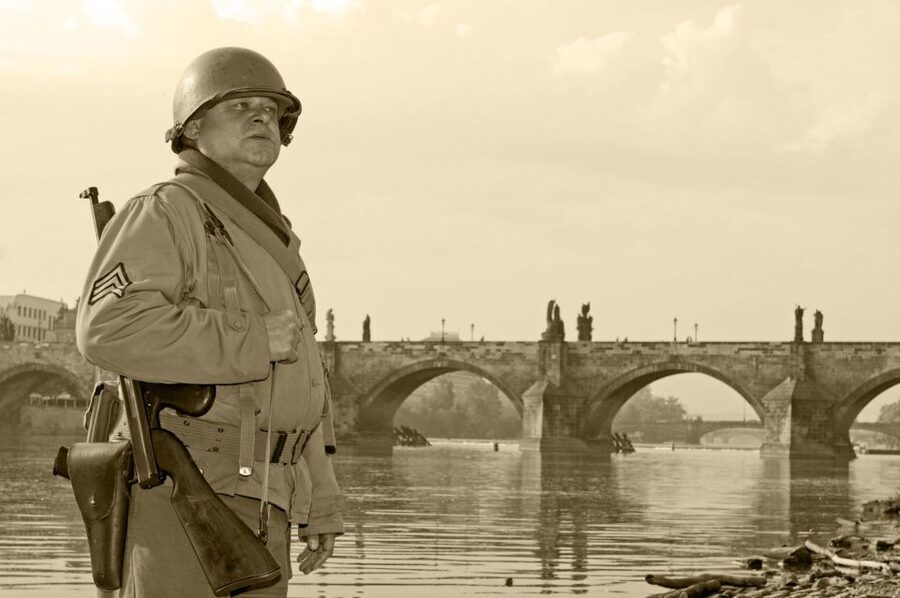
Meet your guide in front of Charles Bridge at Křižovnické Square, beside the statue of Charles IV. Look for the orange umbrella, and use Staroměstská as your reference point if you are coming by tram or subway.
The starting place is easy to recognize, but several guides use orange umbrellas, so allow a few extra minutes to find the right one. One practical improvement would be a tour name on each umbrella. Until that changes, ask before joining a group.
From here, the tour sets up the political changes that shaped modern Czech history. You learn how World War I helped bring about the creation of Czechoslovakia, then how the tensions and consequences of that period fed into the events leading to World War II.
That opening matters. Without it, the later story can feel like a string of occupations and revolutions. With it, you get a basic framework for understanding why independence mattered, how national politics changed, and why Prague became such an important stage for 20th-century power struggles.
Your guide may take the conversation beyond dates and official events. Roman, one of the guides praised for answering questions, was noted for explaining what still remains in people’s minds today. That kind of discussion is especially useful in Prague, where old political divisions are not simply museum subjects.
Národní Street and the memory of occupation
The walk continues to Národní, one of the places where the city’s political history feels close to daily life. Here, the emphasis turns toward the years before and during World War II, including the streets where the Nazi Gestapo once ruled.
You will hear about the road to war and about the German occupation of Prague. The tour does not treat World War II as an isolated chapter. Instead, it links the war to the political failures and pressures that followed World War I.
This is one of the stronger parts of the experience because the setting keeps the story grounded. You are not only hearing about an abstract government or a distant battlefield. You are walking through central Prague while the guide explains how occupation affected the country and how political power was exercised in the city.
The route also introduces Reinhard Heydrich, known as the butcher of Prague, and other figures connected with the period. The supplied details do not promise a separate stop devoted only to Heydrich, so think of him as part of the wider explanation of Nazi control and Czech resistance.
The guide’s ability to handle questions makes a real difference here. Martin was praised for detailed explanations and for connecting the past with life in the Czech Republic today. If you like asking how ordinary people responded to political pressure, this is the point where you will get the most from the format.
More communism history tours in Prague:
- Prague: Communism History and Nuclear Bunker Guided Tour
★ 4.7 · 2,417 reviews - Prague Communism History and Nuclear Bunker Tour
★ 5.0 · 1,742 reviews - Communism & Nuclear Bunker Tour + 70s Canteen Lunch (own expense)
★ 5.0 · 1,036 reviews
New Town turns the history toward postwar Prague
The route moves through New Town, Prague, where the story shifts from Nazi occupation to the political order that followed World War II. You hear how the Communist Revolution changed daily life and government, and how Czechoslovakia became part of the Soviet sphere.
This portion helps explain the Iron Curtain in human terms. The tour covers life under Communism after World War II, not just the names of leaders or the shape of international alliances. You may hear about restrictions, political control, black-listed books, and the way public life changed under the regime.
A particularly useful feature is the comparison between official history and lived experience. Tracy valued hearing personal insight into Communism and the end of the Cold War, while Lisa found that discussion about life during Communist rule and the city’s transition after it added depth to the museum visit.
You should not expect a performance or a heavily staged presentation. The value is in the conversation. Guides have been described as friendly, energetic, and willing to spend time on questions. Otakar, Barbara, Martin, and Inna are among the guides singled out for clear explanations and strong command of the subject.
The pace can feel quick because so much ground is covered in two hours. You are moving through several neighborhoods and political periods, so this tour works best as an introduction. If you already know Czech history well, you may prefer a narrower tour focused on one period.
Wenceslas Square and the courage of Jan Palach
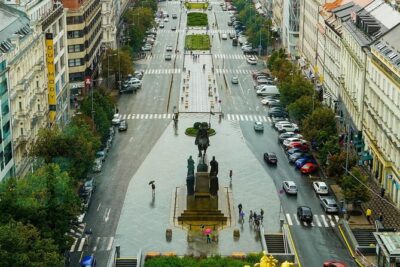
Wenceslas Square is the emotional center of the walk. The broad square has been tied to some of the most important public moments in Czech political life, and here the guide explains the Communist period, the Soviet occupation, Jan Palach, and the Velvet Revolution.
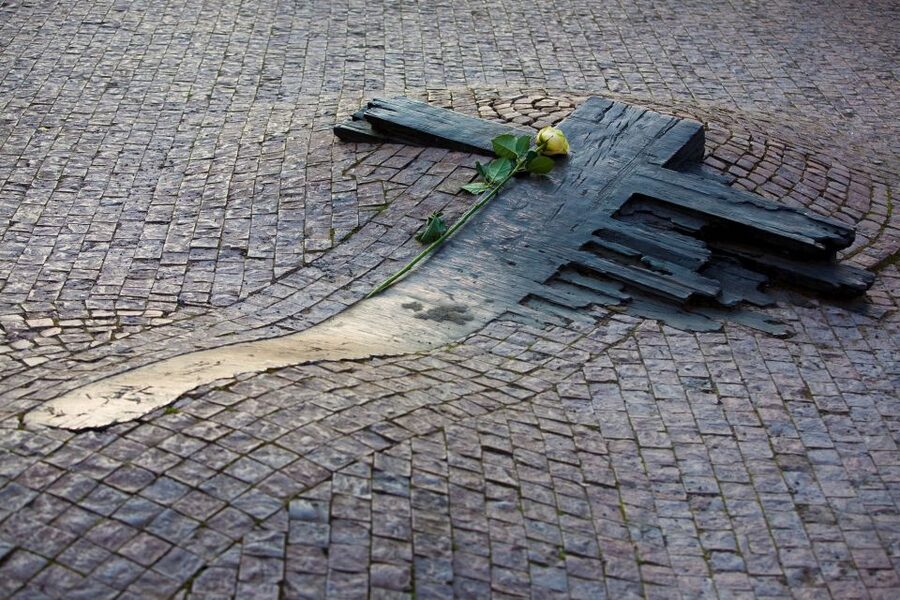
Jan Palach’s story gives the political history a human scale. The tour explains why this student set himself on fire and how his action became part of the country’s memory. You are not asked to treat the event as a simple symbol. The point is to understand the pressure and despair behind it, along with the way his death affected public feeling.
This is also where the discussion of Soviet occupation gains weight. The tour explores what followed the occupation and how censorship shaped public life, including the burning or suppression of black-listed books. Such details show that political control was not limited to police, borders, or official speeches. It also reached education, publishing, and the information people could access.
Wenceslas Square then carries the story toward the Velvet Revolution. You learn how public resistance and political change eventually brought down Communist rule. The walk connects the revolution to the earlier events rather than presenting it as a sudden, isolated triumph.
I would plan to listen carefully here. The square itself is large and busy, and the visual setting may not always make the history obvious. The guide’s explanation is the main attraction. One participant noted that there was not always much to point out physically, but the guide still made the tour worthwhile by answering questions across many parts of Prague’s history.
The Stalin statue and the visual language of Communism
The tour includes a look at the dramatic 30-meter-tall statue of Stalin. Its scale gives you a direct sense of how Communist power was presented in public space.
The statue is not just a photo stop. It helps explain the visual language of the period: leadership shown as enormous, permanent, and above ordinary people. The tour places this image within the larger story of the Communist Revolution and Soviet influence.
You should keep your expectations practical. The supplied route lists the Stalin statue among the highlights, but it does not promise a long stop or a detailed examination of the surrounding site. Its value depends on how your guide frames it. With a guide like Otakar or Barbara, whose teaching style has received strong praise, the statue can become a useful way to understand propaganda and authority.
This is also one reason the tour is better suited to adults and older teenagers than to very young children. Gustavo specifically described it as more of a knowledge tour than a sightseeing outing and chose to leave the children behind. The subjects include occupation, political violence, censorship, and suicide, so parents should decide based on a child’s age and interest.
More World War II tours in Prague:
- Prague: WWII Guided Tour & The Crypt of Operation Anthropoid
★ 4.7 · 1,030 reviews - WWII in Prague Tour & The Crypt of Operation Anthropoid
★ 5.0 · 817 reviews - Small-Group World War 2 & Operation Anthropoid Tour in Prague
★ 5.0 · 231 reviews - Prague: World War 2 and Operation Anthropoid Walking Tour
★ 4.8 · 193 reviews
Republic Square closes the route with a wider view
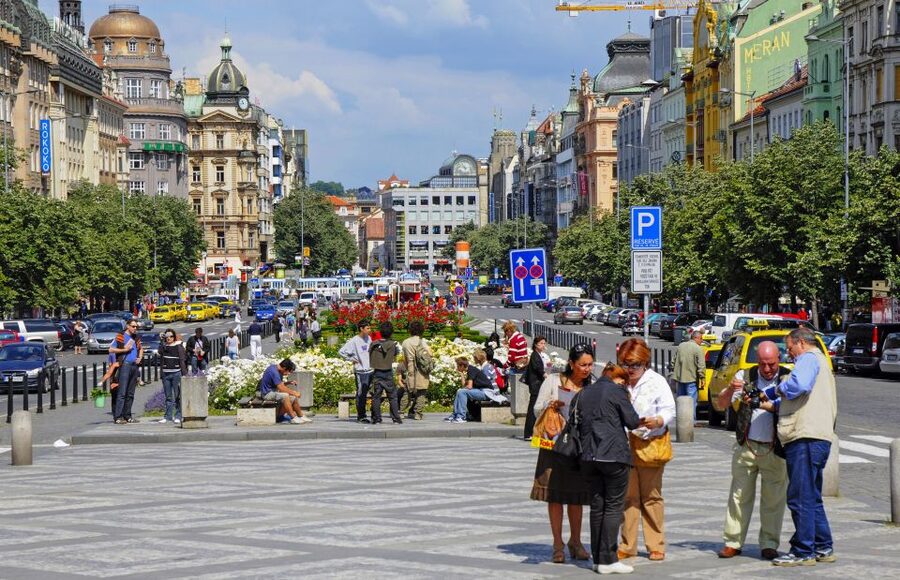
The walk continues to Republic Square before finishing in Prague. By this stage, the route has moved from the origins of Czechoslovakia through World War I, Nazi rule, postwar Communism, Soviet occupation, and the Velvet Revolution.
The final stop helps bring the different periods together. Prague’s modern identity did not come from one event. It was shaped by independence, occupation, ideological conflict, censorship, resistance, and eventual political change.
The route is central and gives you a useful orientation for later sightseeing. You cover Charles Bridge, Národní, New Town, Wenceslas Square, and Republic Square, so the tour also helps connect parts of the city you may otherwise visit separately.
Still, this is not a monument-by-monument city tour. The guide may point out locations associated with political events, but the main experience is listening and asking questions. If you want interiors, formal exhibits, or long stops for photographs, you will need to add those separately.
Adding the Museum of Communism
You can choose an option that includes entry to the Museum of Communism. A 10 percent discount coupon is also included for the museum, depending on how you book and which option you select.
The museum works best after the walking tour because you arrive with a basic timeline. You already understand the shift from wartime occupation to Communist rule, so displays about censorship, state power, and everyday life have a clearer place in the story.
Do not assume the museum will add a completely different experience. One person found its film repetitive after Dana’s clear explanations on the walk. That is a fair warning: the museum may repeat some of the same themes, especially if your guide has already provided a strong introduction.
I would choose the museum option if you want extra material and prefer to learn at your own pace. If your time in Prague is tight, the two-hour walk alone gives you a useful foundation. You can also use the 10 percent coupon later, if the booking terms for your selected option allow it.
What the $29 price gets you
At $29 per person, this is a reasonable purchase for a two-hour guided walk through central Prague. You are paying for a local guide who can organize a complicated century into a readable sequence, not for a long list of admissions or transport.
The value is strongest if you are new to Czech modern history. The tour covers enough ground to explain how Czechoslovakia came into being, why World War II followed the tensions of the earlier period, how Communism took hold, and how the country moved toward the Velvet Revolution.
The value is less clear if you want a full sightseeing tour. There is no promise of extensive interior access, and the route’s locations are mainly used as settings for explanation. You are buying historical context and conversation.
Guides have been praised for being friendly, energetic, and able to answer questions. Barbara was described as engaging, Martin as personable, Otakar as clear and well prepared, and Inna as especially strong when discussing the impact of World War II and Communism. Those individual guides shape the experience, so the quality may vary somewhat by departure.
The free cancellation policy allows cancellation up to 24 hours before the tour for a full refund. You can also reserve now and pay later, which is useful when your Prague schedule is still changing.
Languages, walking comfort, and who should book
Tours are offered in English, German, and Russian. Check the available time and language before booking, since the experience depends heavily on understanding the guide’s explanations.
Wear comfortable shoes. The tour lasts two hours and moves through central Prague on foot. No special equipment is needed, but you should be ready to walk and listen for most of the time.
I would recommend this tour if you:
- Want a clear introduction to Prague between World War I and the Velvet Revolution.
- Prefer political and social history over palace interiors and decorative architecture.
- Like asking questions and discussing how events affected ordinary life.
- Plan to visit the Museum of Communism and want a timeline first.
- Are curious about Jan Palach, censorship, the Soviet occupation, and the creation of Czechoslovakia.
I would think twice if you are traveling with very young children, dislike serious subjects, or want a tour built around constant visual attractions. Alcohol and drugs are not allowed, and the experience is plainly intended as a focused historical walk.
Should you book the Communists and World War II Tour?
Book it if you want Prague to make more sense beyond its medieval streets and famous churches. The route gives you a useful political map of the city, and the best guides turn difficult material into a clear discussion rather than a list of dates.
The main reason to choose it is the connection between place and event. You walk where Nazi power operated, stand near symbols of Communist rule, hear why Jan Palach acted, and follow the road to the Velvet Revolution. At $29, that is solid value for a two-hour introduction.
Skip it if your main goal is sightseeing with minimal narration. This is a serious, information-heavy tour. For the right audience, though, it gives you the background needed to see Prague as more than a beautiful old city.
FAQ
How long does the tour last?
The walking tour lasts two hours.
What is the price?
The listed price is $29 per person.
Where does the tour meet?
Meet in front of Charles Bridge at Křižovnické Square, next to the statue of Charles IV. The guide holds an orange umbrella.
Which public transport station is closest?
The closest tram or subway station is Staroměstská.
What languages are available?
The live tour guide is available in English, German, and Russian.
Is the Museum of Communism included?
Museum entry is included only if you select the option with the museum ticket. A 10 percent discount coupon for the museum is also included.
Can I cancel for a full refund?
Yes. You can cancel up to 24 hours in advance for a full refund.
What should I bring?
Bring comfortable shoes. Alcohol and drugs are not allowed.
Just added around Prague
- WWII and Communism History in Prague’s Old Town Private Tour★ 5.0 · 4 reviews
- World War II 4WD Tour from Prague with Lunch★ 4.4 · 3 reviews
- Prague: Historical Walking Tour with Focus on World War 2★ 4.3 · 12 reviews
- Unique salt cave in Prague★ 4.9 · 10 reviews
- Walking tour of Prague in French : Nové Město★ 4.9 · 16 reviews
- Walking tour of Prague in french: Old Town & Charles Bridge★ 4.9 · 62 reviews
- Prague: Market Tour and Traditional Czech Cooking Class★ 4.7 · 19 reviews
- Ultimate Unlimited Beer Pong with Czech Beer★ 4.6 · 5 reviews
Prague Communism History Tours, compared.
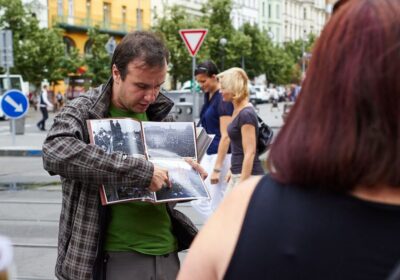
Communism History and Nuclear Bunker Guided Tour
Read our review →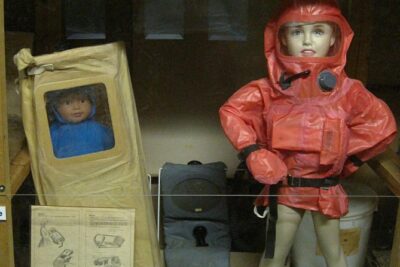
Prague Communism History and Nuclear Bunker Tour
Read our review →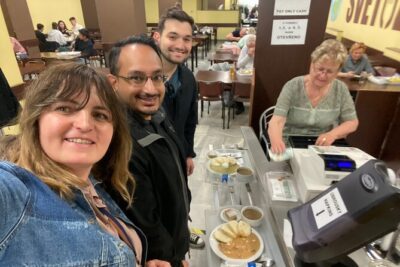
Communism & Nuclear Bunker Tour + 70s Canteen Lunch (own expense)
Read our review →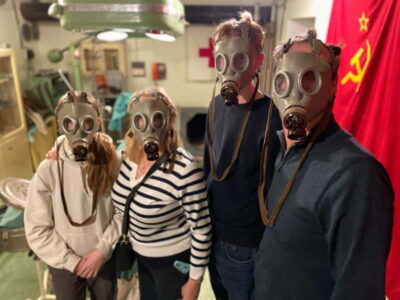
Communism and Bunker Tour with 70s Canteen Lunch
Read our review →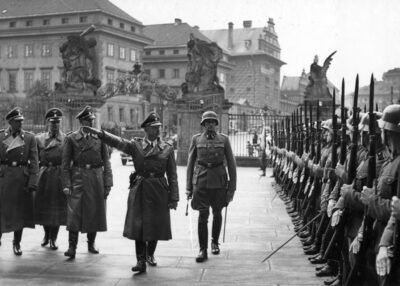
Second World War & Communism (Tip-based 3 hour tour)
Read our review →
Browse the lists this tour appears in