
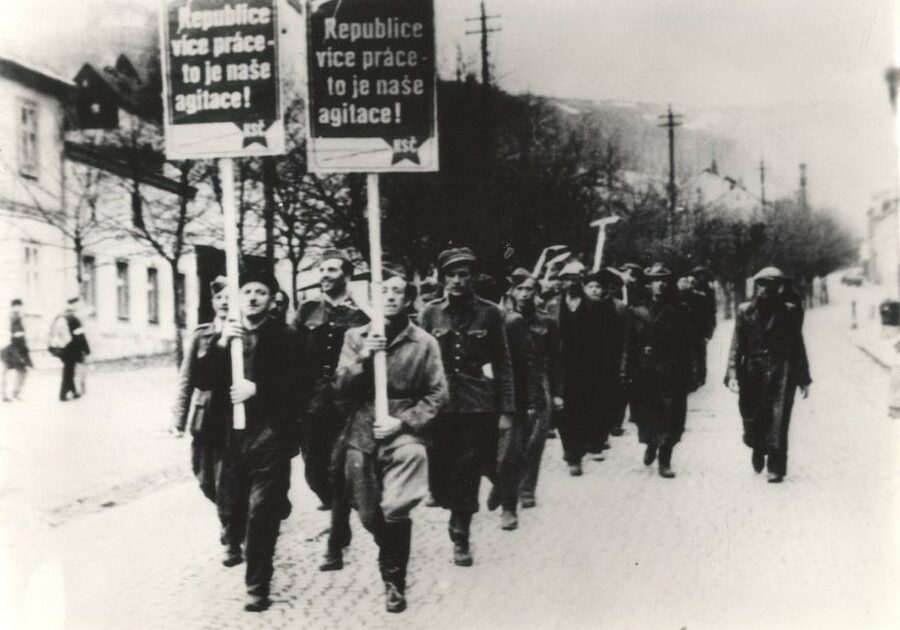
Reviewed · PRAGUE COMMUNISM HISTORY TOURS
Prague: 2-Hour Back to Communism Walking Tour
Prague’s communist past comes into sharp focus on this walking tour, which links ordinary streets with the former secret police headquarters, the site of Stalin’s statue, party offices, and places marked by protest and Soviet occupation. A local guide who lived through the period adds personal detail that a textbook cannot.
I like the firsthand local stories and the chance to discuss both the benefits and harms of socialism rather than hearing a one-sided lecture. I also like the compact route: in about two hours, you cover major political turning points without giving up a full day of sightseeing.
The main caution is the uneven guide experience. Most feedback praises the clear, interesting storytelling, but one German-language booking found the guide’s German weak, and another suffered when the guide spent too much time on phone messages. Check your language needs carefully.
Key points to know before you book
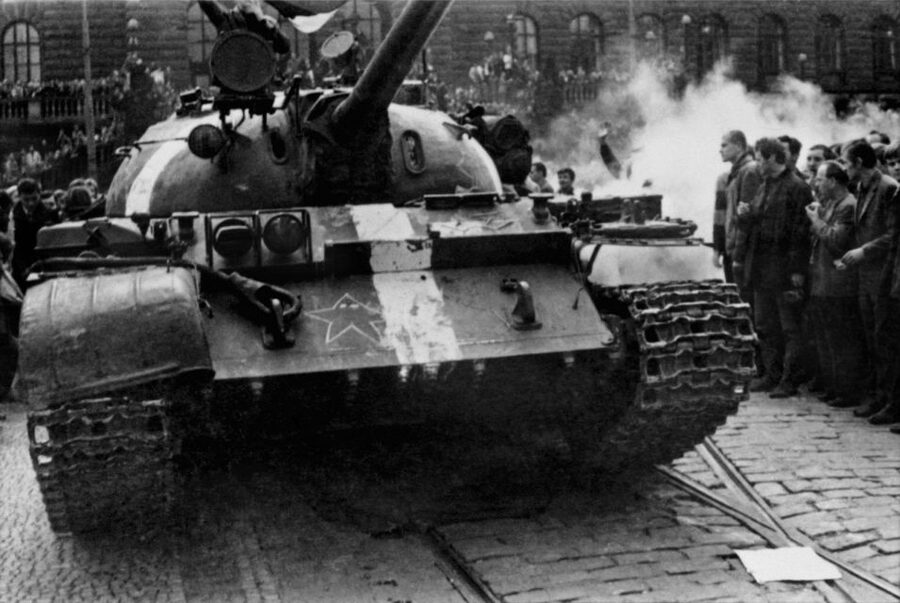
- Former secret police headquarters: See a place tied to surveillance and political control.
- Stalin’s former statue site: Learn how Prague’s public spaces reflected Soviet power.
- Firsthand Cold War perspective: Your guide lived through the communist period and can explain daily life.
- Politics beyond slogans: Hear about party leadership, protests, rebellion, revolution, and occupation.
- A focused two-hour walk: The tour gives you a useful framework without taking over your day.
- Private groups are available: A private booking may suit you if you want more time for questions.
Why Prague’s communist past needs a walking tour
Prague is easy to admire as a city of castles, church towers, and handsome squares. That familiar picture leaves out the decades when Czechoslovakia sat inside the Soviet sphere, and when public life was shaped by one-party rule, surveillance, censorship, shortages, and fear of political change.
This tour puts those years back into the city. You are not only hearing dates and names. You are standing in places connected with the Communist Party, the secret police, public demonstrations, failed resistance, rebellion, revolution, and the Soviet occupation.
That physical setting matters. A classroom discussion can explain how communism spread through Central and Eastern Europe after the Second World War. A walk shows how that system occupied real offices, streets, squares, and public monuments.
The tour begins with an introduction to the theory and development of socialism and communism. It traces the rise of these ideas in the 19th century before turning to their spread across Central and Eastern Europe. That opening gives you a basic political map before the walk gets more specific.
You do not need a background in Czech politics to follow it. The guide is expected to explain the major personalities, dates, and turning points in plain terms. Questions and discussion are welcome, which is useful because this subject rarely fits neatly into a simple good-versus-bad story.
More communism history tours in Prague:
- Prague: Communism History and Nuclear Bunker Guided Tour
★ 4.7 · 2,417 reviews - Prague Communism History and Nuclear Bunker Tour
★ 5.0 · 1,742 reviews - Communism & Nuclear Bunker Tour + 70s Canteen Lunch (own expense)
★ 5.0 · 1,036 reviews
Starting at Na Příkopě 28 or Na Příkopě 864
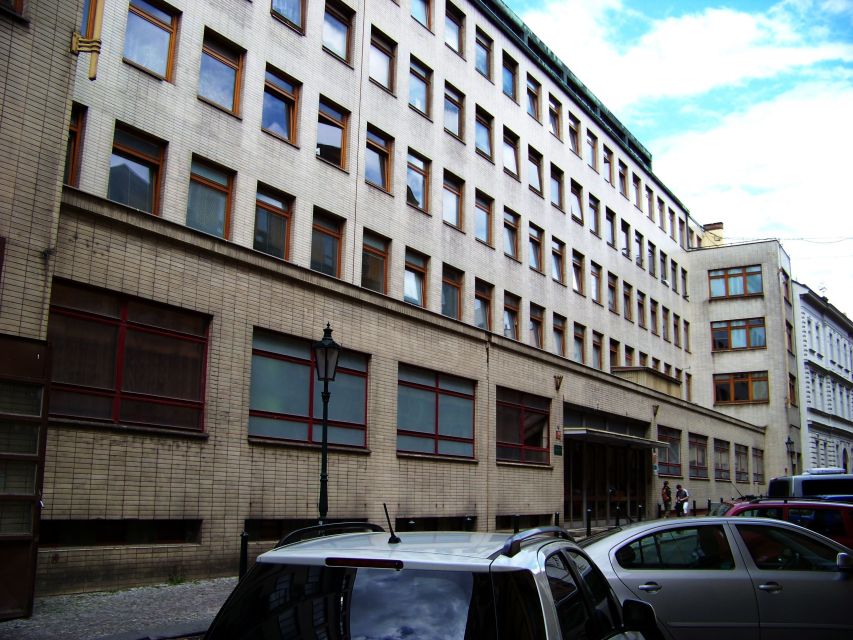
You may be offered one of two starting points on Na Příkopě: number 28 or number 864. The exact meeting place depends on the option you book, so check your confirmation rather than assuming every departure begins at the same spot.
This part of central Prague is practical for a walking activity, but the two addresses make it important to arrive with the correct instructions. The tour does not include luggage storage, and large bags are not allowed. Bring a passport or identification card, as requested for the activity.
The listed duration is one to two hours, with the actual walk described as approximately two hours. That makes it easy to fit between other central Prague plans. You will want comfortable shoes, even though the walk is not presented as a strenuous hike.
The tour is wheelchair accessible. A private group can also be arranged, which may help you set the pace and ask more questions. If you book a shared departure and no other participants join, you might receive a private-style experience at the group price, as happened on one booking.
The former secret police headquarters
One of the most important stops is the former headquarters of the communist secret police. This is where the tour moves from political theory to the machinery of daily control.
The secret police were not simply another government department. Their presence affected what people said, whom they trusted, and how openly they discussed politics. A local guide can explain how surveillance and pressure worked in ordinary life, rather than leaving you with only an abstract description of state security.
The building itself is part of the lesson. You do not need dramatic displays for the location to carry weight. Knowing what took place there changes how you see an otherwise ordinary piece of Prague.
The tour does not promise an interior visit, so expect to learn about the site from outside and from the guide’s explanation. That is worth keeping in mind if you want museum exhibits or original rooms. This is a street-based history tour, built around places and conversation.
Stalin’s former monument and the public face of power
The route also reaches the former location of Prague’s Stalin statue. The monument is no longer there, but its former site still helps explain how Soviet influence was presented in public.
A large political statue is never just decoration. It tells people who holds power and which version of history is meant to dominate public space. The former monument site gives the guide a clear way to discuss the relationship between Czechoslovakia and the Soviet Union.
This stop should appeal to you if you like seeing how politics shapes cities. It is less about viewing a surviving object and more about understanding what once occupied the space, why it mattered, and what its removal represented.
Because the statue is gone, do not expect a preserved monument or a major photo stop. Its value comes from the explanation and the setting. The guide’s storytelling is especially important here.
More walking tours in Prague:
- Prague: 3-Hour Walking Tour of Old Town & Prague Castle
★ 4.7 · 5,696 reviews - Prague: Ghost Walking Tour Where Legends Come To Life
★ 4.4 · 5,253 reviews - Prague: Jewish Quarter Walking Tour with Admission Tickets
★ 4.7 · 3,729 reviews - Prague Guided Walking Tour and Cruise with Authentic Czech Lunch
★ 5.0 · 3,627 reviews
Communist Party offices and the structure of power
The tour includes the current and former seats of the Communist Party. These locations help connect national events with the people and institutions that directed them.
You will hear about key figures and milestones, but the larger point is how power operated. Party offices were not just administrative workplaces. They represented the system’s control over public life and its claim to speak for the country.
This is also where the tour can move beyond the familiar image of communism as something imposed from outside. The history includes local political structures, local decisions, and local responses. The guide is expected to explain how Czechoslovakia functioned within the Soviet-led order.
If you prefer buildings with grand interiors or formal museum displays, these stops may feel understated. The appeal lies in the political context. You are using the city itself as the exhibit, with the guide filling in what cannot be seen from the pavement.
Protest, rebellion, revolution, and Soviet occupation
The walk visits places linked with protests, demonstrations, rebellions, revolutions, and the Soviet occupation. This gives the tour a human scale. Political change did not happen only in offices. It also appeared when people gathered, resisted, protested, or faced military force.
The guide can connect those moments to the wider Cold War. You will learn how Soviet influence affected Central and Eastern Europe after the Second World War, with Prague as the main case study.
Expect the route to discuss several different kinds of public action. Some events may represent open protest. Others may involve rebellion, political upheaval, or the public response to occupation. The activity description does not promise a single named event at each stop, so the guide’s explanation will shape how much detail you receive.
Some locations still carry a sense of sadness, according to the tour description. That mood may be part of the experience. Prague’s communist past is not presented as a tidy story that ends with a convenient lesson. The walk asks you to look at fear, control, resistance, and change together.
What daily life was like under communism
The strongest part of this activity may be its attention to ordinary life. The guides are local people who lived through the Cold War period, and they describe how daily routines looked under the system.
You can ask about the practical side of life, not only party leaders and official dates. The tour promises discussion of both advantages and disadvantages, which gives you room to hear why some people valued aspects of the system while others suffered under it.
That balance does not mean every part of the period deserves equal weight. It does mean you get a more useful account than a simple political slogan. A guide who experienced the era can explain how official ideals compared with lived reality.
This personal angle is one reason the tour received strong praise for its interesting and educational storytelling. One Italian participant highlighted the guide’s detailed grasp of the subject and unusual anecdotes. Another participant called the perspective informative and unique.
At the same time, personal storytelling depends heavily on the individual guide. One booking was weakened by constant phone use and a persistent cough. That is not a criticism of the subject itself, but it is a reminder that the quality of a walking tour can change from one departure to another.
Language, guide quality, and the role of questions
The activity is offered in Czech, English, and German. English appears to be the safer choice if you want the broadest comfort, while German-language ability may vary. One German-language booking specifically called for stronger German skills.
The guide is the heart of this experience. The tour covers theory, political structures, important figures, dates, daily life, and personal memory in a short time. Clear delivery matters as much as the route.
I would use the question period well. Ask how ordinary people experienced the system, how Soviet occupation affected Prague, or why particular public places became sites of protest. The activity welcomes questions, and this is where a standard route can become a useful conversation.
You should also be prepared for a lecture-heavy walk. The tour description places strong emphasis on explanation, and some participants found the storytelling very interesting. If you want a walk that is mostly visual sightseeing with only brief commentary, this may feel too serious.
Is $50 good value for two hours?
At about $50 per person, this is not the cheapest way to walk through central Prague. The value depends on what you want from the experience.
You are paying for a specialist subject, a local guide, and a route tied to difficult political history. If you tried to build the same walk alone, you could find the locations, but you would miss the connections between them. The guide’s firsthand perspective is the part that justifies the price.
The cost also makes more sense if you are short on time. Two hours gives you a focused introduction before you return to Prague’s other sights. You do not need to spend a whole day in a museum to gain a basic understanding of the communist period.
The value drops if you expect extensive access to buildings, a large number of preserved artifacts, or a fully polished performance in your chosen language. The route is mainly about outdoor locations and spoken explanation.
A private group is available. That can be worthwhile if you want to set the pace, ask many questions, or keep the discussion focused on a particular part of Czech or Soviet history. It may also be a good option for families or small groups with different levels of background knowledge.
Who will enjoy this Prague walk?
I would recommend it to you if you want history tied to real places. It is especially useful after you have seen Prague’s famous medieval and imperial sights and want to understand the city’s 20th-century experience.
It suits visitors interested in:
- Cold War politics and Soviet influence
- Local accounts of life under communism
- Public protest and political change
- Prague’s less familiar landmarks
- Short, focused walks with plenty of explanation
You may want to skip it if you are looking for light entertainment, panoramic views, or a fast introduction with little discussion. The topic is serious, and the route depends on listening.
It is also a good choice for repeat visitors. If you have already seen Prague Castle, the Old Town, and the main squares, this walk can show you a different side of the city without requiring a long journey outside the center.
Should you book the Back to Communism walk?
Book it if you want a compact, place-based introduction to Prague under communist rule and value a guide who can explain the period from personal experience. The former secret police headquarters, Stalin’s former statue site, party offices, and protest locations give the walk a clear purpose.
I would book in English unless you have confirmed strong German or Czech service for your date. I would also arrive ready to listen, ask questions, and accept that some stops are meaningful because of what once happened there, not because there is a large attraction to enter.
The tour is best for curious visitors who want context, not just photographs. At $50, it is a fair buy when the guide is engaged and the group is small. Its main weakness is the dependence on guide quality, but the subject and route make it a worthwhile addition to a Prague visit focused on modern European history.
FAQ
How long does the Back to Communism walking tour last?
The activity is described as lasting approximately two hours. Availability can show starting times within a stated duration range of one to two hours.
Where does the tour begin?
There are two possible starting locations on Na Příkopě: Na Příkopě 28 and Na Příkopě 864. The exact meeting point depends on the option you book.
What languages are available?
The tour is offered in Czech, English, and German.
Does the guide have personal experience of the communist period?
The local guides are described as Cold War survivors who lived through the era. They explain both political events and everyday life.
Which places connected with communism will I see?
The route includes the former secret communist police headquarters, the former site of the Stalin statue, current and former Communist Party seats, and places linked with protests, demonstrations, rebellions, revolutions, and Soviet occupation.
Is the tour suitable for wheelchair users?
Yes. The activity is listed as wheelchair accessible.
Can I book a private group?
Yes. A private group option is available.
What should I bring?
Bring a passport or identification card. Comfortable footwear is sensible for a walking tour.
Can I bring luggage or a large bag?
No. Luggage and large bags are not allowed on the tour.
More 2-Hour Experiences in Prague
- Prague: Pub Crawl with 2-Hour Open Bar at Drunken Monkey
★ 3.9 · 670 reviews - Prague Castle & Castle District: 2-Hour Guided Tour
★ 4.6 · 622 reviews - Prague Boats 2-hour Lunch Cruise
★ 4.0 · 352 reviews - 2-Hour Old Town and Jewish Quarter Tour in Prague
★ 5.0 · 310 reviews
Just added around Prague
- Prague: Historical Walking Tour with Focus on World War 2★ 4.3 · 12 reviews
- WWII and Communism History in Prague’s Old Town Private Tour★ 5.0 · 4 reviews
- World War II 4WD Tour from Prague with Lunch★ 4.4 · 3 reviews
- Unique salt cave in Prague★ 4.9 · 10 reviews
- Walking tour of Prague in French : Nové Město★ 4.9 · 16 reviews
- Walking tour of Prague in french: Old Town & Charles Bridge★ 4.9 · 62 reviews
- Ultimate Unlimited Beer Pong with Czech Beer★ 4.6 · 5 reviews
- Prague: Market Tour and Traditional Czech Cooking Class★ 4.7 · 19 reviews
Prague Communism History Tours, compared.
Communism History and Nuclear Bunker Guided Tour
Read our review →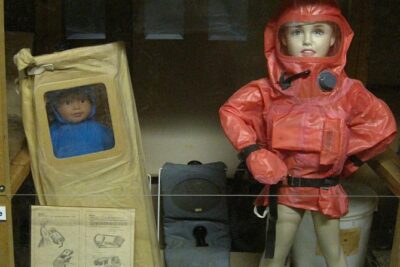
Prague Communism History and Nuclear Bunker Tour
Read our review →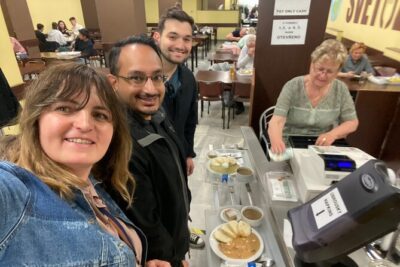
Communism & Nuclear Bunker Tour + 70s Canteen Lunch (own expense)
Read our review →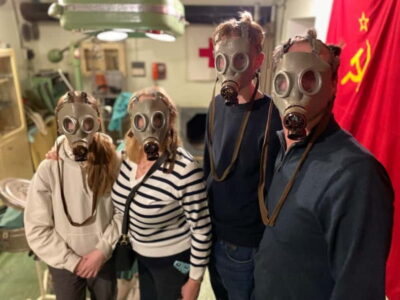
Communism and Bunker Tour with 70s Canteen Lunch
Read our review →
Second World War & Communism (Tip-based 3 hour tour)
Read our review →Browse the lists this tour appears in