
Reviewed · PRAGUE WORLD WAR II TOURS
WWII in Prague Tour & The Crypt of Operation Anthropoid
Operation Anthropoid is the heart of this Prague tour. You follow the story of the Czech and Slovak paratroopers who assassinated Reinhard Heydrich, then made their final stand beneath Saints Cyril and Methodius Cathedral. The bullet-scarred crypt gives the history a weight that no classroom can match.
I like the blend of walking, public transit, photographs, and original artifacts. I also like the small-group format, with no more than 20 people, and guides such as Hanna, Pavel, George, and Anna who bring strong personal interest to the subject. The main caution is pace: the tour is advertised at two to three hours, but some departures run closer to three and a half, with a lot of standing and walking.
Key points at a glance
- The crypt is the emotional centerpiece: See the place where the paratroopers made their last stand beneath the cathedral.
- The story begins before Operation Anthropoid: You get background on the creation of Czechoslovakia, Nazi rule, and the Czech resistance.
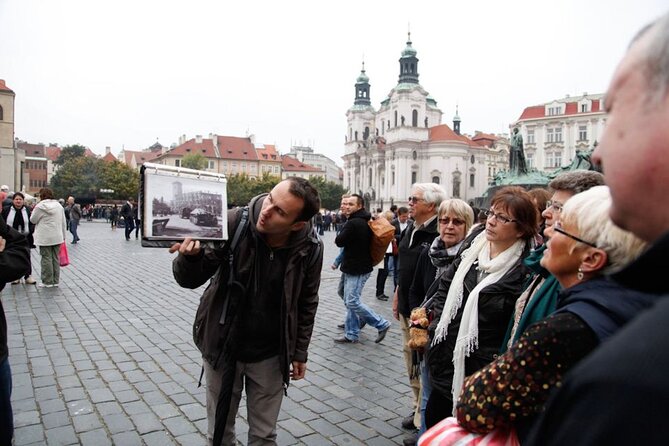
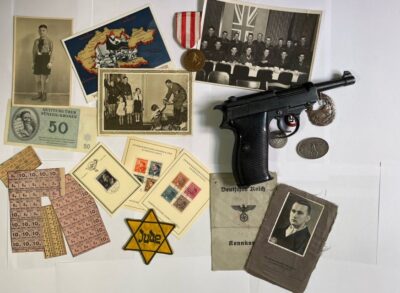
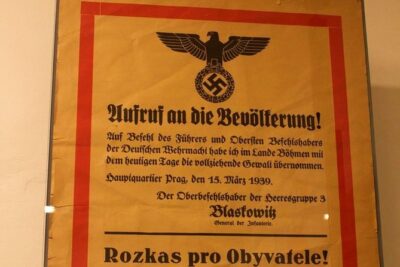
- Photos and artifacts add useful context: The guide uses visual material to connect ordinary streets with wartime events.
- A medieval shelter is part of the route: Enter an underground space used during Prague’s 1944 air raids.
- Public transit is included: The route uses walking and city transport, so wear comfortable shoes and stay near the group.
- This is serious, detailed history: It suits people who want more than a quick introduction to Prague during World War II.
Why Operation Anthropoid matters in Prague
Many people arrive in Prague knowing little about Operation Anthropoid. This tour fixes that quickly, but it does not treat the event as an isolated military episode.
The guide first sets up the political story around the creation of Czechoslovakia and the country’s place in Europe before the war. That background matters. Without it, the later events can feel like a string of names and dates. With it, you begin to understand why the resistance operated under such terrible pressure and why the assassination of Heydrich carried enormous risk.
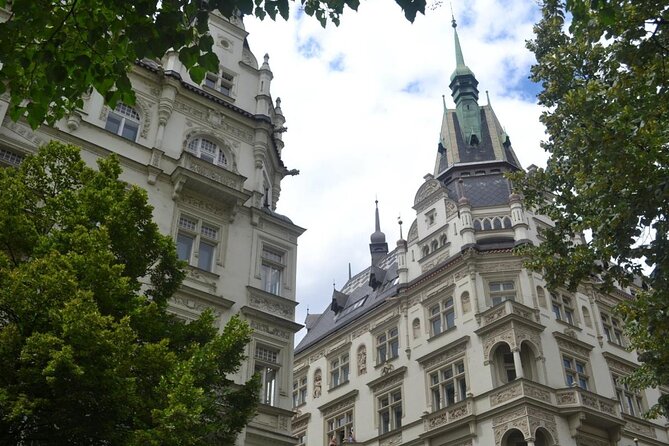
The tour also places the resistance inside the city itself. Safe locations, former offices, memorials, and ordinary streets become part of the account. You are not simply being told what happened in Prague. You are shown how wartime power and resistance occupied the same compact city.
The guides generally handle the subject with care. Hanna is praised for combining humor with a very dark chapter of history, while Pavel, George, Paul, and Anna are noted for clear explanations and strong command of the material. Guide quality can vary on any departure, but the strongest guides do more than recite facts. They explain why each location matters and answer questions as the story develops.
More World War II tours in Prague:
- Prague: WWII Guided Tour & The Crypt of Operation Anthropoid
★ 4.7 · 1,030 reviews - Small-Group World War 2 & Operation Anthropoid Tour in Prague
★ 5.0 · 231 reviews - Prague: World War 2 and Operation Anthropoid Walking Tour
★ 4.8 · 193 reviews
Starting at the Powder Tower
The meeting point is in front of the Powder Tower, a convenient spot in central Prague. It is also a noisy one. The opening explanation about the start of the war and the city’s earlier political history can be hard to hear if the group is spread out or nearby crowds are loud.
I would arrive early and position myself close to the guide. This is especially important at the beginning, when the historical framework is laid out. If you miss that part, later references to Czechoslovakia, Germany, the Nazi administration, and the resistance may be harder to follow.
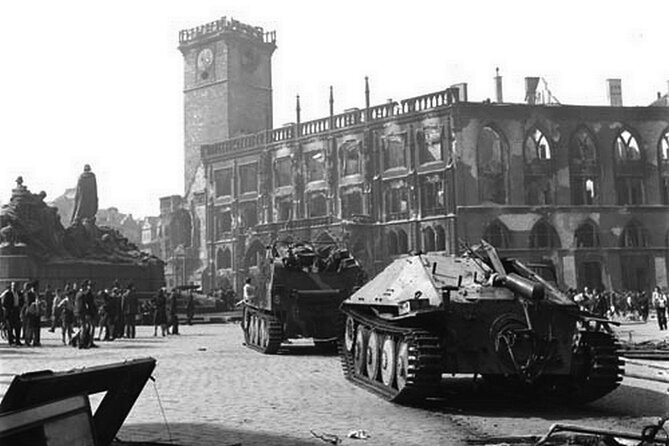
From the Powder Tower, the route moves through central Prague on foot. You may pass the former NSDAP headquarters, see Prague Uprising memorials, and visit places connected with the Czech national resistance. The walk is not simply sightseeing between indoor stops. Streets, buildings, and memorials help show how the city functioned during occupation and revolt.
One stop concerns a secret resistance flat. The details provided for the tour do not promise a full interior visit at every location, so expect the guide to explain the site and its importance rather than assume you will enter each building. The same applies to some memorials and former headquarters. Their value comes from the story attached to them.
Photos, archives, and the Jewish Quarter
The route includes the Jewish Quarter, along with archive photographs showing Prague before, during, and after the war. One example involves a hall and clock seen through old images and compared with what remains today.
This part can be particularly useful if you pay attention to changes in the city. A photograph gives you a direct way to compare a street or building with its wartime appearance. The city may look calm now, but the images help reveal the damage, political change, and human loss behind that calm.
The tour also connects the Nazi occupation with the broader experience of Prague’s Jewish population. The available details do not indicate a separate museum admission or a long visit inside the Jewish Museum complex, so do not book this as a substitute for a full Jewish Quarter museum tour. It is a wartime city walk with a Jewish Quarter component, not a dedicated museum circuit.
Some guides use a large number of photographs and documents. That can be excellent when the material is explained clearly. It can feel slow if you prefer a moving walking tour with little time seated. One departure included a long pub stop of roughly 45 minutes for viewing photos and documents. That may be useful for a serious student of the subject, but it can feel like lost sightseeing time if you expected constant movement.
The medieval shelter beneath Dům pánů z Kunštátu
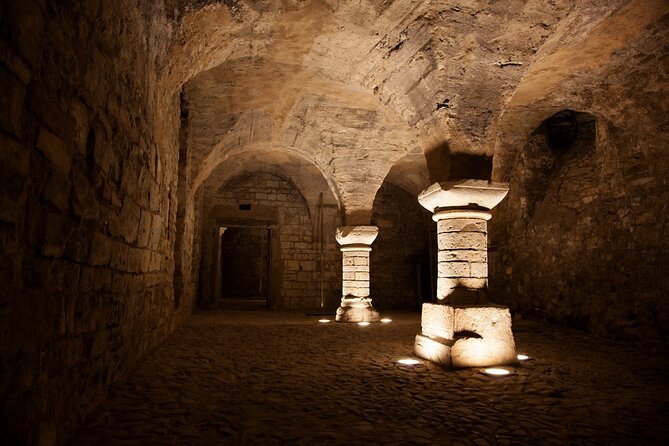
The first named indoor stop is Dům pánů z Kunštátu a Poděbrad, a medieval underground space used as an air raid shelter during the bombing of Prague in 1944.
You spend about 20 minutes here, and admission is included. The location works well because it brings the war down to a human scale. Instead of thinking only about generals, governments, and military operations, you see where people sought protection during air raids.
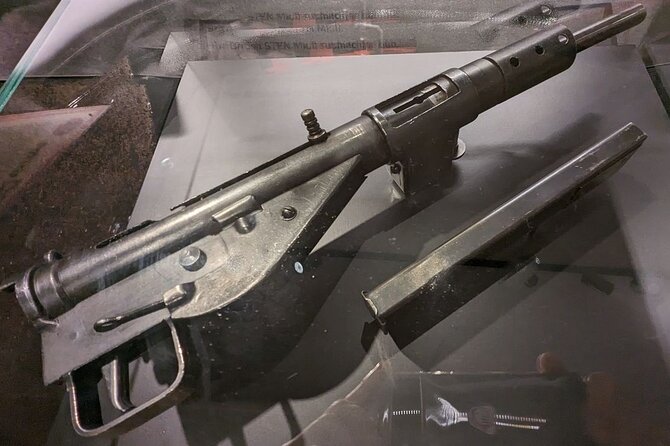
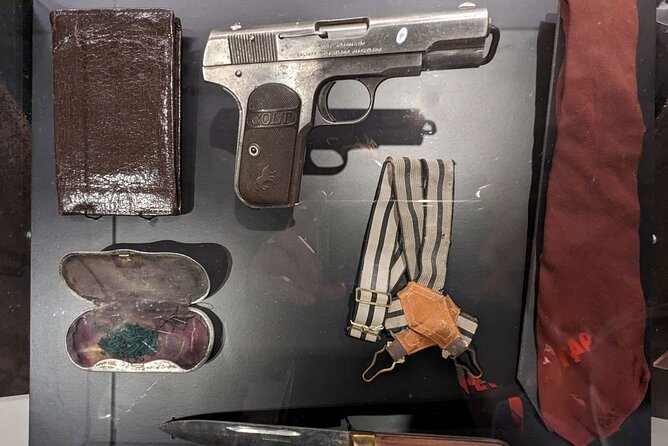
A private collection of World War II artifacts adds another layer. The available information does not list every object, so I would expect a compact collection rather than a large museum. Its strength is the setting and the guide’s explanation, particularly when an object is tied to the people and events already discussed.
The underground space may also be one of the more physically demanding parts of the visit. Expect stairs and time on your feet. The tour is not described as wheelchair accessible, and the overall route includes stairs, walking, and public transit. Most people can take part, but anyone with mobility concerns should ask the provider before booking.
Same city, a completely different afternoon:
- Prague: 50-Minute Sightseeing Evening Cruise
★ 4.2 · 33,780 reviews - Prague: Medieval Dinner with Unlimited Drinks
★ 4.4 · 19,847 reviews - Prague: Skip-the-line Castle Ticket and Optional AudioGuide
★ 4.3 · 11,121 reviews - Prague: Castle Tour with Local Guide and Entry Ticket
★ 4.6 · 10,422 reviews
Reaching Saints Cyril and Methodius Cathedral
The route continues by foot and included public transport toward Saints Cyril and Methodius Cathedral. The transport makes sense: Prague is easy to cross by tram or other city services, but walking the whole route would add time and fatigue.
The guide provides the transit tickets, so you do not need to work out the fare system during the tour. Still, stay organized. One departure had a problem when a participant did not receive a ticket, forcing the group to use a paid ride back. Before leaving the starting area, check that you have your ticket if the guide is handing them out individually.
The cathedral is the key destination. The paratroopers connected with Operation Anthropoid hid here after the assassination of Heydrich. The church and its underground spaces became the scene of their last battle.
The above-ground cathedral visit is brief, listed at about 10 minutes. That may feel short if you want time to study the architecture or sit quietly. The focus is not a general church tour. It is the building’s connection to the resistance and the events that followed the assassination.
Entering the National Memorial to the Heroes of the Heydrich Terror
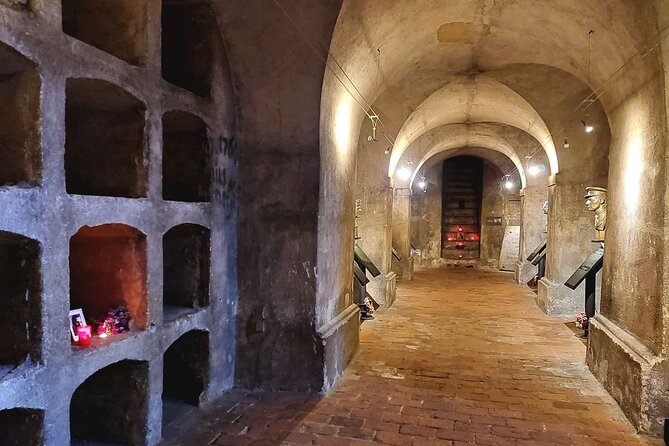
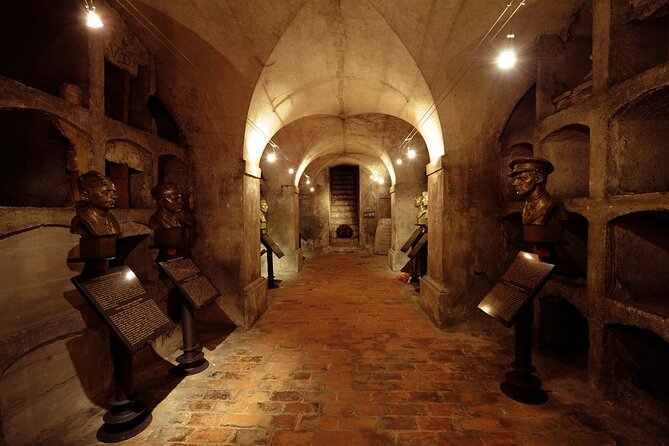
The final stop is the National Memorial to the Heroes of the Heydrich Terror beneath the cathedral. Admission is free, and this is where the tour reaches its emotional peak.
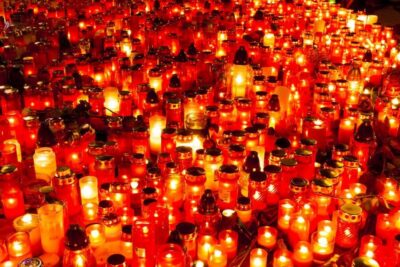
You enter the crypt and the small Operation Anthropoid museum. The space preserves the location of the paratroopers’ final battle. Bullet holes in the walls and the narrow passage connected with their attempted escape make the event feel immediate. You are standing in a confined place where people were trapped, exhausted, and fighting against overwhelming force.
The crypt is not a light or easy stop. The guide may explain the last hours in detail, including the resistance members who helped the paratroopers and the brutal consequences that followed. For many people, the room is deeply moving. If you find wartime violence difficult, you can choose not to enter the crypt.
Free English-language booklets are available at the memorial, which is helpful if you want to read more after the tour. The museum is not large, but its size suits the subject. A vast exhibition might create distance. Here, the cramped setting keeps your attention on the people and decisions involved.
The official end point is at Resslova 9, at the National Memorial. This is useful because you finish in a central part of Prague rather than being returned to the Powder Tower. Plan your next stop from there.
How long the tour really takes
The stated duration is about two to three hours. In practice, you should allow three hours and possibly more. A detailed departure lasted three and a half hours, while another ran just over three.
The variation likely comes from group size, guide style, questions, time spent with artifacts, and the length of any seated document presentation. The strongest guides can make the added time worthwhile, especially if you want a serious account of the resistance. If you have a lunch reservation, train departure, or timed museum ticket afterward, leave a generous buffer.
There may not be a bathroom break until late in the tour. Use facilities before meeting the group. You should also wear shoes suited to pavement, stairs, underground rooms, and several hours on your feet.
The maximum group size is 20 people. That is not a private tour, but it is small enough to keep the group together more easily than a large coach outing. The downside is that hearing the guide can still be difficult at the Powder Tower or while walking. Stay near the front and speak up if you cannot hear.
Is the $43.53 price good value?
At $43.53 per person, the tour is priced above a simple city walk but below a private history guide. The value comes from the combination of a specialist subject, included public transport, the underground shelter, the artifact collection, and entry to the memorial spaces.
The crypt and memorial are free to enter, so you are mainly paying for the guide, organization, transport tickets, and the connected route through Prague. That is worthwhile if you want the historical links explained as you move through the city. It is less attractive if you only want to see the cathedral and crypt, since you could visit the memorial separately.
I would also factor in the time. A two-hour tour at this price feels reasonable. A three-and-a-half-hour version offers more teaching but demands more energy. The price is strongest for people who already know they want a detailed World War II experience and will use the guide’s context.
The tour is often booked about 24 days ahead, which suggests you should not leave it until the final morning of a short Prague stay. That is practical planning rather than a promise that every date sells out. Check the available departure time and reserve early if the crypt is a priority.
Who should book this Prague WWII tour?
I would choose this tour if you have a strong interest in World War II, resistance movements, Czech history, or the moral choices made under occupation. It also suits anyone who likes seeing places that are easy to miss on a standard Prague sightseeing route.
You do not need to be a specialist, but some basic knowledge of World War II will help. The tour can move beyond the simplest introduction, covering Czechoslovakia, Germany, the Nazi administration, the resistance, and the aftermath of Operation Anthropoid.
I would be more cautious if you want a relaxed stroll, a short visit, or broad coverage of Prague’s main sights. The subject is serious, the walking can be tiring, and the guide may spend a long time on documents and background.
English is the only listed language. Most people can participate, and service animals are allowed. A slight language barrier has occasionally made a detailed explanation harder to follow, so sitting or walking close to the guide is sensible.
Final call: a moving history tour with a demanding pace
Book it if the story of Operation Anthropoid interests you and you want to understand it through the actual streets, shelters, memorials, and cathedral crypt connected with the events. The final stop is powerful, and the best guides, including Hanna, Pavel, George, and Anna, add detail, feeling, and useful answers to questions.
Skip it if you need a tightly timed two-hour activity or prefer a lighter introduction to Prague. The tour can run long, and the mix of walking, stairs, transit, and a possible extended artifact session requires stamina.
For the right audience, the $43.53 cost is fair. You finish with more than a list of wartime facts. You leave with a clearer sense of how Prague’s resistance operated, what Operation Anthropoid demanded from the people involved, and why the crypt remains one of the city’s most important historical places.
FAQ
Where does the WWII in Prague tour begin?
The tour begins in front of the Powder Tower in central Prague, at Powder Gate, 110 00 Praha 1.
Where does the tour end?
It ends at the National Memorial to the Heroes of the Heydrich Terror, at Resslova 9, 120 00 Praha 2-Nové Město.
How long does the tour last?
The listed duration is approximately two to three hours. Some departures can last closer to three and a half hours, depending on the guide, questions, walking pace, and time spent with documents and artifacts.
Is public transportation included?
Yes. The tour uses walking and public transportation, and transit tickets are included.
What is the maximum group size?
The group can include up to 20 people. It is described as a small-group tour.
Does the tour enter the Operation Anthropoid crypt?
Yes. The tour enters the crypt and museum beneath Saints Cyril and Methodius Cathedral. You can choose not to enter the crypt if the subject or setting feels too difficult.
Is admission to the main stops included?
Admission to Dům pánů z Kunštátu a Poděbrad is included. Entry to Saints Cyril and Methodius Cathedral and the National Memorial to the Heroes of the Heydrich Terror is listed as free.
Can I cancel for a full refund?
Yes. You can cancel at least 24 hours before the local start time for a full refund. Cancellations or changes made less than 24 hours before the start time are not refunded.
Just added around Prague
- WWII and Communism History in Prague’s Old Town Private Tour★ 5.0 · 4 reviews
- World War II 4WD Tour from Prague with Lunch★ 4.4 · 3 reviews
- Prague: Historical Walking Tour with Focus on World War 2★ 4.3 · 12 reviews
- Unique salt cave in Prague★ 4.9 · 10 reviews
- Walking tour of Prague in French : Nové Město★ 4.9 · 16 reviews
- Walking tour of Prague in french: Old Town & Charles Bridge★ 4.9 · 62 reviews
- Prague: Market Tour and Traditional Czech Cooking Class★ 4.7 · 19 reviews
- Ultimate Unlimited Beer Pong with Czech Beer★ 4.6 · 5 reviews
Prague World War II Tours, compared.
WWII Guided Tour & The Crypt of Operation Anthropoid
Read our review →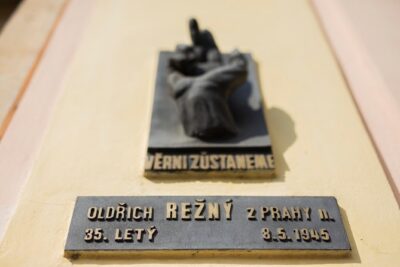
Small-Group World War 2 & Operation Anthropoid Tour in Prague
Read our review →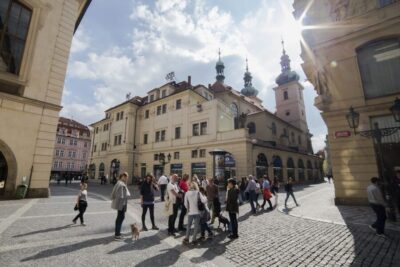
World War 2 and Operation Anthropoid Walking Tour
Read our review →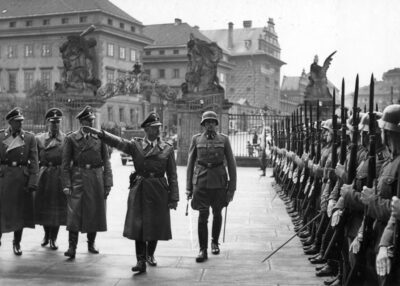
Second World War & Communism (Tip-based 3 hour tour)
Read our review →Browse the lists this tour appears in