
Reviewed · PRAGUE COMMUNISM HISTORY TOURS
Prague Cold War Walking Tour
Prague’s Communist past is easiest to grasp when you see where it happened. This three-hour walk links Cold War shelters, propaganda spaces, Klement Gottwald’s former mausoleum, the old Stalin site, the Lennon Wall, and Wenceslas Square, where the Velvet Revolution caught fire.
I like the small group of no more than eight, which leaves room for real questions. I also like the historian-led approach, especially for a subject that can quickly become a blur of dates and party names. The main drawback is the steep 20 to 30 minute climb to Vitkov Hill, so this is not a gentle stroll.
Key points at a glance
- See the former mausoleum of Klement Gottwald, including the adjoining embalming laboratory.
- Walk past Cold War nuclear-shelter access doors in the Karlin-Zizkov pedestrian tunnel.
- Climb Vitkov Hill to the enormous Jan Zizka equestrian statue and the National Monument.
- Connect the old regime with modern protest at the Lennon Wall and Wenceslas Square.
- Ride public trams with tickets included, while food, drinks, and hotel transfers are not.
- Choose a morning or afternoon departure, with a maximum group size of eight.
Why this Prague Communist tour is worth your time
Many Prague walks stay with castles, churches, and old-town streets. This one asks a different question: how did a modern political system shape the city, and where can you still see its fingerprints?
The route gives you physical evidence rather than only a classroom lecture. You see the doors to Cold War shelter corridors, the ceremonial spaces built around Soviet influence, the place where Gottwald’s body was displayed, and the public squares tied to political protest. That makes the subject easier to follow, even if you do not arrive knowing much about Czechoslovak politics.
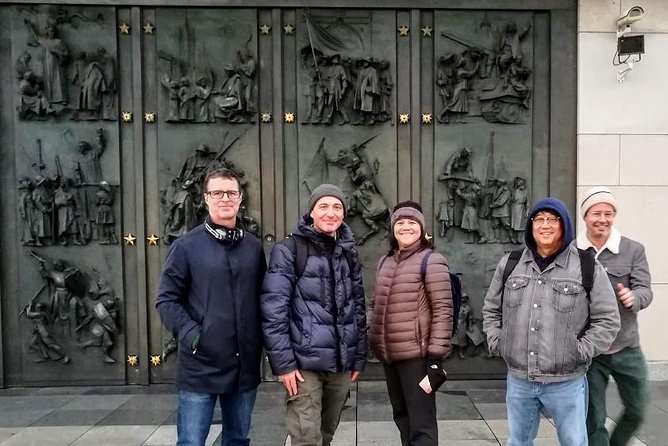
The guide’s role matters here. The tour is offered with a historian, and the small group format should make it easier to pause over difficult subjects such as Communist propaganda, Czech nationalism, Soviet power, and the difference between official ceremony and private life. One named guide connected with the experience is Vadim, whose approach was praised for giving a sophisticated discussion of Communism in the Czech lands.
You should expect interpretation rather than theatrical entertainment. This is a good match if you want political history explained beside the places where it unfolded. It is less suitable if you want a relaxed sightseeing walk with little uphill movement.
More communism history tours in Prague:
- Prague: Communism History and Nuclear Bunker Guided Tour
★ 4.7 · 2,417 reviews - Prague Communism History and Nuclear Bunker Tour
★ 5.0 · 1,742 reviews - Communism & Nuclear Bunker Tour + 70s Canteen Lunch (own expense)
★ 5.0 · 1,036 reviews
The Karlin-Zizkov tunnel and its Cold War secrets
The walk begins in central Prague, with the published meeting point at Náměstí Republiky 1077/2. The tour description also identifies St. Joseph Church as the starting place, so I would check the final confirmation carefully for the exact rendezvous point.
From there, the route reaches the pedestrian tunnel between Karlin and Zizkov. The tunnel itself is useful in a practical way, but the telling detail is behind the locked doors: corridors connected with nuclear bomb shelters built during the Cold War and still maintained.
You do not enter the shelter system, and there is no admission charge for this stop. Even so, the doors offer a sharp reminder that Cold War planning was not an abstract matter. Prague had to prepare for a conflict that might have arrived from the sky, and ordinary urban spaces could hide military purposes.
Allow about ten minutes here. That is enough time for the guide to explain what you are seeing without turning the opening stop into a long lecture. I like this start because it puts the Cold War on a human scale before the tour moves into larger monuments and state ceremony.
Vitkov Hill, Gottwald’s mausoleum, and the cost of the climb
The longest stop is the National Monument at Vitkov, where you should expect about an hour. Getting there requires a steep uphill climb lasting roughly 20 to 30 minutes. The route is not a minor slope, and the tour description specifically advises people with difficulty climbing to consider a private alternative that leaves out Vitkov.
That warning is worth taking seriously. Wear firm shoes, pace yourself, and do not assume that a three-hour city walk means flat pavement. The climb is the main physical demand of the experience, but it also takes you to one of the most important places on the route.
The National Monument commemorates Czech and Slovak soldiers of the First World War. Inside, the Hall of the Soviet Soldier connects that earlier national story with the political order that followed. The guide can use the building to explain how Communist power worked with, and sometimes reshaped, Czech and Slovak national feeling.
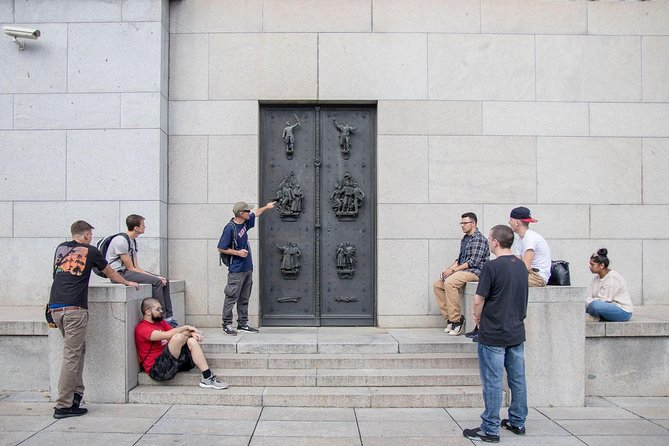
The site also contains the former mausoleum of Klement Gottwald, the first chairman of the Communist Party of Czechoslovakia. His mummified body was once displayed here, in a deliberate imitation of the grand political mausoleums associated with other Communist states. Nearby, you see the laboratory where the body was embalmed.
That combination is unusually revealing. It shows how politics used ritual, architecture, and even the preserved body of a leader to create authority. The laboratory adds a stark, practical detail to what might otherwise seem like distant political symbolism.
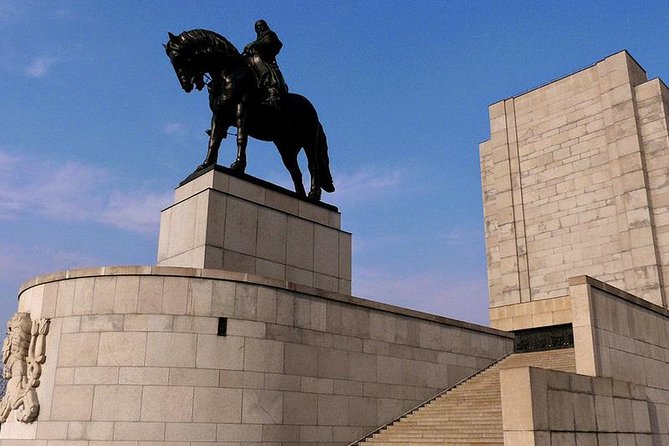
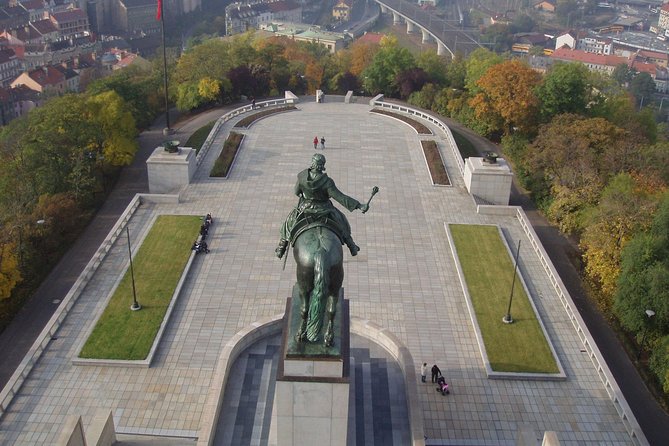
The monument to Jan Zizka is another major sight. The bronze equestrian statue is described as the third largest of its kind in the world. It is an imposing image of military strength and Czech national identity, and the guide uses it to explain why nationalism mattered so much under local Communist rule.
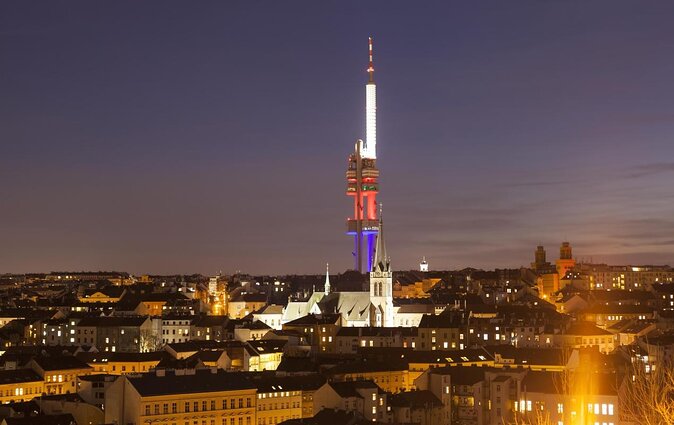
The reward for the climb is not only the monument. Vitkov also gives you a wider view toward Prague, including the Zizkov Television Tower. The tour does not promise a separate visit inside the tower, but it does include a brief stop for the best view of its Brutalist form.
The Zizkov Television Tower and Prague’s modern shape
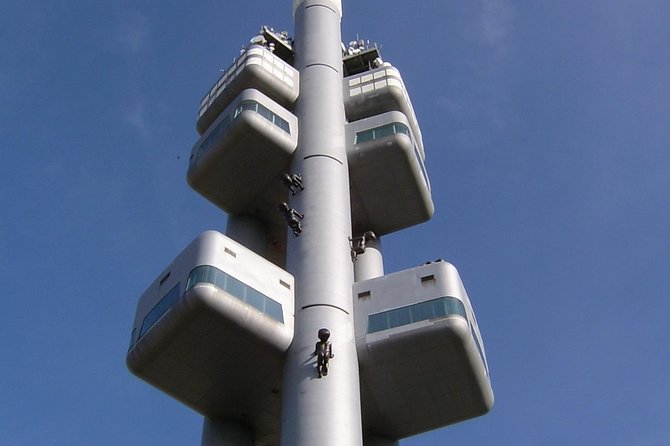
The tower stop lasts about five minutes and costs nothing to enter because you are viewing the building from outside. That short pause may seem modest, but it adds a useful visual contrast to the older monument on Vitkov.
The Zizkov Television Tower is a strong example of late Communist-era design. Its shape is difficult to ignore, and seeing it from Vitkov helps you understand how Prague’s skyline changed under state socialism. The stop is brief, so think of it as a pointed observation rather than a full architectural visit.
This is also where the tour’s pace becomes clear. You are not spending long periods at every sight. Instead, the guide selects places that support the larger story, then moves you to the next piece of evidence.
More walking tours in Prague:
- Prague: 3-Hour Walking Tour of Old Town & Prague Castle
★ 4.7 · 5,696 reviews - Prague: Ghost Walking Tour Where Legends Come To Life
★ 4.4 · 5,253 reviews - Prague: Jewish Quarter Walking Tour with Admission Tickets
★ 4.7 · 3,729 reviews - Prague Guided Walking Tour and Cruise with Authentic Czech Lunch
★ 5.0 · 3,627 reviews
Wenceslas Square and the road to the Velvet Revolution
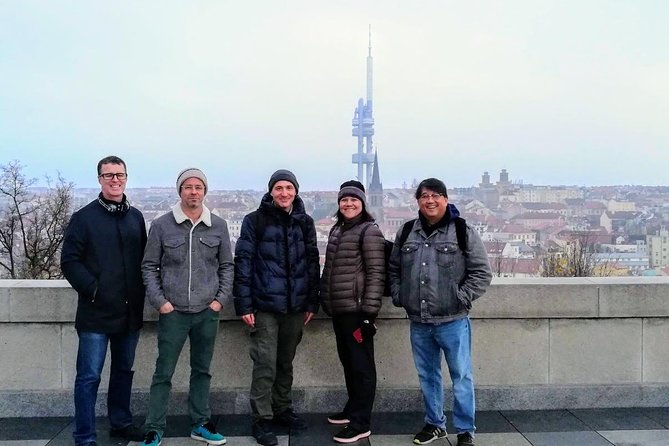
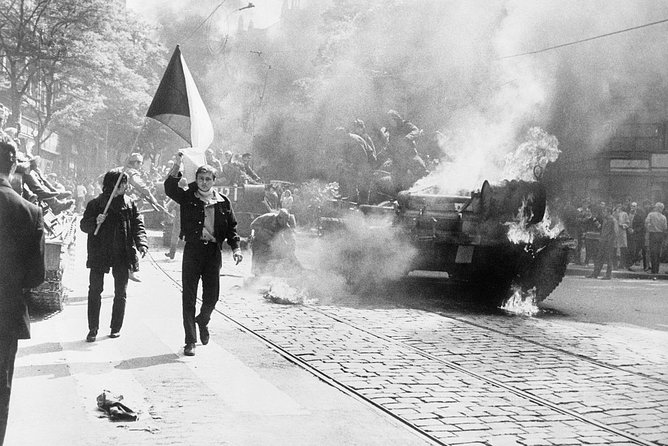
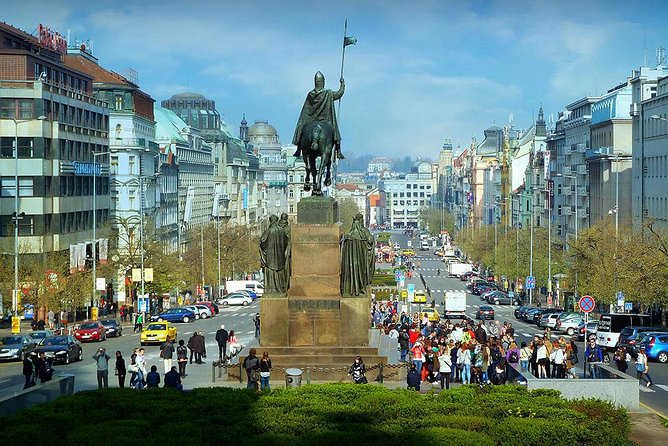
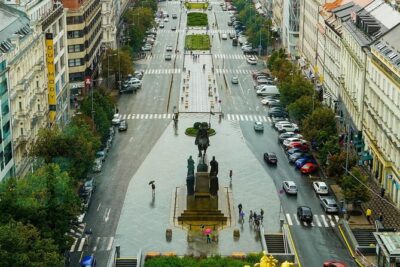
The walk continues to Wenceslas Square for about 20 minutes. This is one of Prague’s most important public spaces, and the guide traces its story from its founding in the 14th century through military parades, occupations, the Prague Spring, and the Velvet Revolution.
The square is especially valuable because it shows how one public place can serve completely different political purposes. An occupying power can use it for ceremony and control. A government can use it for official display. Citizens can later turn the same space into a gathering place for protest and change.
Here you learn about the Prague Spring and the events that led to the Velvet Revolution. The tour’s central idea comes together: Communist rule was not only maintained through offices and party structures. It was also displayed in streets, squares, monuments, and public rituals.
The description says the Velvet Revolution ignited in a single day. That phrase points to the speed and force of the change, but the guide also places it within the longer story of Communist rule and public resistance. You should come away with more than a date. You should understand why Wenceslas Square became the setting for a decisive break with the old system.
The Lennon Wall and protest in public space
The route also includes the John Lennon Wall, an important site of political protest. Its importance is not only artistic. The wall represents the use of public expression against official control, linking Prague’s local politics with a wider language of peace, freedom, and dissent.
This stop provides a welcome change in tone after the formal spaces at Vitkov. Instead of a state monument, you see a place shaped by individual messages and protest. It helps explain how opposition could appear in everyday city life, even when official institutions controlled much of public communication.
The tour also passes the National Assembly building, formerly the seat of the Communist government. That stop connects the informal protest of the Lennon Wall with the formal machinery of power. You see both sides of the political story: the institution that governed and the public spaces where people pushed back.
The upside-down Wenceslas statue
Near the end, the route stops at the ironic statue of King Wenceslas riding an upside-down dead horse. The visit lasts about five minutes, but the work gives the tour a pointed modern finish.
The sculpture asks you to think about how Central European political life is viewed today. After seeing official Communist monuments, preserved political remains, and protest sites, this irreverent work offers a contemporary response to authority and national symbolism.
It is a small stop, but it helps prevent the tour from becoming a museum-like march through the past. Prague’s political memory is still being questioned and reshaped, and this sculpture makes that clear.
What the $126.43 price includes
At $126.43 per person, this is not a budget walking tour. The price makes more sense if you value a private-style group experience without booking a fully private tour. The maximum group size is eight, which is small enough for direct conversation and questions.
You also receive tram tickets, an important detail because the route is spread across several parts of Prague. Food and drinks are not included, and hotel pickup and drop-off are not provided. Plan to handle those costs and arrangements yourself.
The value rests mainly in the guide’s interpretation. The sights themselves are public or connected with monuments, but the reason to book is the carefully designed connection between them. You are paying for a historian to explain why a shelter door, a mausoleum, a statue, a government building, and a protest wall belong in one story.
If your main goal is to collect famous Prague views at the lowest possible price, this tour may feel costly. If you want a serious look at the city’s 20th-century politics, the small group and specialist guide make the fee easier to justify.
Timing, fitness, and booking advice
The experience lasts about three hours, with morning and afternoon departures available. The stated start time is 2:00 p.m., but the tour information also says to advise your preferred departure when booking. Confirm the time you receive before setting other plans.
The group can include no more than eight people. That limit is one of the tour’s strongest practical features, especially at sites where a large group would make discussion awkward.
You need moderate physical fitness. The Vitkov climb is the key issue, not the total length alone. If you have trouble with steep uphill walking, ask about the private city-center alternative that leaves out Vitkov Hill and focuses on Cold War sites without the ascent.
Confirmation is sent within 48 hours, subject to availability. The experience allows free cancellation up to 24 hours before the start time. Changes or cancellations inside that period are not accepted for a refund.
Who should book this experience?
I would choose this tour if you are interested in modern European politics, public memory, architecture, or the everyday effects of state power. It is also a strong choice if you have already seen Prague’s medieval center and want a different side of the city.
The tour suits curious first-time visitors who want context, but you do not need a degree in history. A good guide can connect the political terms to places you can see and remember.
It may not suit you if you want an easy, flat walk, a broad introduction to all of Prague, or lots of time inside attractions. The itinerary is focused, and its focus is Communist rule, Cold War preparation, protest, and the Velvet Revolution.
Should you book the Prague Cold War Walking Tour?
Book it if you want Prague explained through its recent political past, and if you are comfortable with a serious discussion and a steep climb. The route is unusually well connected, moving from shelter corridors to political monuments, protest spaces, and the square where the old order began to fall.
Skip it if Vitkov Hill is beyond your physical limits and you do not want to arrange the alternative private route. For everyone else, the historian guide, eight-person limit, included tram tickets, and unusual sites make this a strong specialist tour rather than a routine city walk.
FAQ
How long does the Prague Cold War Walking Tour last?
The tour lasts approximately three hours.
What is the maximum group size?
The tour has a maximum of eight travelers.
Is the tour offered in English?
Yes. The experience is offered in English.
Is a historian guide included?
Yes. A historian guide is included. One guide specifically associated with the experience is Vadim.
Are tram tickets included?
Yes. Tram tickets are included in the tour price.
Is the Vitkov Hill climb difficult?
The climb to the Vitkov Hill monument takes about 20 to 30 minutes uphill and requires moderate physical fitness. A private alternative that leaves out Vitkov is recommended for people who have difficulty climbing.
Just added around Prague
- Prague: Historical Walking Tour with Focus on World War 2★ 4.3 · 12 reviews
- WWII and Communism History in Prague’s Old Town Private Tour★ 5.0 · 4 reviews
- World War II 4WD Tour from Prague with Lunch★ 4.4 · 3 reviews
- Unique salt cave in Prague★ 4.9 · 10 reviews
- Walking tour of Prague in French : Nové Město★ 4.9 · 16 reviews
- Walking tour of Prague in french: Old Town & Charles Bridge★ 4.9 · 62 reviews
- Prague: Market Tour and Traditional Czech Cooking Class★ 4.7 · 19 reviews
- Ultimate Unlimited Beer Pong with Czech Beer★ 4.6 · 5 reviews
Prague Communism History Tours, compared.
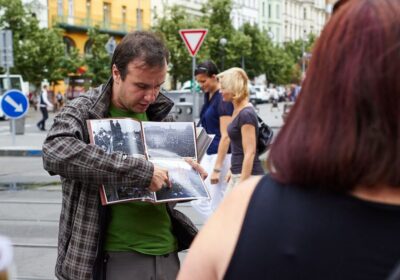
Communism History and Nuclear Bunker Guided Tour
Read our review →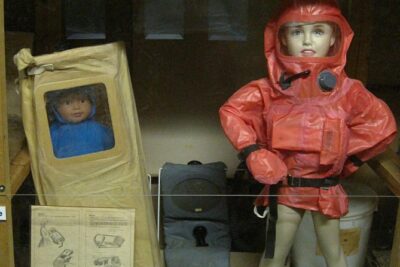
Prague Communism History and Nuclear Bunker Tour
Read our review →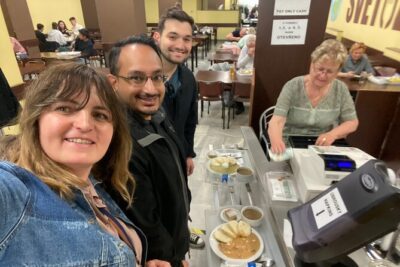
Communism & Nuclear Bunker Tour + 70s Canteen Lunch (own expense)
Read our review →
Communism and Bunker Tour with 70s Canteen Lunch
Read our review →
Second World War & Communism (Tip-based 3 hour tour)
Read our review →Browse the lists this tour appears in