
Reviewed · MARKETS
Prague Cooking Class Including Market Visit and 3-Course Lunch
Prague’s best food lesson may begin before you reach the kitchen. You meet your chef at Holešovice Market, choose local ingredients, then carry them into Chefparade’s bright cooking studio for a hands-on Czech meal. It is a practical way to see what people cook, not just what restaurants serve.
I like the market visit, where you can look at Czech produce, mushrooms, apples, and other regional foods with a chef beside you. I also like the small-group format, which gives you time to ask questions and work through each dish rather than simply watch a demonstration.
The main drawback is the price: $240.05 per person is a serious outlay for a three-and-a-half-hour activity. The class also cannot be refunded or changed, so you should book only when your Prague plans are firm.
Key points at a glance
- Market first, cooking second: Shop for seasonal ingredients at Holešovice Market before heading into the nearby school.
- A real Czech menu: The sample meal includes mushroom potato soup, pork goulash, Carlsbad dumplings, and apple strudel.
- Hands-on instruction: You prepare the food with step-by-step help instead of sitting through a passive demonstration.
- Useful local detail: Chefs explain Czech seasonings, cooking habits, regional recipes, and ingredients you may not notice on your own.
- Comfortable class size: The maximum is 15 people, though some sessions may be much smaller.
- Recipes and shopping: Recipes can be sent by email, and the school store sells many ingredients used in class.
Starting at Holešovice Market at 9 a.m.
Your morning begins at 9 a.m. at 36 Underground, Bubenské nábř. 306/13, in Prague 7’s Holešovice district. The meeting point is at or beside the market area, and the cooking school is only a short walk away.
This location gives the experience a useful sense of place. You are not starting in a hotel kitchen built only for tourists. You begin among food stalls, where the chef can point out the ingredients that shape Czech home cooking. You might see mushrooms, apples, root vegetables, meat, dairy products, and other everyday foods used in the country’s kitchens.
The market portion is not a full sightseeing tour of Prague. Its value is narrower and more practical. You learn what is in season, how Czech ingredients are presented, and which foods are worth buying for the meal ahead. One class included a chance to taste blackcurrant wine while looking around, though alcoholic drinks are not part of the included package.
Allow yourself enough time to reach Holešovice without rushing. The area around the school may look plain from the outside, but the cooking facility itself has been described as bright, clean, and fitted with modern equipment. The contrast is part of the experience: an ordinary market setting leads into a polished teaching kitchen.
A few more Prague outings worth weighing up
- Cooking Czech Menu with Chef
★ 5.0 · 61 reviews - Prague: Traditional Czech Cooking Class with Market Tour
★ 4.6 · 53 reviews - Prague: Market Tour and Traditional Czech Cooking Class
★ 4.7 · 19 reviews
Choosing ingredients with your chef
The market visit works best if you treat it as part shopping trip and part food lesson. Your chef helps you select fresh ingredients, explains Czech food traditions, and answers questions as you move through the stalls.
That personal contact is important. A market can be hard to read when you do not speak the language or know what local produce should look like. With a chef beside you, a pile of mushrooms or an unfamiliar cut of meat becomes part of a dish rather than a mystery.
The exact menu can vary. The advertised sample menu includes traditional potato soup with mushrooms, pork goulash with Carlsbad dumplings, and apple strudel. Other classes have prepared potato and mushroom soup, roast pork with sauerkraut and Czech dumplings, paprika chicken, fruit dumplings, or a shredded pancake dessert.
That variation is worth noting before you book. You should expect Czech cooking, but not necessarily the exact three dishes listed for every session. The class description says you will receive a chosen three-course menu, while the sample menu gives you a clear idea of the style and scale.
Inside Chefparade’s modern kitchen
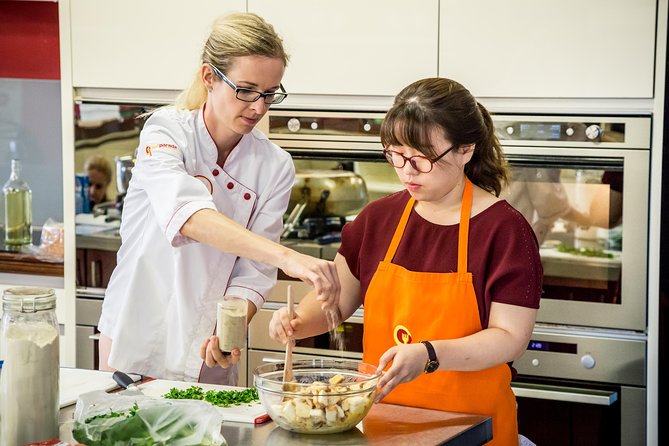
After shopping, you move to Chefparade Cooking School, the nearby teaching kitchen. You put on an apron, receive an introduction to the menu, and begin preparing the ingredients with guidance from the chef.
The format is active. You are not simply watching someone cook a soup or fold a dumpling. You receive step-by-step directions and take part in the preparation. That makes the three-and-a-half-hour schedule feel more useful than a quick meal followed by a short demonstration.
Your chef explains Czech cooking methods, seasoning choices, and local preferences as you work. You may learn how to handle potatoes, build flavor in a soup, prepare a goulash, or make steamed dumplings. The dumplings are one of the more useful skills to take home because they are less familiar to many home cooks than soup or strudel.
The teaching style can depend on the chef assigned to your class. Chef Matt has been praised for his pork goulash and root soup, while Petra led one particularly personal class for a solo participant. Another session was taught by a former contestant on Czech MasterChef. Those details suggest that the school uses chefs with different backgrounds, so the tone may range from relaxed conversation to more polished culinary instruction.
You should expect to work alongside other people, ask questions, and share the kitchen. The maximum group size is 15. That is still a manageable number for a cooking school, though it is not the same as a private lesson. If your class is smaller, you will naturally receive more direct attention. One participant had a solo class with Petra, but you should not count on that being the normal arrangement.
The sample Czech three-course lunch
The advertised sample menu begins with Czech traditional potato soup with mushrooms. This is a good introduction to the country’s home-style cooking because it uses familiar ingredients in a hearty, earthy combination.
The main course is pork goulash with Carlsbad dumplings. Goulash is filling rather than delicate, and the dumplings give you a chance to learn a distinctly Czech accompaniment. The meal is designed to teach the building blocks of local cooking: meat, gravy, potatoes, vegetables, and bread-like dumplings.
Dessert is apple strudel. It is a sensible finish for a class because the preparation gives you a change of pace after the savory courses. You move from chopping and simmering to pastry work and baking.
You then sit down and eat what you prepared. This is more satisfying than packing up the food and leaving. You can compare techniques with the people at your table, ask the chef for feedback, and see how the individual dishes work together as a meal.
Food and soft drinks are included. Alcoholic drinks can be purchased separately, so you can add wine or another drink if you want, but you should budget for it. The minimum drinking age is 18.
More lunches worth booking in Prague:
- Prague Guided Walking Tour and Cruise with Authentic Czech Lunch
★ 5.0 · 3,627 reviews - Prague: Vltava River Lunch Cruise in an Open-Top Glass Boat
★ 4.5 · 2,865 reviews - Prague: Hard Rock Cafe with Set Menu for Lunch or Dinner
★ 4.4 · 1,487 reviews - Communism & Nuclear Bunker Tour + 70s Canteen Lunch (own expense)
★ 5.0 · 1,036 reviews
What you actually learn
This class is most valuable when you want recipes you can repeat at home. The emphasis is not only on eating Czech food, but on understanding how to make it.
You receive practical guidance on ingredients, preparation, seasoning, and cooking methods. The lessons are likely to be most useful if you take notes or ask questions while working. Pay attention to the chef’s small corrections, especially when making dumplings, thickening a sauce, or balancing the flavor of soup.
Recipes may be supplied by email after the class. That is a real benefit. A cooking lesson can fade quickly once you return to your hotel, but emailed recipes give you a way to recreate the meal later. One class also gave a participant a little extra strudel to take home, though you should not assume leftovers are always available.
The market adds another layer to the lesson. You are not only learning how to follow a recipe. You are learning why certain ingredients appear together and how Czech cooking connects to local shopping habits. This makes the experience useful even if you are not an experienced cook.
Eating, talking, and taking your time
After roughly two hours of preparation, you sit down for lunch with the class. The remaining time gives you a chance to enjoy the food, talk with the chef, and ask about Czech recipes and daily cooking.
The social side matters. Several people have enjoyed having time to speak with the chef and get to know others in the class. If you are traveling alone, this can be an easy way to spend a morning without feeling isolated. If you are traveling with family, the shared meal gives everyone a common project and a clear reward.
The pace is also a strength. This is not a rushed tasting stop squeezed between Prague landmarks. You spend much of the morning shopping, preparing, cooking, and eating. If your sightseeing schedule is packed, that time commitment may feel long. If you want a more relaxed cultural activity, it is well suited.
The food itself is hearty and traditional. Do not book this expecting a refined restaurant tasting menu or a modern chef’s laboratory. You are learning everyday Czech-style dishes, with an emphasis on comfort and technique.
Is $240.05 a fair price?
At $240.05 per person, this is expensive compared with a simple Prague meal or a short cooking demonstration. The price makes more sense when you count the full package: a guided market visit, a small-group class, ingredients, a three-course lunch, soft drinks, and instruction from a professional chef.
You are also paying for access to a purpose-built cooking school and for the chance to ask questions while preparing the food. If you cook at home and value recipes, the instruction may justify the cost. If you mainly want to eat Czech food, a restaurant will be cheaper and easier.
The group limit of 15 helps protect the value, though the experience will feel different at 15 people than in a private or nearly private class. A smaller class offers more time with the chef and fewer people sharing work areas.
The timing also matters. Starting at 9 a.m. means you will probably eat lunch earlier than usual. That is convenient if you have afternoon plans, but you should not expect a late lunch. The activity ends back at the meeting point after the meal.
Practical details before you book
The experience lasts about three hours and 30 minutes and is offered in English. A mobile ticket is available, and confirmation is sent within 48 hours, subject to availability.
The activity is booked an average of 68 days ahead, so last-minute availability may be limited. If this is important to your Prague plans, reserve early rather than leaving it until the week of your trip.
The cancellation rule is strict. The experience is non-refundable and cannot be changed for any reason. You will not receive your money back if you cancel or request an amendment, so make sure your date and schedule are settled first.
The tour ends where it begins. The meeting point is at 36 Underground, Bubenské nábř. 306/13, Praha 7-Holešovice. One participant found it practical to use the Metro and walk a short distance to the studio, while the school provided detailed directions.
The outside surroundings may not look polished, but that should not put you off. The cooking school itself is described as clean, neat, bright, and well equipped. The school store also sells many of the ingredients used during class, giving you a chance to buy items for later cooking.
Who should book this Prague cooking class?
I would recommend this for you if you enjoy cooking, food shopping, and conversations about local culture. It suits couples, families, solo visitors, and small groups who want a morning away from Prague’s most familiar sights.
It is especially good for people who want to learn a few techniques rather than just collect photographs. You can return home with recipes for soup, goulash, dumplings, strudel, or other Czech dishes, depending on your menu.
Families should note that the class includes hands-on work and a meal, but the information provided does not give a specific child age policy. If you are booking with children, confirm that point before paying.
I would hesitate if you have a strict sightseeing timetable, dislike rich traditional food, or want a private lesson guaranteed. The price is high, the menu may vary, and the no-refund rule leaves little room for changes.
Should you book it?
Book this class if you want Czech food to make sense beyond the plate. The market visit, personal instruction, and sit-down meal work together well, and the class gives you something useful to take home: recipes, techniques, and a better idea of how local ingredients fit into Czech cooking.
Skip it if you only want the cheapest meal or a short activity between major sights. For everyone else, especially home cooks and food-focused visitors, Chefparade offers a thoughtful three-hour morning with plenty of hands-on work and a clear local connection.
FAQ
Where does the cooking class begin?
The class begins at 36 Underground, Bubenské nábř. 306/13, 170 00 Praha 7-Holešovice, Czechia.
What time does the experience start?
The start time is 9 a.m.
How long does the cooking class last?
The experience lasts approximately three hours and 30 minutes.
Is the market visit included?
Yes. You meet your chef at a market, browse the stalls, and select fresh seasonal ingredients before going to the nearby cooking studio.
What food might be on the menu?
The sample menu includes Czech potato soup with mushrooms, pork goulash with Carlsbad dumplings, and apple strudel. Other possible dishes include potato pancakes, roast pork with sauerkraut, paprika chicken, fruit dumplings, and shredded pancake dessert.
Are food and drinks included?
Food and soft drinks are included. Alcoholic drinks can be purchased separately.
Is the class offered in English?
Yes. The experience is offered in English.
How many people can join the class?
The maximum group size is 15 people.
Can I cancel or change my booking?
No. The experience is non-refundable and cannot be changed for any reason.
More Hands-On Workshops in Prague
- Prague: 1.5-Hour Chocolate Museum Visit with Workshop
★ 4.4 · 387 reviews - Prague Beer Pouring Class at Pilsner Urquell
★ 5.0 · 129 reviews - Prague: Soy Candle-Making Workshop
★ 4.9 · 121 reviews - Prague: Choco Art Museum Ticket with Chocolate Making Class
★ 3.9 · 71 reviews
More Market and Shopping Walks in Prague
- Dresden Christmas Market & Bastei Saxon Switzerland Tour from Prague
★ 5.0 · 105 reviews - Prague: Farmers Market and Brunch Class with Celebrity Chef
★ 4.9 · 11 reviews
Just added around Prague
- Prague: Historical Walking Tour with Focus on World War 2★ 4.3 · 12 reviews
- WWII and Communism History in Prague’s Old Town Private Tour★ 5.0 · 4 reviews
- World War II 4WD Tour from Prague with Lunch★ 4.4 · 3 reviews
- Unique salt cave in Prague★ 4.9 · 10 reviews
- Walking tour of Prague in French : Nové Město★ 4.9 · 16 reviews
- Walking tour of Prague in french: Old Town & Charles Bridge★ 4.9 · 62 reviews
- Ultimate Unlimited Beer Pong with Czech Beer★ 4.6 · 5 reviews
- Prague: Market Tour and Traditional Czech Cooking Class★ 4.7 · 19 reviews
Markets, compared.

Dresden Christmas Market & Bastei Saxon Switzerland Tour from Prague
Read our review →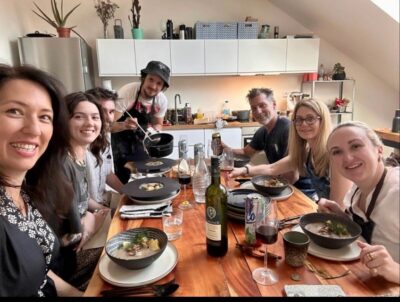
Traditional Czech Cooking Class with Market Tour
Read our review →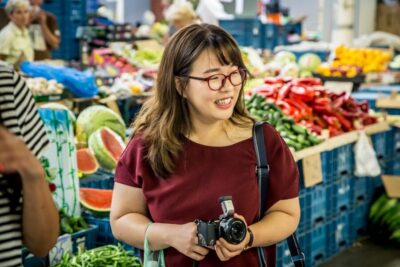
Market Tour and Traditional Czech Cooking Class
Read our review →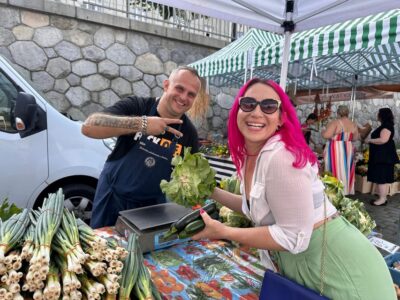
Farmers Market and Brunch Class with Celebrity Chef
Read our review →Browse the lists this tour appears in