
Reviewed · TEREZIN CONCENTRATION CAMP TOURS FROM PRAGUE
Terezin Concentration Camp Day Tour Including Admission From Prague
Terezín is a living Czech town wrapped around one of the country’s most painful wartime sites. You’ll walk through its cemetery, crematorium, morgue, barracks, and museums while learning how the Nazis used the ghetto as a prison, transit center, and propaganda tool. The train and bus ride also give you a grounded look at everyday Czech life beyond Prague.
I like the public-transport format, which makes the day feel less sealed off from the country around it. I also like the small-group guide service, with guides such as Givi, Petra, Bianca, Adam, and Ilya praised for clear explanations and a serious, humane approach. The main concern is important: the route described here may not include the Small Fortress, Gestapo prison, or SS headquarters, despite some promotional wording suggesting otherwise.
Key points to know before you book
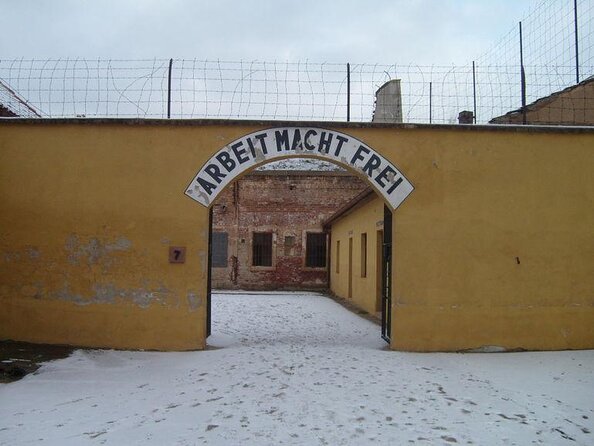
- Terezín is still a functioning town: Memorial sites sit beside ordinary homes and streets, creating an unsettling contrast.
- The day uses public transport: You travel from Prague by train and bus, then walk between parts of the memorial complex.
- The main visits last about three hours: You see major sites, but this is not a full day exploring every corner of Terezín.
- The Small Fortress needs checking: Several visitors expected the prison section and were disappointed when it was not part of the route.
- Guides shape the experience: Givi, Petra, Bianca, Adam, Ilya, and others have been praised for clear, thoughtful storytelling.
- Bring food and warm clothing: A 15-minute break comes at Prague’s main station, but food and drinks are not included.
Why Terezín feels different from other memorial sites
Terezín is not simply an isolated camp reached through empty fields. It is a town where people still live. As you walk from memorial to museum, ordinary streets and occupied buildings remain part of the view. That can feel jarring, but it helps you understand that Terezín was not a distant place cut off from society.
The Nazis used the former fortress town as a Jewish ghetto and detention center during World War II. It also served as a transit point for people sent onward to extermination camps. The day focuses on the ghetto side of Terezín and its associated memorials, rather than presenting a single prison building as the whole story.
That distinction matters. Terezín was not an extermination camp in the same way as Auschwitz-Birkenau. Yet the conditions were deadly, and many people were transported from there to other camps. A good guide helps you understand that difference without softening the suffering.
The tour is led in English and is limited to a maximum of 30 people. That is not an intimate group, but it is small enough for a guide to keep people together during the train, bus, and walking sections.
More Terezin memorial tours:
- From Prague: Terezin Concentration Camp Guided Tour w/ Audio
★ 4.5 · 1,959 reviews - Terezin Concentration Camp Day Tour from Prague
★ 4.0 · 1,007 reviews - From Prague: Terezín and Ghetto Museum Guided Tour
★ 4.3 · 571 reviews
Leaving Prague by train and bus
You meet at Týnská 639/4 in Prague’s Old Town at 10:00 a.m. From there, the group makes its way to Praha hlavní nádraží, Prague’s main railway station. A 15-minute stop at the station gives you time to buy food and drinks before departure.
I like this arrangement because you see how the local transport system works instead of being carried from hotel door to memorial gate. The train ride also gives you a view of the Czech countryside, and several people found that part of the day especially worthwhile. It adds a sense of distance without turning the journey into a private sightseeing drive.
The tradeoff is time. The full experience lasts about seven and a half hours, and roughly two hours can be tied up in transport and transfers. You should expect a long day with walking, waiting, and travel between sites. Wear shoes you can walk in, and bring extra layers, particularly in cool weather.
The tour ends at Hlavní nádraží in Prague rather than returning you to your hotel. That is convenient if you want to continue exploring the city center, but you need to arrange your own way back to your accommodation.
Beginning at the cemetery and memorials
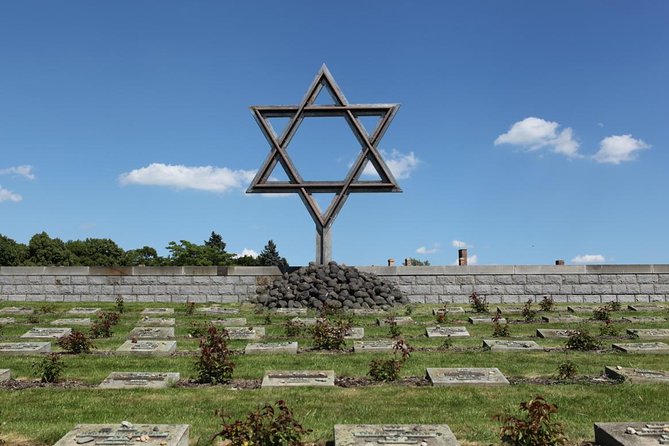
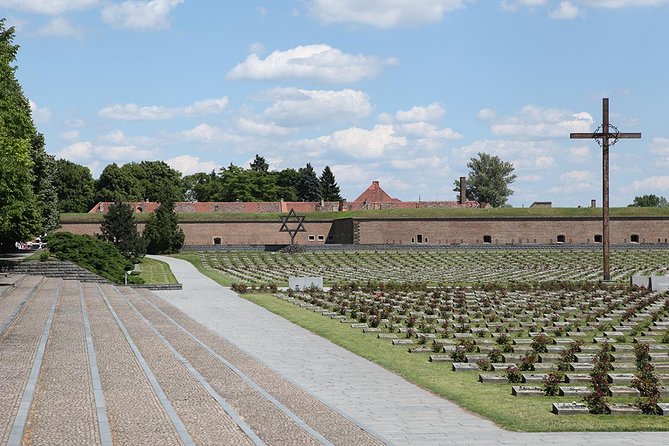
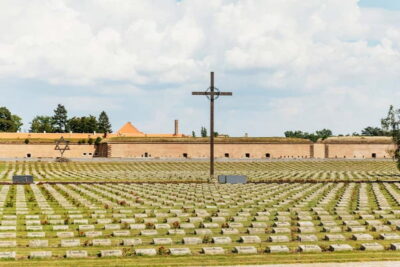
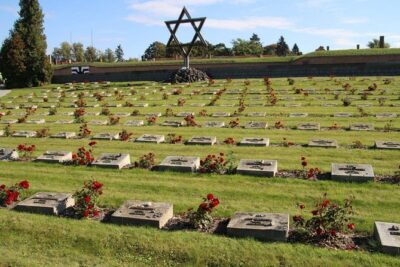
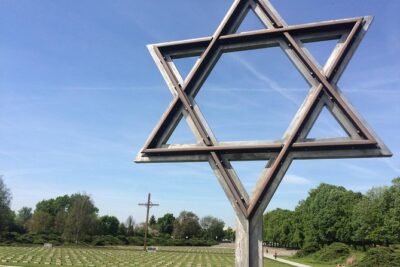
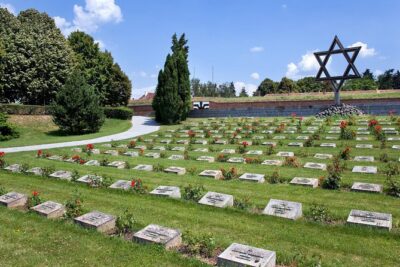
The first main stop is the Terezín Memorial cemetery. Here, the guide introduces the site’s wider story, including the Austro-Hungarian period, the creation of Czechoslovakia, the Nazi invasion, and the wartime use of Terezín.
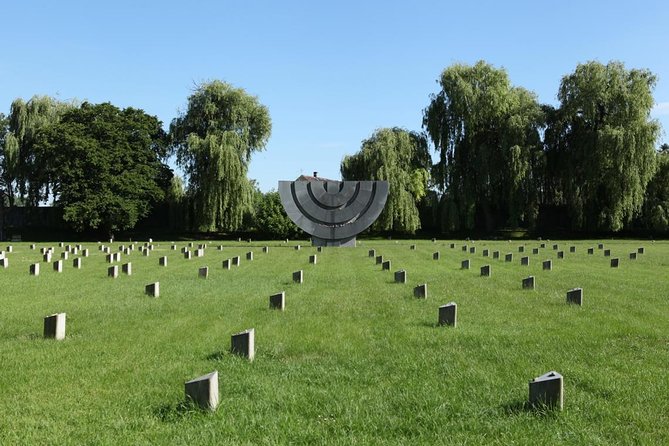
This opening works well because it gives you a timeline before the tour enters the more enclosed buildings. You will see memorials connected with Russian soldiers from World War I and World War II, a menorah, the Tree of Children, and the Alley of Nations. These details show that Terezín’s story extends beyond one group or one period, although the Holocaust remains the central subject.
The cemetery visit lasts about 30 minutes. That is enough for an introduction and a guided explanation, but not enough to study every memorial at length. You should listen closely here, since later stops make more sense once you understand the town’s changing roles.
The setting is quiet, but the town itself is close by. Cars, homes, and regular daily life can appear within the same general area as the memorials. That contrast is one of the strongest features of Terezín, and also one of its most uncomfortable.
Inside the crematorium and morgue
The tour then visits the crematorium, where you see the main room, back room, autopsy room, charts, and documents. The stop is brief, about 20 minutes, but the guide’s explanation helps connect the building to the wider system of death and disease in the ghetto.
Next comes the morgue, with a list showing the places from which people were transported. This stop lasts about 15 minutes. It is easy to move quickly through a place like this, so I would pay attention to the documents and location names rather than treating it as just another room on a schedule.
The crematorium and morgue are emotionally difficult. They are also places where a calm, careful guide matters. Givi has been praised for speaking clearly and answering questions, while Bianca and Petra have been singled out for thoughtful explanations and a friendly manner. Guides can vary, but the strongest ones help you process what you are seeing without turning the visit into theater.
One practical warning: access to individual buildings can change. A Saturday visit, for example, did not include the crematorium because it was closed. The tour includes entrance fees, but opening conditions can still affect the route on a particular day.
Same city, a completely different afternoon:
- Prague: 50-Minute Sightseeing Evening Cruise
★ 4.2 · 33,780 reviews - Prague: Medieval Dinner with Unlimited Drinks
★ 4.4 · 19,847 reviews - Prague: Skip-the-line Castle Ticket and Optional AudioGuide
★ 4.3 · 11,121 reviews - Prague: Castle Tour with Local Guide and Entry Ticket
★ 4.6 · 10,422 reviews
Magdeburg Barracks and the cultural life of the ghetto
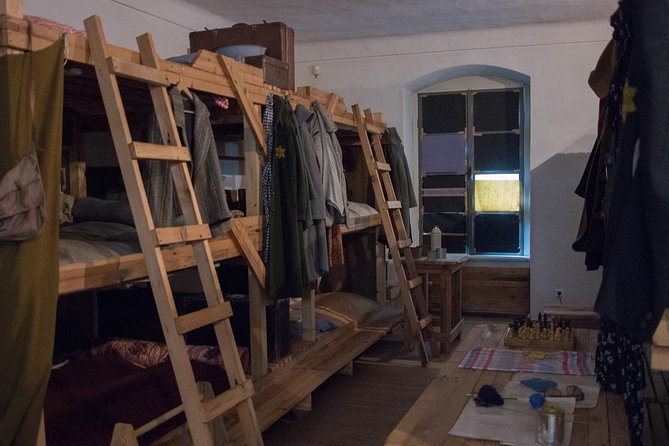
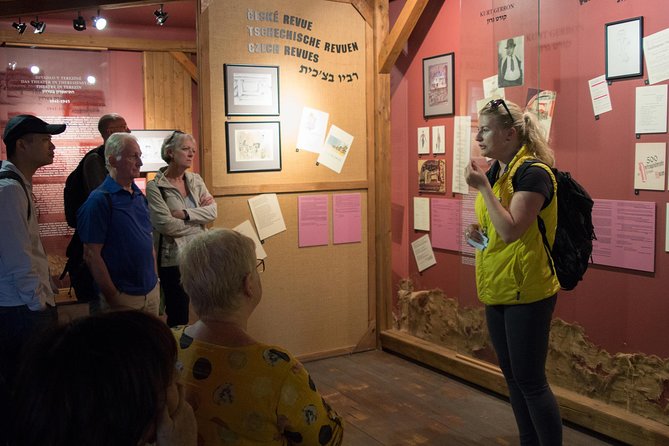
The Magdeburg Barracks provide a different kind of evidence. Inside, you see a dormitory and displays linked to music, painting, literature, and theater.
This stop is valuable because it shows that prisoners were not defined only by hunger, fear, and death. People continued to create, perform, teach, and preserve culture under extreme pressure. Those activities did not make the ghetto humane, but they reveal how people tried to retain identity and dignity.
The visit lasts about 20 minutes, so you will not have time to examine every display in detail. The guide leads the group through the building, and the short schedule means you should save personal questions for suitable pauses.
The barracks also help explain why Nazi propaganda used Terezín in a misleading way. The existence of cultural activity did not mean people were safe or free. A good explanation keeps those facts together instead of allowing the artwork and performances to become a comforting story.
The Ghetto Museum and Holocaust exhibition
The Ghetto Museum is the longest museum stop, at about 30 minutes. Your guide introduces the Holocaust exhibition, then gives you some time to look around independently. If time allows and the guide agrees, you may also see a propaganda film.
This is one of the most useful parts of the day for visitors who want a wider account of Terezín. The cemetery and buildings show physical places. The museum helps organize names, events, transports, and the larger story of the Holocaust.
Still, 30 minutes is not a lot. If you read every panel carefully, you may need to choose what matters most to you. The tour is designed as an introduction to the memorial complex, not as an expert-level museum day.
The balance between guided explanation and free time is a strength. You receive enough context to understand what you are seeing, then have a chance to pause without a guide talking continuously. If you are especially interested in the museum, ask at the start how much independent time the schedule allows.
The important question about the Small Fortress
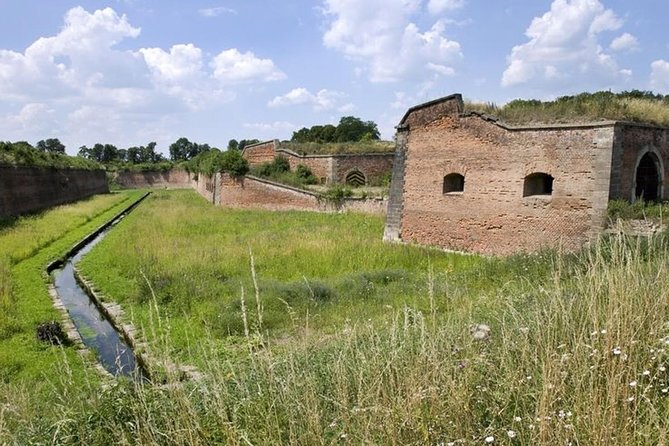
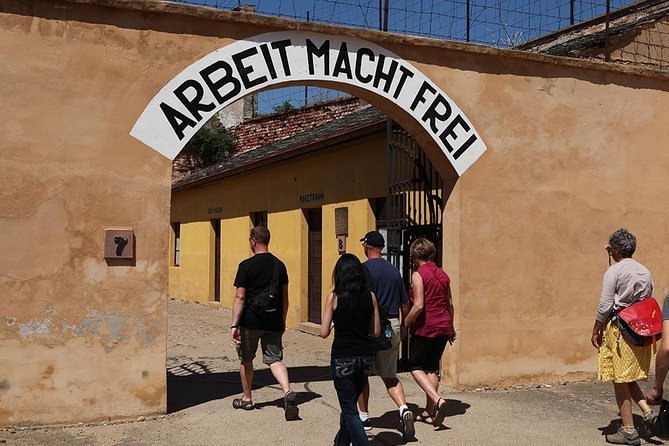
This is the biggest point to settle before you pay. Some descriptions and images associated with Terezín tours can lead you to expect the Small Fortress, the former prison section, Gestapo cells, or SS headquarters. Several people arrived expecting those places and found that the actual route focused on the cemetery, crematorium, morgue, Magdeburg Barracks, and Ghetto Museum instead.
The Small Fortress is not listed among the timed stops provided for this experience. That does not mean it can never be included, since routes and access can change, but you should confirm directly with Discover Prague Tours before booking if seeing it is essential.
This matters because the Small Fortress is often the part people most want to visit. If you book this tour for its public-transport journey and broad introduction to the ghetto, the listed program may suit you well. If your priority is the prison section, do not assume it is included simply because Terezín is described generally as a concentration camp and Gestapo prison.
That one question can prevent the main disappointment associated with this outing.
How the guides affect the day
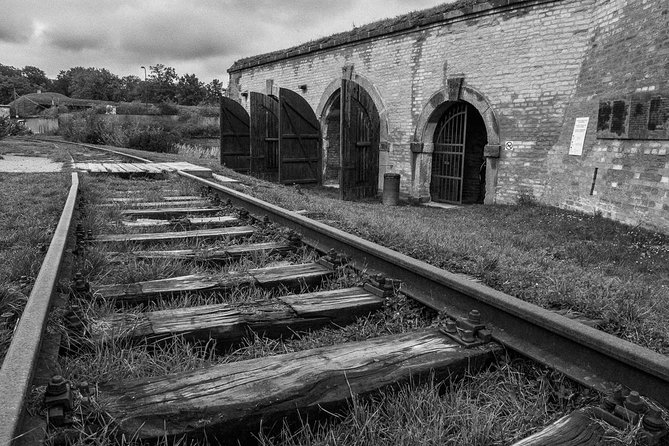
The guide is the central value of this experience. You are not simply buying transport and admission. You are paying for someone to connect the buildings, dates, people, and political setting into one understandable account.
Givi has been praised for his passion, clear voice, and ability to explain Czech wartime history, including the assassination of a senior German official in Prague. Petra has been described as friendly and well organized, with a good sense of how to keep the group moving. Bianca has been noted for her calm explanations during the train ride and at the memorial.
Adam and Ilya have also received strong praise for being approachable and well informed. One useful detail is that the route can involve a fair amount of walking and coordination, so a guide who keeps the group together makes a real difference.
Not every guide will speak at the same pace. One person found it hard to follow a guide who talked quickly. If you need a point repeated, ask. The group is conducted in English, but accents and the emotional weight of the subject can make concentration harder than usual.
Is $96.79 good value?
At $96.79 per person, this is not a cheap outing, but the price covers a long guided day, public transport from Prague, and entrance fees. You also avoid having to work out the train, bus, walking route, and separate memorial admissions on your own.
The value is strongest if you want historical context. Terezín is not a place where a quick glance at one building tells the full story. A guide can explain the Austro-Hungarian fortress, Nazi occupation, Jewish ghetto, cultural life, transports, and postwar memorial work in a way that individual sightseeing may not.
The value is weaker if you expect a private tour, a slow museum visit, or every Terezín site in one day. The maximum group size is 30, and the time at the complex is about three hours. You will see important locations, but you will not cover every part of the memorial at leisure.
Food and drinks are not included. Use the 15-minute station break to buy supplies, and do not rely on finding a long meal during the visit. Souvenir photographs are also extra, and hotel pickup and drop-off are not provided.
Who should book this Terezín tour?
I would choose this tour if you are staying in Prague, want a structured introduction to Terezín, and prefer traveling by public transport. It suits people who value a guide’s interpretation and do not want to manage the route alone.
It is also a good fit if you want to see more than one memorial building in a single day. The cemetery, crematorium, morgue, barracks, and Ghetto Museum each contribute something different, so the program has more depth than a single-site visit.
You should think twice if you need a quiet, self-guided museum day. The schedule is fixed, the group may include up to 30 people, and the train and bus connections add effort. You should also reconsider if the Small Fortress is the main reason you want to visit Terezín. Confirm that point first.
The subject is serious. This is not a casual day trip or a sightseeing stop to fit between restaurants and shopping. Give yourself some quiet time afterward if you can.
Should you book it?
Book this Terezín day tour if you want a practical, guided introduction to the town’s Holocaust memorials and appreciate the human scale of train travel from Prague. The strongest parts are the guide’s explanations, the range of memorial sites, and the unsettling reality of a functioning town surrounding places of mass suffering.
Before booking, ask one direct question: does this departure include the Small Fortress and Gestapo prison? If the answer is no, decide if the cemetery, crematorium, morgue, Magdeburg Barracks, and Ghetto Museum still match your plans. For many people, they will. For others, the missing fortress will be a dealbreaker.
FAQ
How long does the Terezín tour last?
The tour lasts approximately 7 hours and 30 minutes, including travel between Prague and Terezín.
Where does the tour begin?
You meet at Týnská 639/4 in Prague’s Old Town at 10:00 a.m.
Where does the tour end?
The tour ends at Hlavní nádraží, Prague’s main railway station.
How do you travel from Prague to Terezín?
The tour includes round-trip public transport. The journey uses a local train and bus, followed by walking between sites in Terezín.
Is food included?
No. Food and drinks are not included. The schedule includes a 15-minute break at Prague’s main station so you can buy supplies.
Is the Small Fortress included?
The listed route includes the cemetery, crematorium, morgue, Magdeburg Barracks, and Ghetto Museum. The Small Fortress is not listed as a timed stop, so confirm its inclusion before booking.
Is the tour offered in English?
Yes. The tour is offered in English.
Are entrance fees included?
Yes. The tour includes entrance fees for the included sites.
Can children join the tour?
Children must be accompanied by an adult. Children aged 6 to 12 can receive half-price admission, purchased at the meeting point.
Just added around Prague
- WWII and Communism History in Prague’s Old Town Private Tour★ 5.0 · 4 reviews
- World War II 4WD Tour from Prague with Lunch★ 4.4 · 3 reviews
- Prague: Historical Walking Tour with Focus on World War 2★ 4.3 · 12 reviews
- Unique salt cave in Prague★ 4.9 · 10 reviews
- Walking tour of Prague in French : Nové Město★ 4.9 · 16 reviews
- Walking tour of Prague in french: Old Town & Charles Bridge★ 4.9 · 62 reviews
- Prague: Market Tour and Traditional Czech Cooking Class★ 4.7 · 19 reviews
- Ultimate Unlimited Beer Pong with Czech Beer★ 4.6 · 5 reviews
Terezin Concentration Camp Tours from Prague, compared.
Terezin Concentration Camp Guided Tour w/ Audio
Read our review →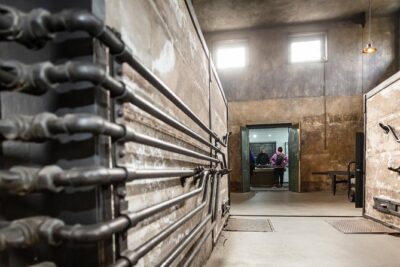
Terezin Concentration Camp Day Tour from Prague
Read our review →
Terezin & Bohemian Switzerland from Prague: Bastei, Narnia & Café
Read our review →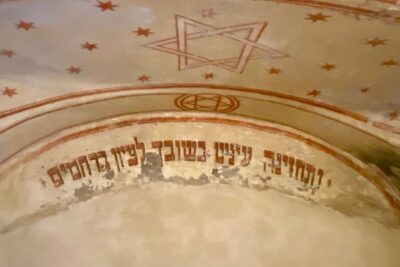
Terezin In-Depth Holocaust Tour From Prague’s Center (max 7 pax)
Read our review →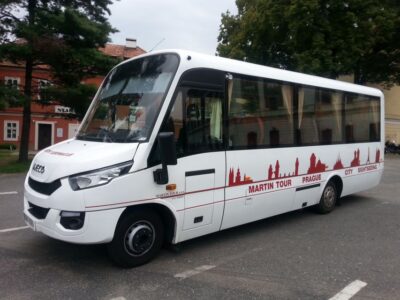
Browse the lists this tour appears in