
Reviewed · PRAGUE
Taste, Cook and Dine Traditional Czech
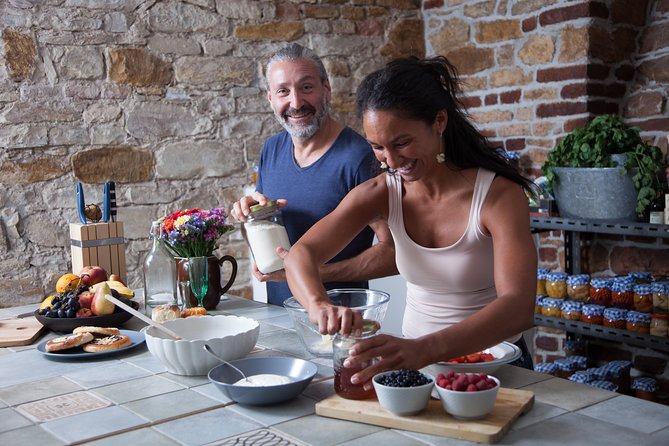
This is more than a cooking lesson. It is a small Czech food gathering where you taste your way through local habits, then help turn familiar ingredients into dinner. Host Bret leads the session, sometimes with his sister Svetlana, and the setting may be a cozy historical basement space in Prague’s Karlín district.
I especially like the small maximum of eight people, which gives you room to take part instead of standing behind a counter. I also like the mix of hands-on work, Czech wine, fruit brandy, and food stories. You are not simply handed a plate and told what it is.
The main consideration is the price: $167.75 per person is a serious sum for a three-and-a-half-hour meal. You are paying for a full food-and-drink experience, not just a basic class, but budget-minded visitors may find it costly.
Key points at a glance
- A small Karlín gathering: The class has a maximum of eight people and begins and ends at Křižíkova 70/67.
- Food with a story: Bret explains how farming, household cooking, and Czech traditions shaped the dishes.
- Several tasting stages: Expect sausages, cheeses, jams, pickles, bread, seasonal produce, wine, and fruit brandy.
- You help prepare the meal: Depending on the season, you may make potato-sauerkraut pancakes, a quark spread, salad, bread dumplings, or dessert.
- A substantial Czech dinner: The host prepares a main dish such as svíčková, goulash, roast duck, rabbit, or beef with mushrooms.
- A relaxed social format: Cooking, music, wine, and conversation are central to the evening, making it a good choice for solo visitors and couples.
Why this class says more than a restaurant meal
A restaurant can show you what Czech food looks like on a plate. This experience gives you the background behind it. You learn what has commonly appeared in Czech homes, which ingredients were grown locally, and how practical household cooking became part of the national food tradition.
That context matters. Bread, potatoes, cabbage, dairy, meat, pickles, and seasonal fruit are not random items on the menu. They reflect the foods available to ordinary households and the ways cooks stretched ingredients into filling meals. Bret uses the cooking process to connect food with Czech culture, habits, and the local economy.
I like this approach because it gives you something useful to take home. You may not recreate a complete Czech dinner after the class, but you will better understand why dumplings accompany saucy meat, why fruit appears in dessert dumplings, and why preserved foods remain such a familiar part of the table.
The tone is meant to be social rather than formal. You cook, eat, listen, and talk as the evening moves along. That makes the experience especially appealing if you enjoy meeting people as much as tasting food.
Other Prague days people book alongside this one:
- Prague: 50-Minute Sightseeing Evening Cruise
★ 4.2 · 33,780 reviews - Prague: Medieval Dinner with Unlimited Drinks
★ 4.4 · 19,847 reviews - Prague: Skip-the-line Castle Ticket and Optional AudioGuide
★ 4.3 · 11,121 reviews
Starting with Czech snacks, cheese, and pickles
The meal begins with a spread of typical Czech delicacies. You may taste sausages, cheeses, homemade jams, pickles, bread, seasonal vegetables, and fruit. This opening course works like a food map of the country, with smoky, tangy, creamy, sweet, and fresh flavors arriving before the main meal.
It also gives you time to settle in. You are not expected to understand Czech cuisine at once. Bret can explain what you are tasting and how the products fit into local cooking.
The cold starters are one of the strongest parts of the experience for anyone curious about everyday food. A restaurant menu tends to focus on finished dishes. Here, you get to sample the supporting ingredients that Czech families might serve with bread or place on a shared table.
The exact selection changes with the season. That is a plus for freshness and variety, but it also means you should not book expecting one fixed tasting menu. The experience promises a style of food and a range of possibilities rather than identical plates every time.
Making potato pancakes, spreads, or salad
The next hands-on portion focuses on one seasonal starter. You might prepare potato-sauerkraut pancakes, a cheese quark spread, or a carrot and kohlrabi salad. These options show three different sides of Czech home cooking: a hot pan-fried dish, a simple dairy spread, and a crisp vegetable preparation.
The potato-sauerkraut pancakes are likely to be the most active choice. You may grate ingredients, combine the mixture, and flip the pancakes. One particularly appealing detail from the class format is that you are not limited to watching a demonstration. You get involved in practical steps such as grating cheese and handling the pancakes.
The quark spread offers a gentler introduction. Quark is a fresh, soft cheese used widely in Central European cooking, and preparing it helps you see how a few basic ingredients can make a satisfying starter. The carrot and kohlrabi salad brings a lighter note and highlights vegetables that can be overlooked on a heavy Czech menu.
This part suits beginners because the dishes are approachable and the group is small. Still, you should expect participation, not a polished cooking show. The pace may depend on the season, the menu, and how quickly the group works together.
Three Czech wines and a taste of fruit brandy
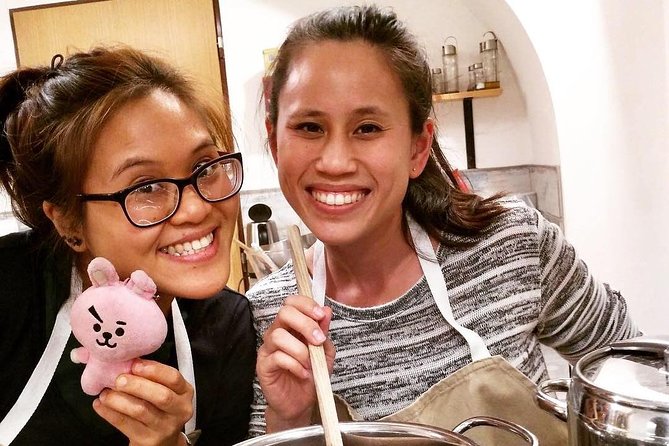
Drinks are woven into the class rather than added as an afterthought. You will taste three Czech wines, including Moravian wines, and sample Czech fruit brandy. The wine gives you a useful counterpoint to the food, especially with rich meat, dumplings, cheese, and pickled flavors.
Moravia is the Czech Republic’s main wine region, so tasting its wines adds an important regional detail to the meal. You are not only eating Czech food; you are also sampling a local drink tradition that may receive less attention than Czech beer.
The fruit brandy is offered as a sample, not described as a full serving. That makes it a small but distinctive part of the evening. If you do not drink alcohol, the supplied information does not specify nonalcoholic alternatives, so it is sensible to ask before booking if this matters to you.
The wine also helps create the informal mood that defines the class. Conversation and shared tasting are built into the schedule. This is a better fit for you if you like talking over food than if you want a quiet, tightly timed lesson.
Same city, a completely different afternoon:
- Prague: Castle Tour with Local Guide and Entry Ticket
★ 4.6 · 10,422 reviews - Prague Castle 2.5-Hour Tour Including Admission Ticket
★ 4.7 · 8,927 reviews - Prague: Oldtown, Medieval Underground & Dungeon History Tour
★ 4.2 · 8,244 reviews - Prague: Vltava River Night Cruise with Buffet
★ 4.3 · 7,338 reviews
Sitting down to svíčková, goulash, or roast duck
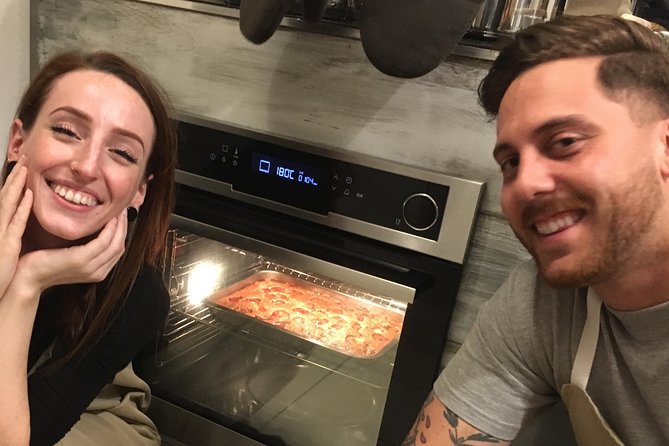
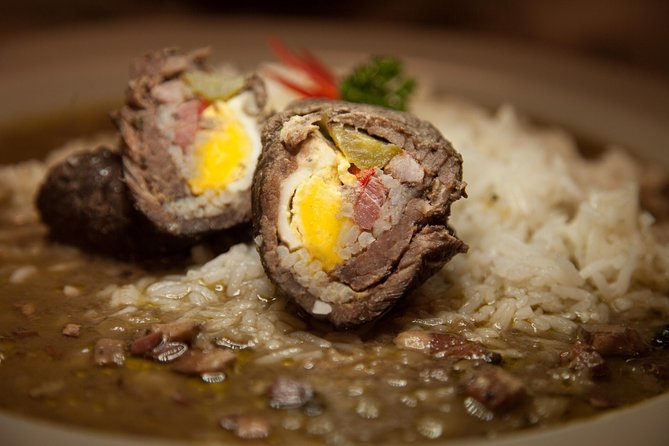
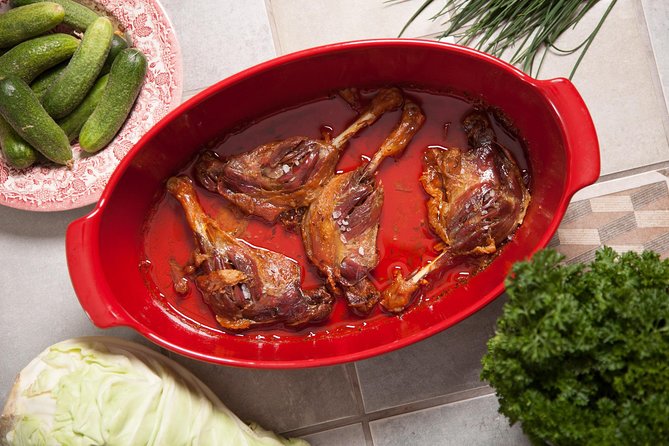
The main course is prepared by the host in advance, so this is the point where the class shifts from cooking practice to dining. The possible dishes include svíčková, beef goulash, Spanish bird, roasted duck, rabbit with vegetables, and beef with mushrooms.
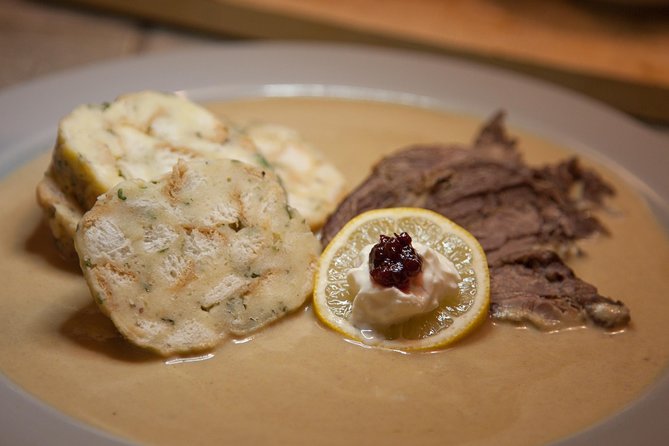
Svíčková is one of the best-known Czech dishes on the list. It combines beef with a creamy vegetable sauce and is usually associated with dumplings and a substantial Sunday-style meal. Goulash offers a more robust, slow-cooked option, while roast duck and rabbit show other traditional ways of preparing meat.
The menu can change, which keeps the experience seasonal and personal. The tradeoff is that you may not know the exact main dish until the class takes place. If you have dietary restrictions, do not assume the alternatives will be suitable. The supplied information does not list vegetarian, vegan, allergy, or gluten-free substitutions.
Because the host prepares the main course ahead of time, the class can focus on eating it at its best. You help with selected recipes, but this is not a full course in every dish served. Think of it as a guided food experience with cooking woven through it.
Learning to make Czech bread dumplings
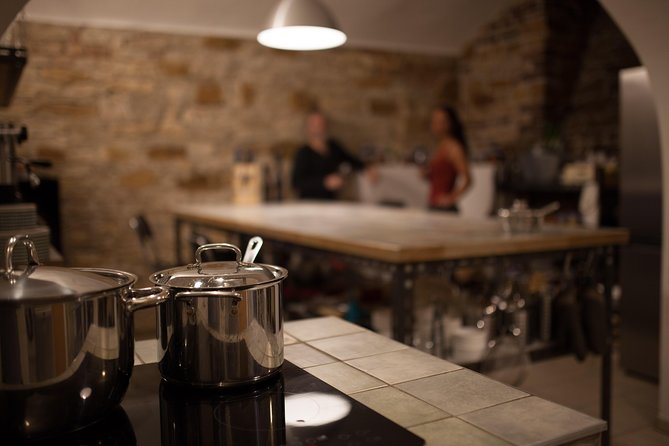
Bread dumplings are prepared together and serve as the side dish for the main course. They are a key part of Czech cuisine because they soak up creamy sauces and gravy, turning a rich main into a complete meal.
This is one of the most useful techniques in the class. Dumplings can seem mysterious when they arrive sliced on a restaurant plate, but preparing them with a host makes their role clearer. You see that they are not a decorative extra. They are designed to carry sauce and balance the meat.
The hands-on work may include different dumpling techniques, depending on the evening. The experience also mentions a variety of dumplings in the cooking process, so you may see more than one form. Still, the exact preparation is not guaranteed.
If you want a class where every course is cooked from raw ingredients by the group, this format may disappoint. If you prefer a meal with some guided participation and plenty of time to eat, it is a better match.
Ending with fruit dumplings or kremrole
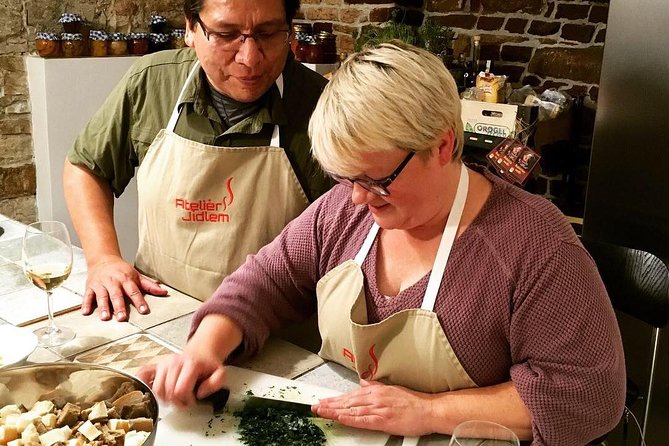
Dessert keeps the focus on familiar Czech ingredients. You might finish with fruit dumplings stuffed with fresh seasonal fruit and served with poppy seeds and or quark. Another possibility is kremrole, a delicate pastry filled with sweet meringue.
Fruit dumplings are a particularly interesting ending because they blur the line between dumpling and dessert. The seasonal fruit, poppy seeds, and quark give you a taste of Czech baking and home cooking that is quite different from a standard restaurant cake.
Kremrole brings a lighter, more pastry-focused finish. The fragile pastry and sweet filling are a pleasant contrast to the savory meal, though their delicate nature means the final dessert may vary with preparation.
As with the main course, the exact dessert depends on the season and the host’s plan. That is worth keeping in mind if you are choosing the class for one particular dish.
A small group with a personal feel
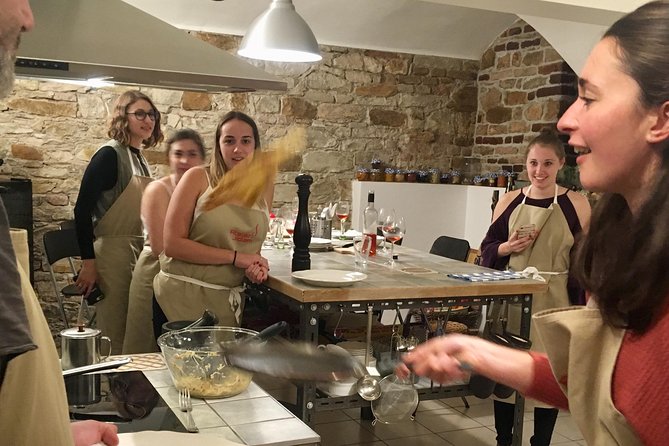
The maximum group size is eight. That is small enough for the host to involve people in the cooking and keep conversation moving around the table.
Bret is the main host, and the class may also be led with his sister Svetlana. The style is warm and informal. Food preparation, jokes, music, wine, and conversation all share the evening, rather than the class being built around a strict lecture.
This setup works well for solo visitors. You can arrive without a dining partner and still have a natural way to meet people. It also suits couples, families, and small groups who want an activity with more conversation than a standard dinner.
The social side is a real part of what you are paying for. If you prefer to keep to yourself, or if you want a technical chef’s class with little discussion, this may not be your ideal choice.
Location, timing, and practical value
The meeting point is Křižíkova 70/67 in Prague’s Karlín district. The area is near public transportation, and the activity ends back at the same meeting point. The total duration is about three hours and thirty minutes, so plan it as a full evening rather than a quick stop between sights.
The small venue has been described as a cozy historical basement space. That gives the class a more intimate setting than a large commercial cooking studio, though basement rooms may not suit everyone. The supplied details do not provide specific accessibility information, so ask the provider if stairs or mobility access are important to you.
The price is $167.75 per person. That is high compared with simply ordering a Czech meal, but the package includes a food tasting, a cooking lesson, a substantial main course, dessert, three wines, and fruit brandy. You are also paying for about three and a half hours with a host who explains the food and keeps the group involved.
For me, the value depends on how you travel. If you want an inexpensive meal, choose a restaurant. If you want a social evening that helps you understand Czech food and gives you hands-on time in the kitchen, the price makes more sense.
This activity is often booked about 50 days ahead, so I would not leave it until the last part of your Prague planning. Confirmation arrives at booking, and free cancellation is available up to 24 hours before the start time. The experience requires a minimum number of participants, so a cancellation for that reason may lead to another date, another experience, or a full refund.
Who should book this Czech food experience?
I would choose this class if you enjoy eating local food, asking questions, and taking part in simple kitchen tasks. It is particularly good for solo visitors, couples, food-focused families, and anyone who wants a social evening away from Prague’s main sightseeing streets.
You should also book it if Czech cuisine is new to you. The menu covers many familiar national touchstones: dumplings, goulash, creamy sauces, pickled foods, quark, fruit desserts, Moravian wine, and homemade preserves.
I would hesitate if you need a fixed menu, strict dietary control, a fully vegetarian meal, or a highly technical cooking course. None of those details is promised. The class is also not the cheapest way to eat in Prague.
Should you book it?
Book this experience if you want Czech food explained through cooking, tasting, and conversation rather than served without context. The small group, flexible seasonal menu, and mix of wine, snacks, dinner, and dessert make it a strong choice for a memorable evening.
Skip it if you want a short activity, a guaranteed dish, or a low-cost introduction to Czech cuisine. For everyone else, the combination of Bret’s relaxed hosting, practical cooking, and a full traditional meal offers a meaningful way to spend three and a half hours in Prague.
FAQ
How much does the experience cost?
The price is $167.75 per person.
How long does the class last?
The experience lasts approximately three hours and thirty minutes.
Where does the activity start?
It starts at Křižíkova 70/67, 186 00 Praha 8-Karlín, Czechia.
Where does the activity end?
It ends back at the meeting point.
What language is the experience offered in?
The experience is offered in English.
How many people can join?
The maximum group size is eight people.
What food might I prepare?
Depending on the season, you may prepare potato-sauerkraut pancakes, a quark cheese spread, carrot and kohlrabi salad, bread dumplings, fruit dumplings, or kremrole.
What drinks are included?
You will taste three Czech wines and a sample of Czech fruit brandy.
Can I cancel for a full refund?
Yes. You can cancel at least 24 hours before the start time for a full refund. Cancellations or changes made less than 24 hours before the start time are not accepted for a refund.
Just added around Prague
- Prague: Historical Walking Tour with Focus on World War 2★ 4.3 · 12 reviews
- WWII and Communism History in Prague’s Old Town Private Tour★ 5.0 · 4 reviews
- World War II 4WD Tour from Prague with Lunch★ 4.4 · 3 reviews
- Unique salt cave in Prague★ 4.9 · 10 reviews
- Walking tour of Prague in French : Nové Město★ 4.9 · 16 reviews
- Walking tour of Prague in french: Old Town & Charles Bridge★ 4.9 · 62 reviews
- Prague: Market Tour and Traditional Czech Cooking Class★ 4.7 · 19 reviews
- Ultimate Unlimited Beer Pong with Czech Beer★ 4.6 · 5 reviews