
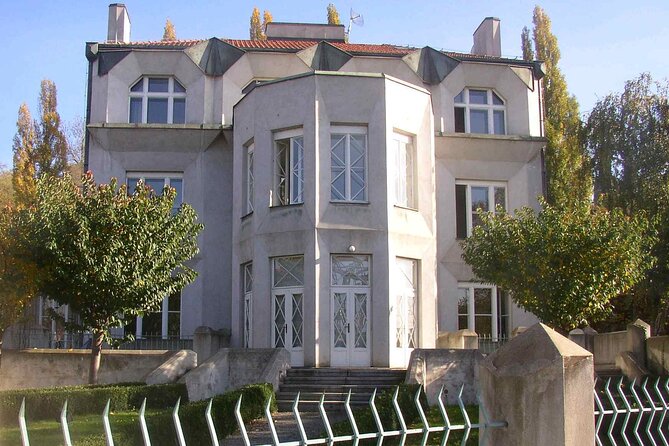
Reviewed · WALKING TOURS
Private Prague Art Nouveau and Cubism Walking Tour
Prague’s famous Gothic and Baroque sights get most of the attention, but this tour shows you a different city: one of bold curves, geometric facades, and daring early-modern design. In 2.5 hours, you move from the restored Central Station to the Cubist buildings near Vyšehrad, with guide Max Hutar explaining how Prague’s architects turned buildings into works of art.
I like two things here. First, the private format lets your group of up to 15 ask questions and set the pace. Second, the route teaches you how to spot Art Nouveau and Cubism for yourself, so the city keeps making more sense after the tour ends. The main drawback is that this is an active route, and the schedule can run longer than the advertised 2.5 hours.
Key Points to Know Before You Book
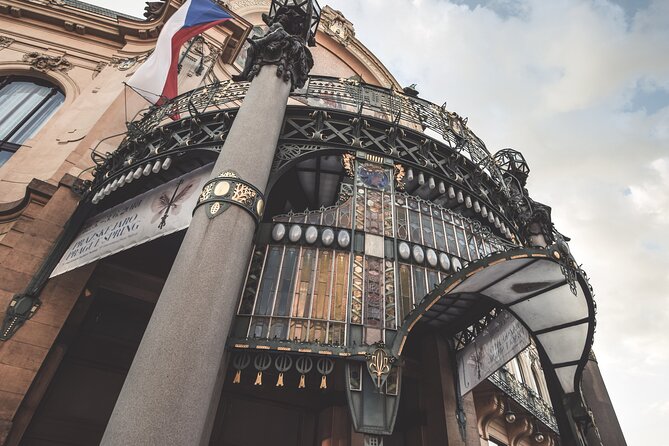
- A rare look at Prague’s early-modern architecture: See Art Nouveau decoration and Prague Cubism side by side.
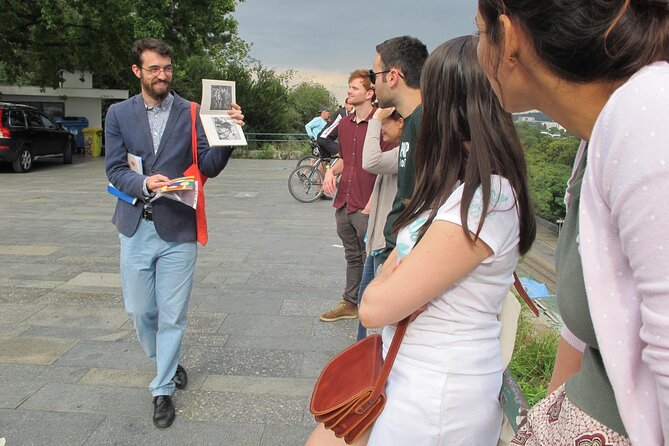
- Max Hutar leads the tour: His storytelling and passion for the subject are central to the experience.
- The route covers 13 architectural stops: You’ll visit landmarks from Prague Central Station to Villa Kovarovic and Neklanova.
- Expect walking plus public transport: Short transfers connect the buildings, and the tour ends near the Albertov tram stop.
- Private groups get a more personal outing: Your party is the only group on the booking, with space for questions and adjustments.
- The price is $94.93 per group of up to 15: That can be excellent value for a family or larger party, but less so for one or two people.
Why Prague’s Art Nouveau and Cubism Matter
Prague is one of the best cities in Europe for seeing Art Nouveau in everyday urban settings. The style appears not only on grand public buildings, but also on apartment houses, hotels, banks, department stores, lamps, and shopfronts.
This tour also introduces you to Prague Cubism, a more unusual movement that used sharp angles and crystalline forms in architecture. You may know Cubism from painting, but Prague’s architects applied the idea to facades, interiors, furniture, and even street furniture.
That contrast gives the tour its character. Art Nouveau tends to flow, curl, and decorate. Cubism breaks surfaces into hard planes and pointed shapes. Once Max helps you identify those traits, you can begin spotting them on your own around the city.
The tour is not simply a parade of pretty buildings. It gives you a way to read Prague. You learn why a facade looks soft or severe, why a building feels modern even when it borrows from older styles, and how local architects experimented before the First World War.
More walking tours in Prague:
- Prague: 3-Hour Walking Tour of Old Town & Prague Castle
★ 4.7 · 5,696 reviews - Prague: Ghost Walking Tour Where Legends Come To Life
★ 4.4 · 5,253 reviews - Prague: Jewish Quarter Walking Tour with Admission Tickets
★ 4.7 · 3,729 reviews
Starting at Prague Central Station
The tour begins at Praha hlavni nadrazi, Prague’s main railway station on Wilsonova. Opened in 1909, its historic building is an early and important example of local Art Nouveau.
The station has practical value as a meeting point, but it also sets the tone immediately. Instead of beginning with a long transfer to a distant neighborhood, you start inside one of Prague’s major architectural landmarks. The recently reconstructed halls and corridors give you a chance to look closely at decorative details before the route moves into the streets.
Allow yourself a little time to find the correct meeting area at Prague Main Station. The address is Wilsonova 300/8, in Prague 2. Since the station remains a working transport hub, arriving a few minutes early is sensible.
Jerusalem Synagogue and the New Town Apartments
The next stop is the Jerusalem Synagogue, built in 1906 in a Moorish style with Art Nouveau touches. It is a useful reminder that Art Nouveau was not one fixed look. Architects could combine flowing decoration with Moorish, Gothic, or other historical influences.
The visit here is brief, listed at about five minutes, and admission is not included. Treat it mainly as an exterior architecture stop unless Max advises otherwise. The building’s colorful, exotic appearance makes it a strong early example of how Prague designers mixed old references with newer decorative ideas.
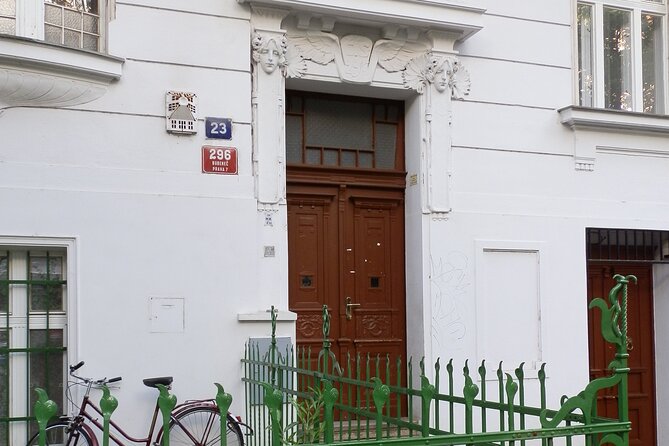
At Senovazne Namesti, you see three luxurious apartment buildings from the Art Nouveau period. This stop matters because it shifts attention away from famous public monuments. Prague’s style lives in residential architecture too, and these buildings show how design shaped the streets where people lived.
The stop is short, so you will not spend long examining every facade. Still, Max can point out the details that make these apartments typical of Prague’s Art Nouveau period. I like this part of the route because it helps you see the style as part of the city’s daily fabric, not just as a special effect reserved for grand halls.
Hotel Central and the Municipal House
At Hybernska 10, you see the Hotel Central, dating from 1899. It is among Prague’s earliest Art Nouveau buildings, making it an important stop for understanding the style’s arrival in the city.
The listed time here is only five minutes, and admission is not included. That tells you what kind of tour this is: an exterior-focused survey with many stops, not a slow interior visit at every address. If you prefer to study one building for half an hour, this pace may feel quick.
The Municipal House is the route’s grand Art Nouveau centerpiece. Projected in 1905, it remains a major cultural and representative building for Prague. Its scale and decorative detail make it a natural highlight, even with only about ten minutes scheduled.
Admission is not included, so do not assume the tour includes a full interior visit. The building is still valuable from the outside, and Max’s explanation can help you understand why it matters within Prague’s early-modern architecture. If you want to return later for more time inside, the tour gives you a useful first look.
A few more Prague outings worth weighing up
- Prague Old Town: Private Tour
★ 5.0 · 1,223 reviews - Prague Airport Private Arrival Transfer
★ 4.5 · 991 reviews - Prague Airport Private Departure Transfer
★ 4.5 · 780 reviews - Discover Prague Private Tour – 3 hours
★ 5.0 · 705 reviews
The House at the Black Madonna
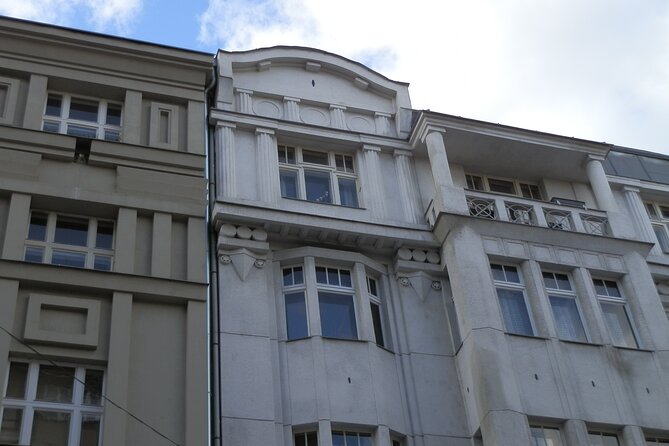
The House at the Black Madonna, built in 1912, is the clearest turn from Art Nouveau to Cubism. Its central location and strong stylistic purity make it one of Prague’s key Cubist buildings.
This is where the visual lesson becomes especially clear. Instead of relying on curling lines and ornamental surfaces, Cubist design uses angular forms and forceful geometry. The building is compact and urban, which makes the style feel even more striking beside the older architecture around it.
The stop lasts about ten minutes, and admission is not included. Since this is one of the best-known buildings on the route, you may want to return later if you want a longer look. The scheduled visit gives you the essential exterior and the broader design context.
For me, this is one of the tour’s most useful moments because it gives you a firm reference point. After seeing the House at the Black Madonna, later Cubist buildings become easier to recognize.
Banks, a Cubist Lamppost, and Wenceslas Square
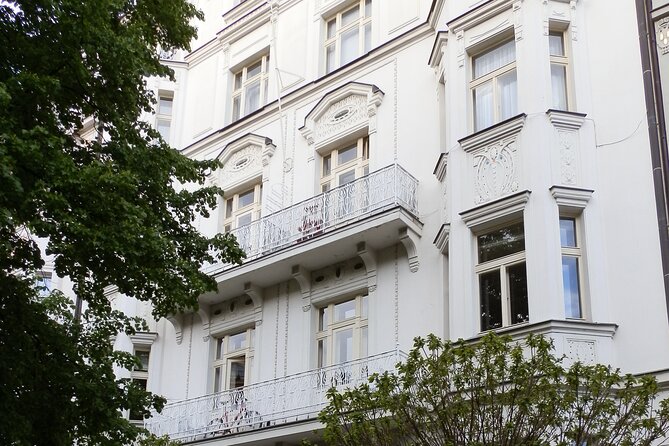
Na Prikope forms the boundary between Prague’s Old Town and New Town. Along this broad boulevard, banks and other buildings show off Art Nouveau decoration on a large urban scale.
The stop is short, about five minutes, but the street gives you a sense of how the style appeared across a commercial district. You are not looking at a single isolated monument. You are comparing several facades in a busy part of central Prague.
Next comes Emil Kralicek’s Cubist lamppost. This small piece of street furniture is easy to miss when you walk through the city on your own. It is also one of the route’s most unusual stops, since Cubism reaches beyond buildings and into the objects placed around them.
The lamppost makes a useful point: architectural movements can shape an entire street scene, even in details that serve a simple purpose. It is a quick five-minute stop, but one that rewards careful looking.
At Wenceslas Square, you see Art Nouveau hotels and department stores around one of Prague’s central public spaces. The scheduled time is about 20 minutes, longer than at many other stops. That makes sense. The square contains several buildings, and its broad layout lets you compare facades rather than focus on just one.
Because Wenceslas Square is a major downtown area, you should expect city activity around you. Keep your attention on Max and on the buildings overhead. This is not a quiet museum setting, but that is part of its value: the architecture remains part of a living commercial center.
Vodičkova and the Three Cubist Houses
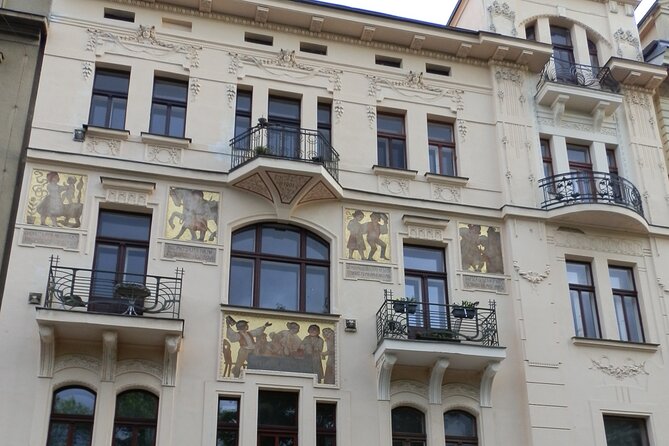
Vodičkova continues the architectural comparison with multiple Art Nouveau and Cubist buildings. The street is another good place to see how the two styles can appear within the same part of Prague.
The route gives you about ten minutes here. That is enough for a guided explanation and a few photographs, but not for a detailed study of every address. I would listen for the visual clues Max uses, then keep them in mind as you walk.
The Three Cubist Houses near the Vyšehrad fortress are among the tour’s strongest architectural moments. Their grouped design makes the Cubist idea easy to see, with facades that appear to fold and project rather than sit flat.
The stop lasts about five minutes, and admission is not included. The short visit is understandable because the main point is the exterior. These houses are best treated as a visual lesson in how radical Prague Cubism could be when applied to residential buildings.
Villa Kovarovic and the Finish Near Albertov
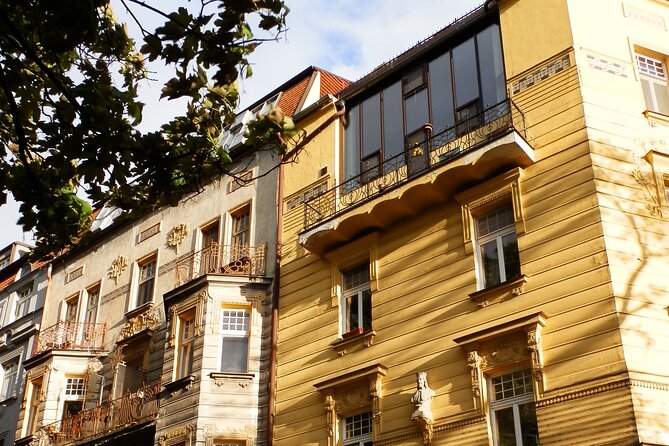
Villa Kovarovic, built in 1912 beside the Vltava River, is a Cubist masterpiece influenced by Gothic and Baroque architecture. This combination is one of the tour’s most interesting ideas. Prague Cubism was not simply an import of modern geometry. Local architects also drew on older Czech and European forms.
The scheduled stop is about ten minutes, and admission is not included. As with other buildings on the route, you should confirm with Max what access is possible on the day rather than assume an interior visit.
The final stop is on Neklanova, where a Cubist apartment building from 1913 brings the route to a close. Ending with a residential building feels appropriate. You have moved from a huge railway station and public monuments to the kinds of structures that shaped ordinary city streets.
The tour finishes near the Albertov tram stop, at Na Slupi 2102/2b. Your public transport ticket for the final leg remains valid long enough to return toward the city center. That makes the ending practical, although you should be ready for the route to finish away from the Old Town’s central squares.
How Much Walking and Time to Expect
The advertised duration is about 2 hours and 30 minutes, but the stop times add up to less than that. The difference comes from walking between buildings and using public transport during part of the route.
That detail matters. You are not standing in one place for the full tour. You will move through several Prague districts, with short walks and transport connections between architectural points.
One useful warning: the tour can run longer than 2.5 hours. If you have a train, dinner reservation, or another timed activity afterward, leave a generous buffer. The route is more enjoyable when you do not need to hurry Max through an explanation or rush away from the final stop.
Comfortable shoes are a sensible choice. The tour is manageable for most people, and most participants can take part, but it is still an active city walk rather than a seated lecture.
Price, Group Size, and Overall Value
The price is $94.93 per group of up to 15 people. For a large family or group of friends, that can be strong value. Divided among 10 people, it works out to less than $10 per person for a private, English-language architecture tour.
For one or two people, the calculation is different. You are paying for a private guide rather than a low-cost group walk, so the value depends on how much you care about Art Nouveau, Cubism, and personal attention.
The private format is a real advantage if your group has specific interests. You can ask about a building, request clarification, and avoid being folded into a large public group. Max Hutar is repeatedly described as engaging, passionate, well-prepared, and able to explain both design and the people behind it.
Several past participants felt the tour changed how they saw Prague. That is the best measure of its value. You are not just collecting 13 addresses. You are learning a visual system you can keep using throughout the city.
Admission is not included at several stops, including the Jerusalem Synagogue, Hotel Central, Municipal House, House at the Black Madonna, Three Cubist Houses, and Villa Kovarovic. The information provided does not promise interior entry, so budget and plan on an exterior-led tour.
Who Will Enjoy This Tour Most
I would choose this tour if you enjoy architecture, design, urban history, photography, or unusual city details. It also suits a repeat visitor who has already seen Prague Castle, Charles Bridge, and the Old Town Square and wants a new way to understand the city.
It is a good fit for a family or friend group that wants a private activity rather than a standard sightseeing walk. The route can also work well early in a Prague visit because it gives you a new set of visual markers across the central districts.
You do not need prior art training. The strongest part of Max’s role is helping beginners recognize the difference between flowing Art Nouveau lines and the sharper logic of Cubism.
I would think twice if you want long interior visits, a slow pace, or a tour focused on Prague’s medieval monuments. This route is niche by design. It covers many stops in a short time, and some visits last only five minutes.
Should You Book It?
Book this tour if you want Prague to look different by the end of the afternoon. Max Hutar’s personal approach, the private group format, and the mix of famous buildings with easy-to-miss details give the route real purpose.
The best value comes when you share the $94.93 price with a group. Allow extra time beyond the advertised 2.5 hours, wear comfortable shoes, and expect public transport near the end.
If Art Nouveau and Cubism sound like subjects you might normally skip, this could be the tour that changes your mind. If you want a quick checklist of Prague’s major historic sights, choose something else. For architecture and design lovers, this is a focused and memorable way to see the city.
FAQ
Where does the tour begin?
It begins at Prague Main Station, Praha hlavni nadrazi, at Wilsonova 300/8, Vinohrady, 120 00 Praha-Praha 2.
Where does the tour end?
The tour concludes near the Albertov tram stop at Na Slupi 2102/2b, Nové Město, 128 00 Praha-Praha 2.
How long does the tour last?
The advertised duration is approximately 2 hours and 30 minutes. The walking and public transport between stops form part of that total, and the tour may take longer.
Is this a private tour?
Yes. Only your group participates in the private activity.
How many people can join one booking?
The price covers one group of up to 15 people.
What language is offered?
The tour is offered in English.
Is transportation used during the tour?
Yes. The route includes short walks and public transportation at one point. The same ticket used for the final leg remains valid long enough to return toward the city center.
Are admission tickets included?
Admission is listed as not included at several stops, including the Jerusalem Synagogue, Hotel Central, Municipal House, House at the Black Madonna, Three Cubist Houses, and Villa Kovarovic. Other stops are free.
Is the tour suitable for most people?
Most participants can take part, and service animals are allowed. You should still expect a fair amount of walking and time on public transportation.
Can I cancel for a full refund?
Yes. You can cancel up to 24 hours before the start time for a full refund. Cancellations or changes made less than 24 hours before the start time are not accepted for a refund.
Just added around Prague
- Prague: Historical Walking Tour with Focus on World War 2★ 4.3 · 12 reviews
- WWII and Communism History in Prague’s Old Town Private Tour★ 5.0 · 4 reviews
- World War II 4WD Tour from Prague with Lunch★ 4.4 · 3 reviews
- Unique salt cave in Prague★ 4.9 · 10 reviews
- Walking tour of Prague in French : Nové Město★ 4.9 · 16 reviews
- Walking tour of Prague in french: Old Town & Charles Bridge★ 4.9 · 62 reviews
- Prague: Market Tour and Traditional Czech Cooking Class★ 4.7 · 19 reviews
- Ultimate Unlimited Beer Pong with Czech Beer★ 4.6 · 5 reviews
Walking Tours, compared.
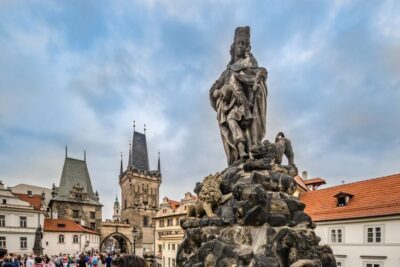
3-Hour Walking Tour of Old Town & Prague Castle
Read our review →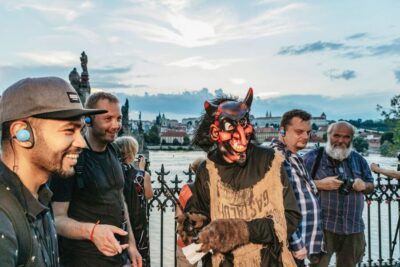
Ghost Walking Tour Where Legends Come To Life
Read our review →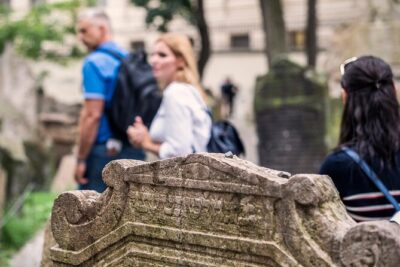
Jewish Quarter Walking Tour with Admission Tickets
Read our review →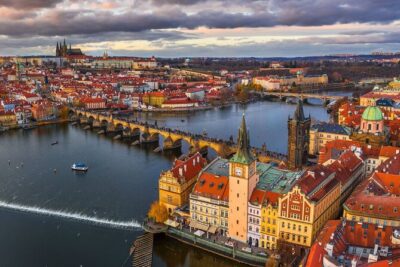
Prague Guided Walking Tour and Cruise with Authentic Czech Lunch
Read our review →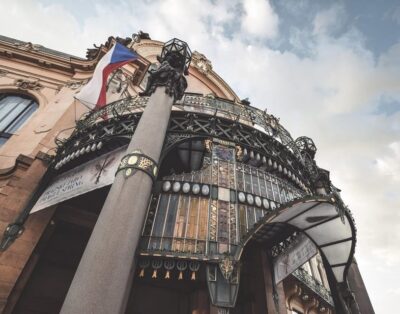
Old Town and Jewish Quarter Guided Walking Tour
Read our review →
Prague Ghost and Legend of Old Town Walking Tour
Read our review →
Prague 3-hour Afternoon Walking Tour including Prague Castle
Read our review →
Ghosts and Legends Nighttime Guided Walking Tour
Read our review →Browse the lists this tour appears in