
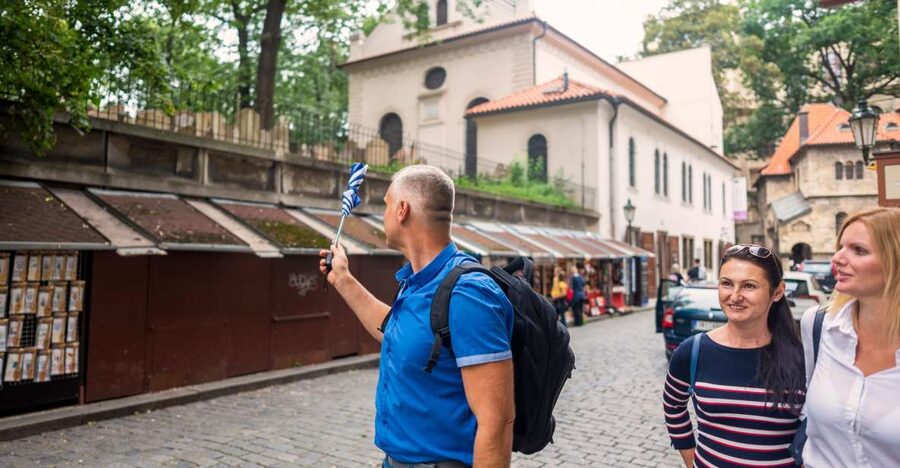
Reviewed · PRAGUE
Prague Through the Eyes of Franz Kafka 2.5-Hour Tour
Kafka’s Prague is not a museum exhibit you simply look at. It is a web of streets, apartments, schools, cafés, synagogues, and family connections. This 150-minute walking tour uses those places to explain the man behind The Metamorphosis, The Trial, and The Castle, while also showing how Prague shaped his work.
I like two things right away: the tour connects Kafka to real addresses and daily routines, and it treats Prague’s Jewish and political past as part of his story rather than as background decoration. Guides such as Peter, Martina, and Argel have been especially praised for turning difficult material into clear, lively storytelling.
The main consideration is that this is primarily a talk-and-walk experience. You will see streets and buildings from the outside, and admission tickets are not included. If you want major interiors or a broad sightseeing tour of Prague, this may feel too focused.
Key points to know before booking
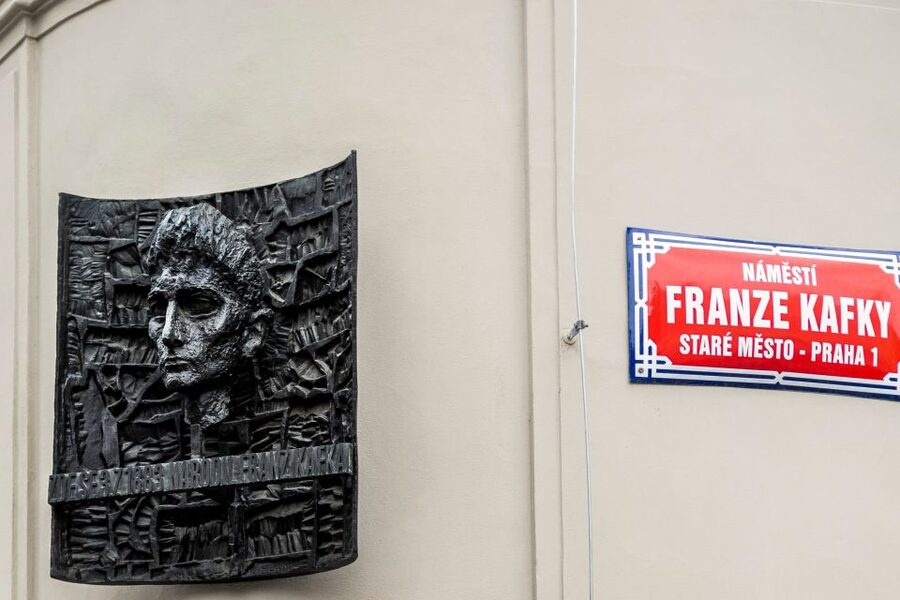
- Kafka’s actual Prague connections: Visit areas tied to his family, education, relationships, and writing.
- Old Town and Josefov in one walk: The route links Kafka’s life with the history of Prague’s former Jewish Quarter.
- Coffee or tea included: The café stop gives you a seated break and time to discuss Kafka’s work.
- Strong guide-led experience: Peter, Martina, Argel, and other guides have earned praise for literary detail and engaging stories.
- Good value at $40: You receive a licensed guide and a 2.5-hour walk, with no attraction admission fees included.
- Weather matters: The tour runs in all conditions, so proper shoes and rain protection are sensible.
Why Kafka makes a smart way into Prague
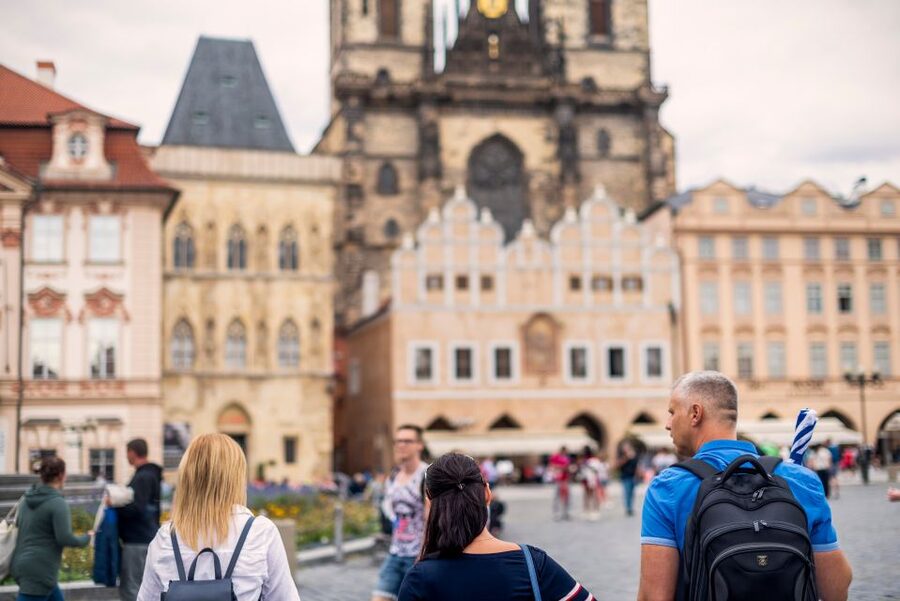
Franz Kafka can seem like a writer floating somewhere outside ordinary life: insects, courtrooms, castles, and strange bureaucracies. In Prague, he becomes easier to place. He was born here, went to school here, studied here, worked here, loved here, and spent much of his life among the streets of Old Town and Josefov.
That is the strength of this tour. You do not simply hear a biography in a room. You walk through the city where Kafka’s family lived and where he formed his view of society, religion, language, work, and authority.
I especially like the way the experience places Kafka inside Prague’s changing identity. He was part of a German-speaking Jewish family in a city with a strong Czech majority, under the rule of the Austro-Hungarian Empire. That cultural mix affected how he understood belonging, separation, and language.
You do not need to have read every page of Kafka to enjoy the walk. The tour gives enough background to make his life understandable, and it also works as a history tour of Prague. If you already know his novels, the stops can give familiar themes a physical setting.
Other Prague days people book alongside this one:
- Prague: 50-Minute Sightseeing Evening Cruise
★ 4.2 · 33,780 reviews - Prague: Medieval Dinner with Unlimited Drinks
★ 4.4 · 19,847 reviews - Prague: Skip-the-line Castle Ticket and Optional AudioGuide
★ 4.3 · 11,121 reviews
Starting at Maiselova 5 near Old Town Square
You meet the guide at the Get Prague Guide office at Maiselova 5, Prague 1. This is close to Old Town Square, so the meeting point is easy to combine with a morning or afternoon in the historic center.
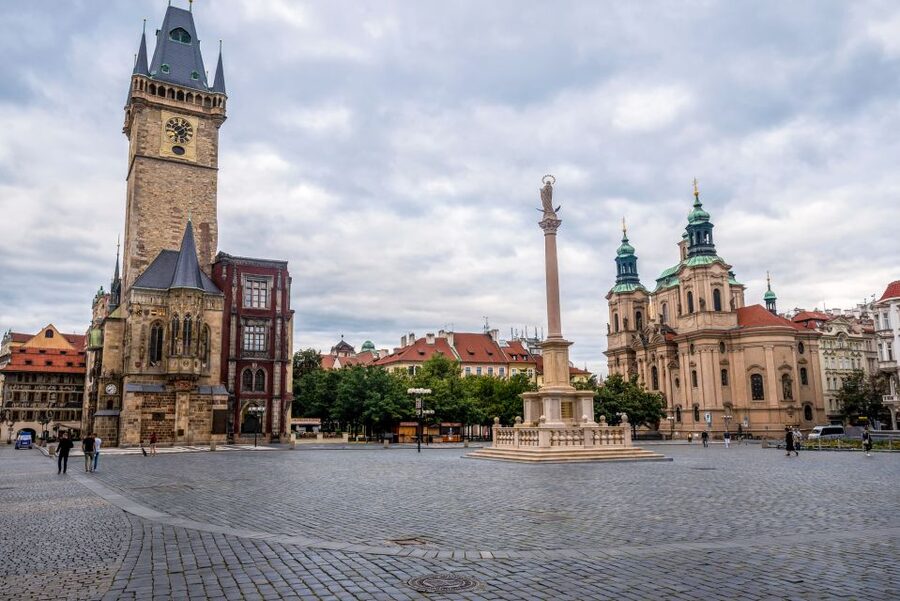
The opening section takes place around Old Town and lasts about an hour. This is a useful beginning because Kafka’s life was tied to the central city, not to some remote literary retreat. Streets, commercial buildings, religious sites, and public institutions all formed part of his daily surroundings.
Your guide explains where Kafka went to school and university, and how his family fitted into Prague’s social world. The details matter because Kafka’s writing did not come from nowhere. His work grew from the pressure of modern city life, family expectations, government offices, and the uneasy borders between communities.
Guides have different personalities, but the best-known names connected with this experience include Peter, Martina, and Argel. Peter has been praised for adding wider historical context, including political and social details beyond Kafka. Martina is noted for a clear storytelling style, and Argel has been described as especially focused on Kafka’s letters, novels, fragments, family, loves, and personal difficulties.
That range is useful. A good Kafka guide needs more than a list of dates. You want someone who can explain how a family home, school, or café connects to the writer’s inner life without pretending every building directly inspired a particular scene.
Old Town: schools, family life, and the young Kafka
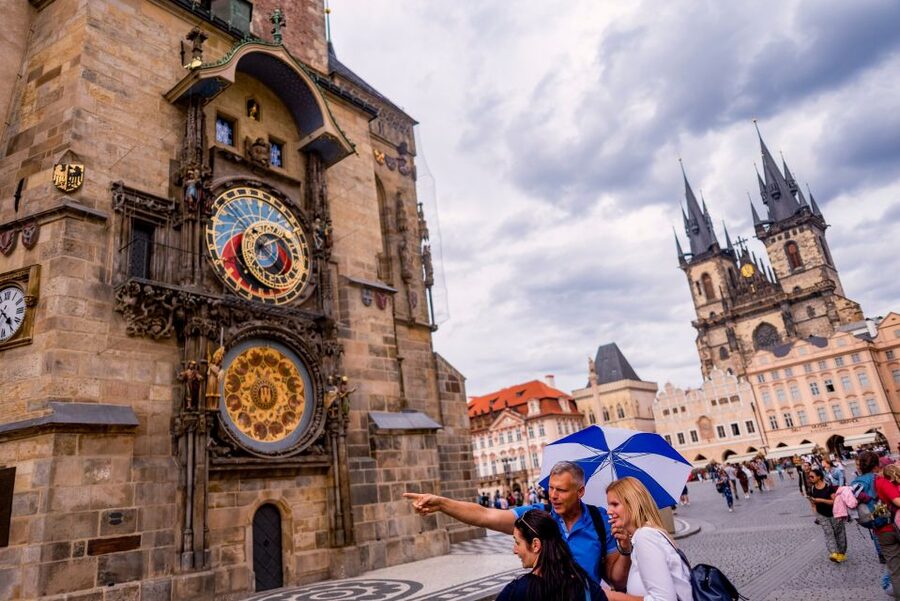
The Old Town portion gives you the basic map of Kafka’s life. You learn about the apartments where his family lived and the places tied to his education. These stops may not look dramatic. That is part of the point.
Kafka’s world was made up of ordinary streets. A house where a family lived, a school where a young student studied, or a café where intellectuals gathered can look like just another Prague façade today. The guide supplies the missing human detail and explains what these places meant in Kafka’s time.
The tour also covers the house where Kafka met his fiancée, Felice Bauer. This adds a personal thread to the walk. Kafka’s relationships, letters, ambitions, and doubts are as important to understanding him as his published novels.
Expect plenty of explanation while standing outdoors. The route is not designed around dramatic architectural reveals at every stop. One earlier account of the experience put the point plainly: there may not be much to see visually, but the information makes the walk worthwhile.
That means your enjoyment will depend heavily on the guide. If you like literary biography, social history, and careful storytelling, the modest physical sights should work well. If you need constant interior visits or highly visual attractions, you may find the first hour restrained.
Josefov and Prague’s Jewish past
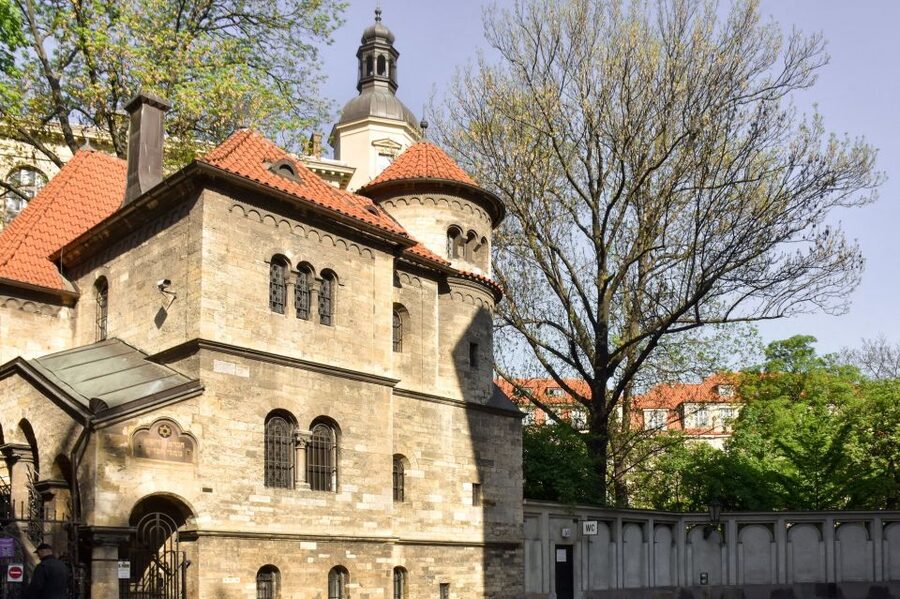
The route then moves through Josefov, Prague’s former Jewish Ghetto. This is the most important setting for understanding the city behind Kafka.
The tour does not treat Josefov as a collection of isolated synagogues and old buildings. It explains the fate of Prague’s Jewish community and the wider social pressures that shaped the city. You hear about Prague as a multicultural place, with Czech, German, and Jewish identities interacting in complicated ways.
This context is one of the tour’s best features. Kafka was Jewish, but his relationship to Jewish culture and religion was not simple. His position in Prague cannot be explained with a single label. The guide helps you see how language, family background, education, and local politics overlapped.
You pass near salons and synagogues connected with Kafka’s world and literary reflections. The exact appeal of these stops is less about entering a grand room and more about understanding the city’s intellectual atmosphere. The street itself becomes evidence of the world Kafka observed.
This part also helps explain why Prague feels different from a standard European capital tour. Its history is not one clean national story. The city’s communities lived close together, sometimes cooperated, and often faced tension. Kafka’s writing reflects that uncertainty, even when a particular story cannot be tied to one specific street.
If you have already visited the Jewish Museum, this walk can still add something different. Museum displays show objects and buildings. This tour links the quarter to one person’s family, education, work, and imagination. Admission to museum sites is not included, so you should not expect a museum visit as part of the $40 price.
Same city, a completely different afternoon:
- Prague: Castle Tour with Local Guide and Entry Ticket
★ 4.6 · 10,422 reviews - Prague Castle 2.5-Hour Tour Including Admission Ticket
★ 4.7 · 8,927 reviews - Prague: Oldtown, Medieval Underground & Dungeon History Tour
★ 4.2 · 8,244 reviews - Prague: Vltava River Night Cruise with Buffet
★ 4.3 · 7,338 reviews
Kafka’s café stop and a useful pause
The final part of the experience includes coffee or tea at a local café associated with Kafka’s Prague. One account identifies the stop as a traditional and famous coffee house, while another mentions a Cubist café. The café setting can vary, so treat it as a cultural pause rather than a guaranteed particular interior.
This is a welcome break after roughly two hours on city streets. You can sit down, ask questions, and talk about Kafka in a less formal way. At least one past guide used the café time to read a short Kafka text with the group, which shows how the stop can bring the literature into the conversation.
The included tea or coffee adds modest but real value. In Prague, café culture is part of the city’s intellectual story, so the stop fits the subject rather than feeling like an unrelated refreshment.
Still, keep your expectations in proportion. The included drink is not a full meal, and the tour does not promise pastries or lunch. If you want to order more, any extra café purchases are not listed as included.
The route returns to the Get Prague Guide office after the café. The advertised duration is 150 minutes, though some past departures have lasted longer when the group had many questions or the guide continued the conversation over coffee. Plan your day around the stated two and a half hours, but avoid booking a tight appointment immediately afterward.
What the guides do best
The strongest part of this experience is the guide’s ability to connect Kafka’s private life with public Prague. Several guides have been praised for more than factual recall. They tell stories, answer difficult questions, and explain the political and economic setting around Kafka’s life.
That matters because a list of addresses would be thin entertainment. You want to know why Kafka’s family moved, how his education shaped him, how his relationships affected his writing, and why Prague’s competing languages and communities mattered.
Peter has been described as a strong historian who added useful information about the area beyond Kafka. Martina’s style has been praised for explaining Kafka’s life without overloading the group. Argel has been singled out for his close command of Kafka’s letters, novels, fragments, and biographies.
You may not get one of these particular guides on your departure, so do not book solely on the hope of meeting a named person. The important point is that the experience is built around live, licensed guides speaking English or German, not an audio track or a fixed script.
The tour also appears suitable for mixed groups. One guide managed to hold the attention of teenagers who arrived tired after a Jewish Museum visit and lunch on a hot day. That suggests the storytelling can work for families and students, not only for literary specialists.
Is $40 a fair price?
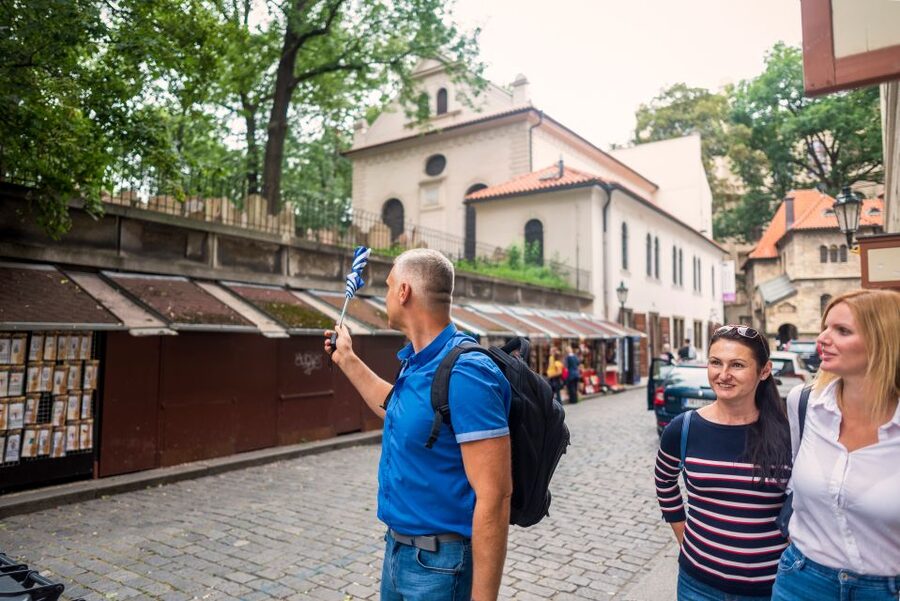
At $40 per person, I consider this fair value if you want a focused walking tour with a strong literary and historical angle. You receive a live licensed guide, two and a half hours of instruction and walking, and coffee or tea.
The price is less attractive if you view it as a sightseeing route only. You do not receive admission to museums, synagogues, or other attractions. The main purchase is the guide’s interpretation, not a collection of tickets.
Compared with wandering through Old Town and Josefov alone, the benefit is structure. You can find Kafka-related places on a map, but the connections between them are harder to understand without context. The tour also saves you from treating Kafka as a decorative name attached to statues and souvenirs.
I would book it early in your Prague stay if you want the rest of the city to make more sense. The route gives you a useful first picture of Old Town, Josefov, Prague’s communities, and the city’s literary life. It can also help you decide which museums or historic buildings deserve a separate visit.
Practical advice for a comfortable walk
Wear shoes suited to city streets. The tour is outdoors and runs in all weather, so a rain jacket, umbrella, and sensible layers are useful when the forecast looks uncertain.
Allow time for standing. The activity includes a café stop, but most of the experience takes place on foot. If you want more time for questions, do not schedule a rushed attraction immediately afterward.
The tour is offered in English and German. Choose the language in which you are most comfortable discussing literature and history, since the value comes from the explanation rather than from simply reaching each location.
Bring some curiosity even if you have never read Kafka. The tour covers Prague’s social and political past, Jewish life, art, architecture, and literature. It is not only a literary pilgrimage.
If you are already a serious Kafka reader, bring questions about a favorite novel, story, letter, or period of his life. The guides are praised for handling detailed questions, and the café stop offers a natural time to talk through them.
Who should book this Kafka tour?
I would recommend it most strongly to readers interested in literature, Jewish Prague, Central European history, or the way a city shapes an artist. It also suits first-time visitors who want a guided introduction to Old Town and Josefov with more substance than a standard photo stop.
Families with older children and teenagers can enjoy it, especially if the guide uses stories rather than a long chain of dates. Students and small groups should find the format useful because the route connects biography with politics, religion, language, and city life.
I would be more cautious if your main goal is to enter historic buildings or see a large number of attractions. You will spend much of the tour outside, and admission tickets are not included. The physical sights are often simple, while the explanations carry the experience.
Final decision: a worthwhile literary walk for the right reader
Book this tour if you want to understand Kafka as a person living in Prague, not just as the author of strange and difficult books. The strongest value comes from the link between his family homes, education, relationships, cafés, Josefov, and the city’s divided cultural identity.
Skip it if you want a general Prague highlights tour or a museum-heavy morning. But if you are willing to listen, walk, and let ordinary streets gain meaning, $40 buys a thoughtful introduction to Kafka and the Prague that shaped him.
FAQ
Where does the Kafka tour meet?
Meet your guide at the Get Prague Guide office at Maiselova 5, 110 00, Prague 1, near Old Town Square.
How long does the experience last?
The scheduled duration is 150 minutes, or two and a half hours.
Which parts of Prague does the tour visit?
The route covers Old Town and Josefov, Prague’s former Jewish Ghetto, with stops connected to Kafka’s family, education, relationships, literary life, and the city’s Jewish community.
Is coffee or tea included?
Yes. Tea or coffee at a local café is included in the experience.
Are admission tickets included?
No. Admission tickets are not included.
Which languages are available?
The tour is offered with a live guide in English or German.
What happens if the weather is bad?
The tour operates in all weather conditions, so dress appropriately for rain, cold, or other outdoor conditions.
Just added around Prague
- Prague: Historical Walking Tour with Focus on World War 2★ 4.3 · 12 reviews
- WWII and Communism History in Prague’s Old Town Private Tour★ 5.0 · 4 reviews
- World War II 4WD Tour from Prague with Lunch★ 4.4 · 3 reviews
- Walking tour of Prague in french: Old Town & Charles Bridge★ 4.9 · 62 reviews
- Unique salt cave in Prague★ 4.9 · 10 reviews
- Walking tour of Prague in French : Nové Město★ 4.9 · 16 reviews
- Prague: Market Tour and Traditional Czech Cooking Class★ 4.7 · 19 reviews
- Ultimate Unlimited Beer Pong with Czech Beer★ 4.6 · 5 reviews