
Reviewed · PRAGUE
Prague, St. Martin: The Best of World & Czech Music
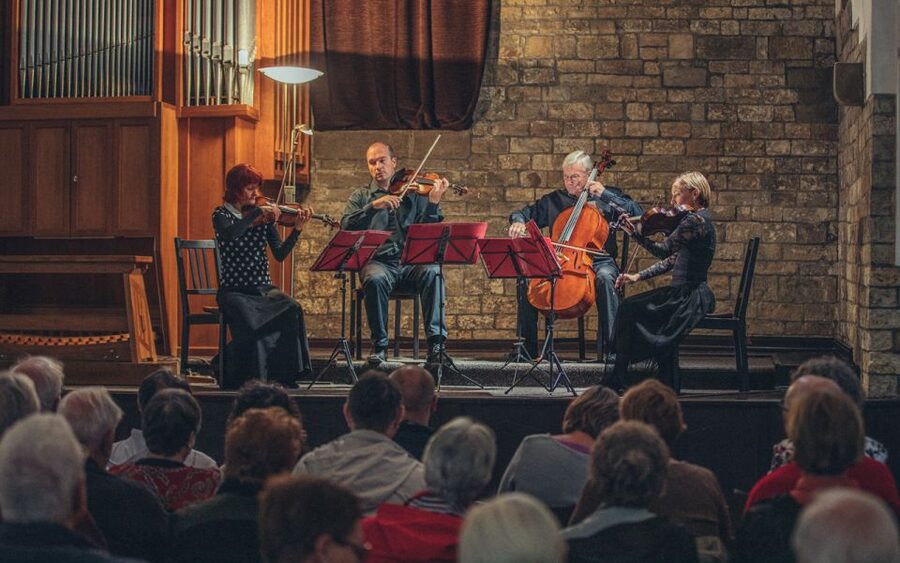
The setting is the star before the first note: a 12th-century church whose medieval wall touches the neighboring house. Inside St. Martin in the Wall, the Old Prague Music Ensemble plays a compact program of Czech and European classics, from Smetana’s Moldau to Albinoni’s Adagio.
I like the intimate string-quartet format, which suits the small church far better than a grand concert hall would. I also like the location, about 15 minutes on foot from Old Town Square, so you can pair the music with an easy evening walk. One caution: the church’s echo can blur quick passages, and the concert may finish around ten minutes early if the musicians take brisk tempos.
Key points to know before booking
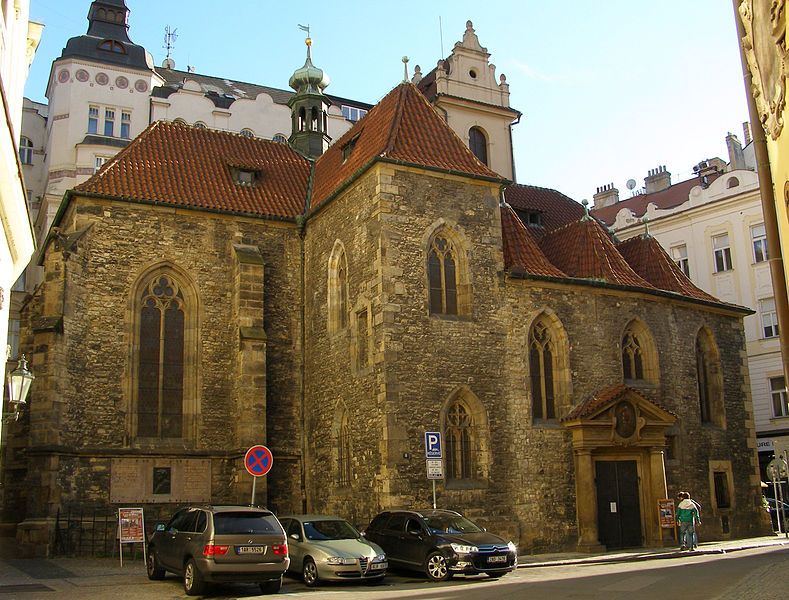
- A medieval venue: St. Martin in the Wall combines a Romanesque base with later Gothic and Baroque changes.
- A broad 70-minute program: You hear Smetana, Dvorak, Pachelbel, Bizet, Vivaldi, Bach, Mozart, Albinoni, and Brahms.
- A four-musician ensemble: The Old Prague Music Ensemble performs as a string quartet.
- A central location: The church sits on Martinska Street, close to both Old Town Square and Wenceslas Square.
- A low-cost evening plan: At $28 per person, the concert offers a simple way to add live classical music to a Prague itinerary.
- A practical sound warning: The church acoustics can make fast music less clear from some seats.
Entering St. Martin in the Wall on Martinska Street
You meet at St. Martin in the Wall Church, Martinska 8, in Prague 1. The church is near the center of Prague, with Old Town Square and Wenceslas Square both within easy reach. From Old Town Square, allow about 15 minutes on foot.
I like this location because the concert does not demand a separate transport plan. You can have dinner nearby, walk through the old center, and arrive without crossing the city. If you prefer public transport, Mustek station serves Metro lines A and B, while Narodni Trida is on line B. Trams 6, 9, 18, 22, and 91 stop at Narodni Trida.
The closest listed parking is at the National Theatre on Ostrovni 1. Since the venue is in central Prague, walking or public transport is likely to be simpler than driving, but the parking option helps if you already have a car.
Give yourself enough time to identify the entrance and settle in. This is a working historic church rather than a purpose-built concert hall, so the arrival experience may feel more modest and less polished than a major opera venue. That is also part of its appeal.
Other Prague days people book alongside this one:
- Prague: 50-Minute Sightseeing Evening Cruise
★ 4.2 · 33,780 reviews - Prague: Medieval Dinner with Unlimited Drinks
★ 4.4 · 19,847 reviews - Prague: Skip-the-line Castle Ticket and Optional AudioGuide
★ 4.3 · 11,121 reviews
Why the church changes the concert
St. Martin in the Wall gets its name from the unusual relationship between the church and the building beside it. One wall borders directly with the neighboring house. That detail is easy to miss on a normal walk through Prague, but it gives the venue a compact, enclosed character.
The church’s base dates from the Romanesque period in the 12th century. Later Gothic and Baroque changes altered its appearance, so you are not looking at a single untouched medieval style. Instead, the building carries several layers of Prague’s religious and architectural past.
The church once served as an important center of the Utraquist Church and had the support of wealthy burghers. Baroque sculptor Ferdinand M. Brokoff is buried here. You may not spend much time studying these details during a short concert, but they give the building weight beyond its role as a convenient music venue.
I find the setting especially fitting for Bach, Albinoni, and Pachelbel. Their music can benefit from a resonant room, and the church gives the performance a sense of occasion without requiring formal concert-hall rituals. At the same time, the echo is not always a benefit. Fast sections may sound less sharply separated, especially when the quartet is playing at a quick tempo.
A 65 to 70-minute program with a Czech center
The program covers a lot of ground in a short time. It is designed for listeners who want familiar classical themes rather than a single composer’s complete work.
The evening begins with Bedrich Smetana’s Moldau, the best-known section of his cycle My Country. This is an especially sensible opening for Prague. Smetana’s music is closely tied to Czech identity, and Moldau gives the concert a local point of reference before the program moves into wider European repertoire.
Antonin Dvorak receives several selections: Humoresque, Largo, and waltzes. Dvorak’s music brings another distinctly Czech voice to the program, but the selections also keep the mood varied. Humoresque is light and recognizable, while Largo offers a slower, more reflective change of pace.
Pachelbel’s Canon in D follows. Its repeating structure is familiar to many listeners, and the string arrangement works naturally for a quartet. This is one of the pieces where the church setting can help create a calm, sustained sound.
You then hear the Intermezzo and Overture from Bizet’s Carmen. These selections bring more theatrical energy. Since the performance is by a string quartet rather than a full orchestra, you should expect an arrangement that presents the main melodies without the full scale of an opera pit.
Vivaldi’s Winter from The Four Seasons provides another strong contrast. The piece depends on rhythmic drive and sharply shaped phrases. It can be exciting in a resonant church, but this is also where quick tempos and echo may make individual lines harder to follow.
Bach’s Air slows the pace again. In a small historic church, this kind of gentle movement can be one of the evening’s most effective moments. The music leaves room to notice the sustained tone of the strings and the room around them.
Mozart’s Divertimento in F adds a lighter Classical-period character. It helps prevent the program from becoming too solemn. Albinoni’s Adagio then returns to a slower, more emotional mood. This has been one of the most moving parts of the program for many listeners, and it is easy to understand why: the long melodic lines suit the intimacy of a small quartet.
The concert closes with Brahms’s Hungarian Dances Nos. 5 and 6. These bring lively rhythms and a clear finish. The broad selection means you get a sampler rather than a deep study of any one composer, but that is a strength if you want variety during a short stay in Prague.
What the quartet format gives you
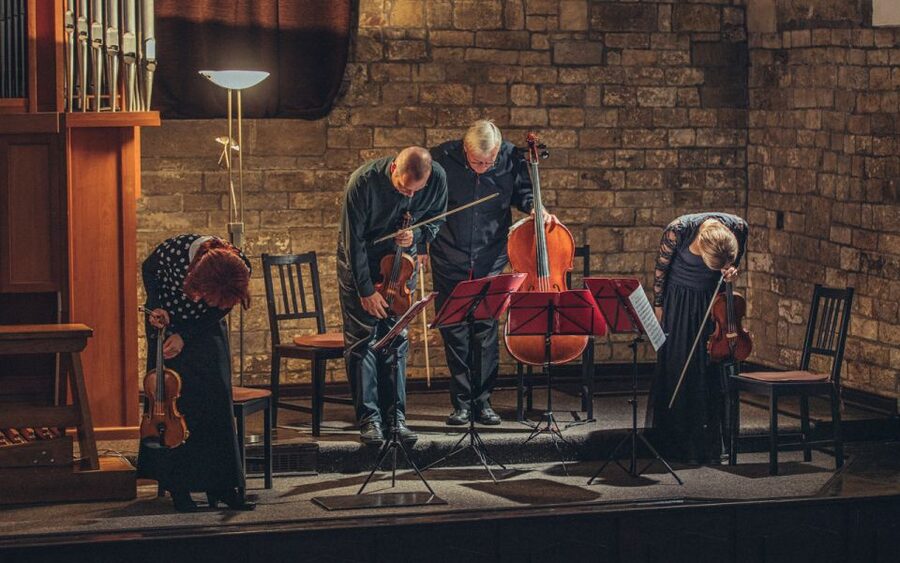
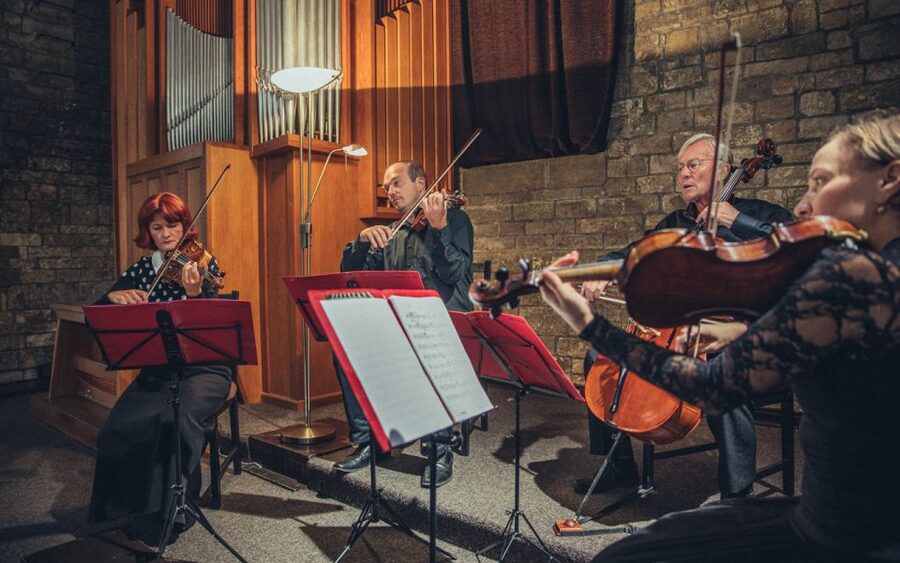
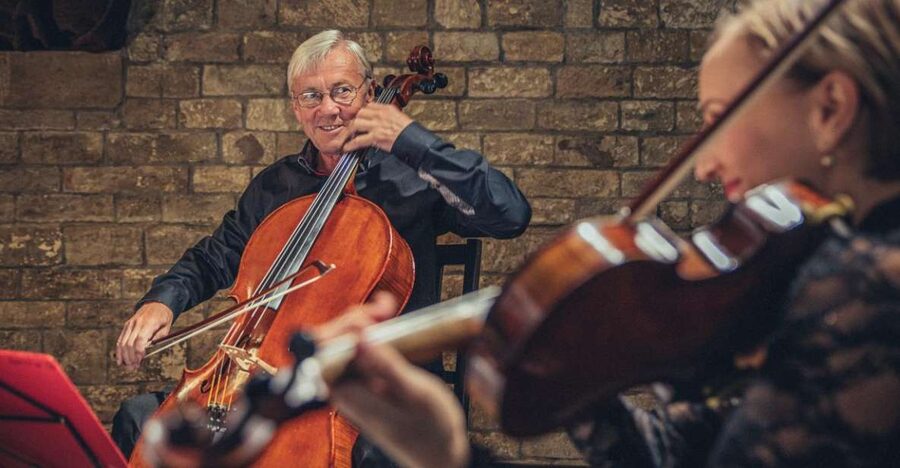
The Old Prague Music Ensemble performs as a string quartet. Four musicians can create a close, direct sound, and you are able to follow the exchange between parts more easily than in a large orchestral performance.
This format also fits the church. A full symphony orchestra would change the balance of the room and likely require a much larger production. The quartet keeps the experience simple: historic interior, live strings, and a program made up of well-known works.
I would choose this concert for a first classical-music evening in Prague, particularly if you are not sure how much formal concert music you want. The familiar selections make it approachable, while Smetana and Dvorak connect the program to the Czech setting.
The tradeoff is scale. You will not hear the full power of Bizet’s opera orchestra, Vivaldi’s larger ensemble, or Brahms with a full concert arrangement. The value lies in the closeness of the performance and the venue, not in orchestral force.
Same city, a completely different afternoon:
- Prague: Castle Tour with Local Guide and Entry Ticket
★ 4.6 · 10,422 reviews - Prague Castle 2.5-Hour Tour Including Admission Ticket
★ 4.7 · 8,927 reviews - Prague: Oldtown, Medieval Underground & Dungeon History Tour
★ 4.2 · 8,244 reviews - Prague: Vltava River Night Cruise with Buffet
★ 4.3 · 7,338 reviews
Sound, seating, and the early finish question
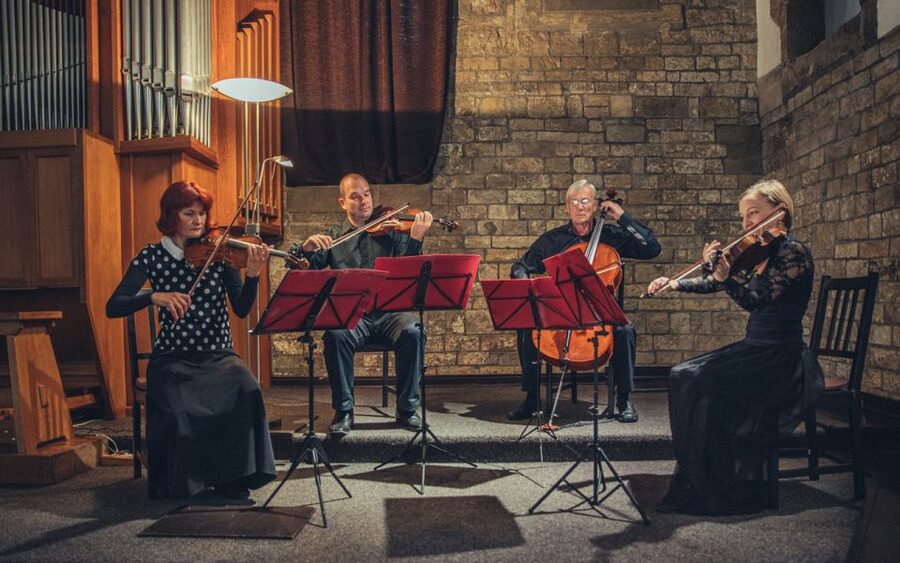
The church has excellent acoustics for sustained string music, but acoustic quality is not the same as perfect clarity. A reverberant room allows notes to linger. That can make Bach’s Air or Albinoni’s Adagio feel especially spacious, while rapid passages in Vivaldi or Brahms may blend together.
One practical point deserves attention: although the concert is described as lasting about 70 minutes, the listed duration is also given as 1 hour to 65 minutes. A performance may finish roughly ten minutes earlier than the headline timing. I would not book a tightly timed dinner reservation immediately afterward.
The program itself can also move quickly. Some listeners will like the brisk pace because it keeps the evening moving. If you prefer slow, expansive interpretations, you may find that certain pieces pass too quickly for every detail to register.
There is no stated dress code. Elegant clothing is welcome, but you do not need formal concert attire. I would dress neatly and comfortably, especially if you are combining the performance with a full day of walking.
Flash photography and video recording are not allowed. Those rules protect the musicians and the atmosphere, and they are easy to follow during a one-hour concert.
Is $28 good value in Prague?
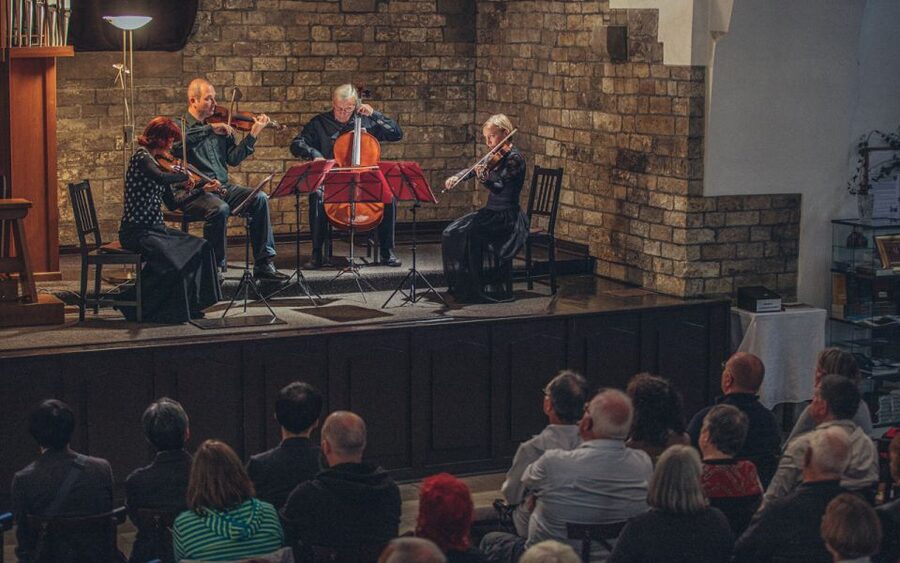
At $28 per person, this is a reasonably priced cultural evening in central Prague. You are paying for live music in a historic building, not just a seat in a generic performance room. The location also keeps incidental costs down because you can walk from the old center.
The value is strongest if you already enjoy familiar classical works and want something easy to fit into your schedule. The program gives you nearly a dozen recognizable pieces without taking up an entire night.
The value is less certain if you are seeking a major concert production, a famous soloist, or a complete work performed at full length. This is a short sampler by a string quartet. It should be judged as an intimate introduction to Czech and European music, not as a substitute for a major orchestra at the Rudolfinum or National Theatre.
I also like the flexibility offered by booking. You can reserve now and pay later, and cancellation is free up to 24 hours in advance. Those terms are useful when you are arranging several Prague activities and do not yet know exactly how your evening will unfold.
Who will enjoy this St. Martin concert?
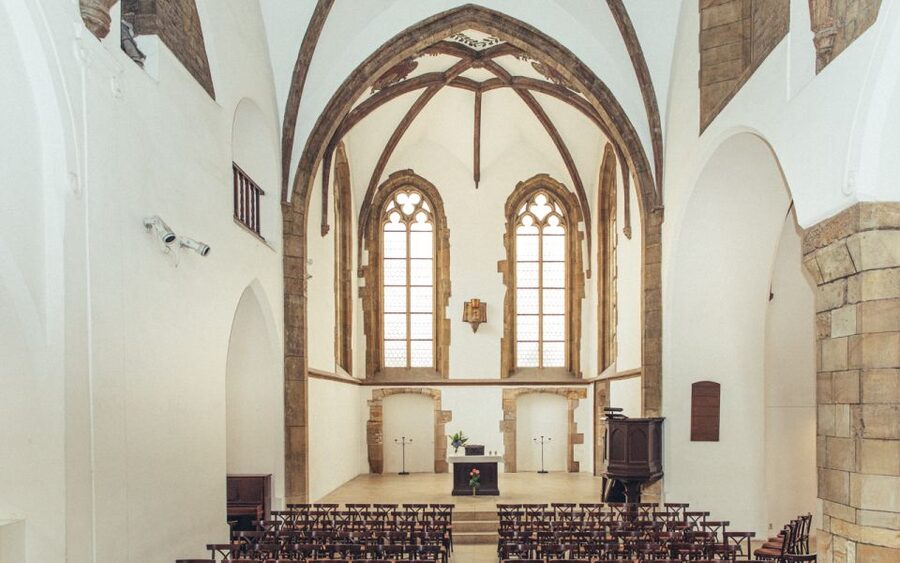
I would recommend it to couples, solo visitors, and small groups looking for a calm evening activity with a strong sense of place. It also suits people who want to hear Dvorak and Smetana while in Prague, rather than attending a program made up only of general European favorites.
The performance may work well for first-time classical listeners. The pieces are familiar, the duration is manageable, and you do not need to understand music theory to enjoy the program. The historic church supplies visual interest even if you are only moderately interested in classical music.
It is less suitable for children under five, who are not permitted. Older children may appreciate the short format, but the quiet setting and no-recording rule require everyone to sit attentively.
Wheelchair access is available. If accessibility is important to you, confirm the exact entrance and seating arrangements when booking, since the supplied information confirms access but does not describe the route inside the church.
How to fit it into a Prague evening
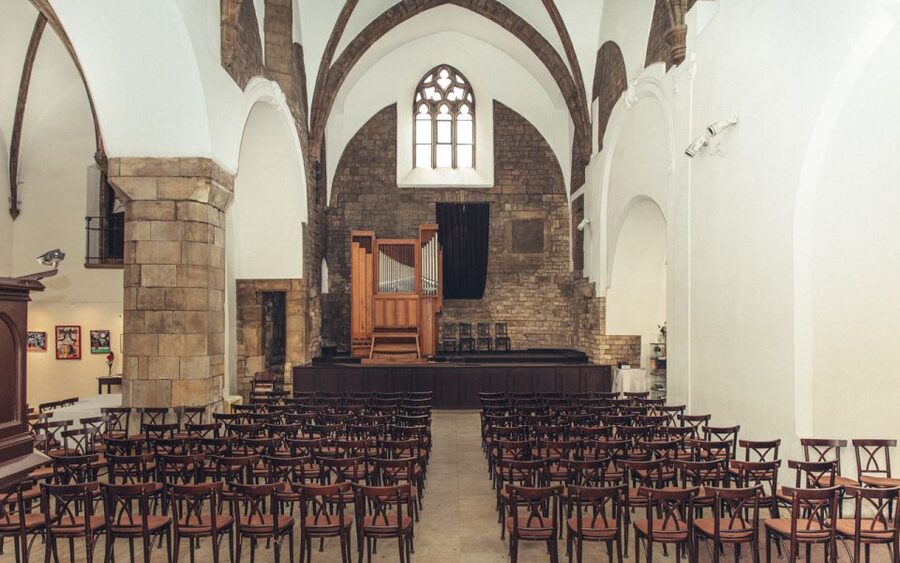
A simple plan is to spend the afternoon around Old Town Square, walk toward Martinska Street, attend the concert, and continue toward Wenceslas Square afterward. The church’s central position makes it easy to connect with other parts of Prague without a long ride.
You can also use the concert as a break from crowded sightseeing. After several hours of churches, bridges, and busy streets, an hour of seated music gives your evening a slower rhythm. The program is long enough to feel worthwhile but short enough that it will not dominate your entire night.
Because the event ends back at the church, you remain in control of the rest of your plans. Keep your schedule loose after the performance, since the actual finish may fall closer to 60 or 65 minutes than 70.
Should you book the Old Prague Music Ensemble concert?
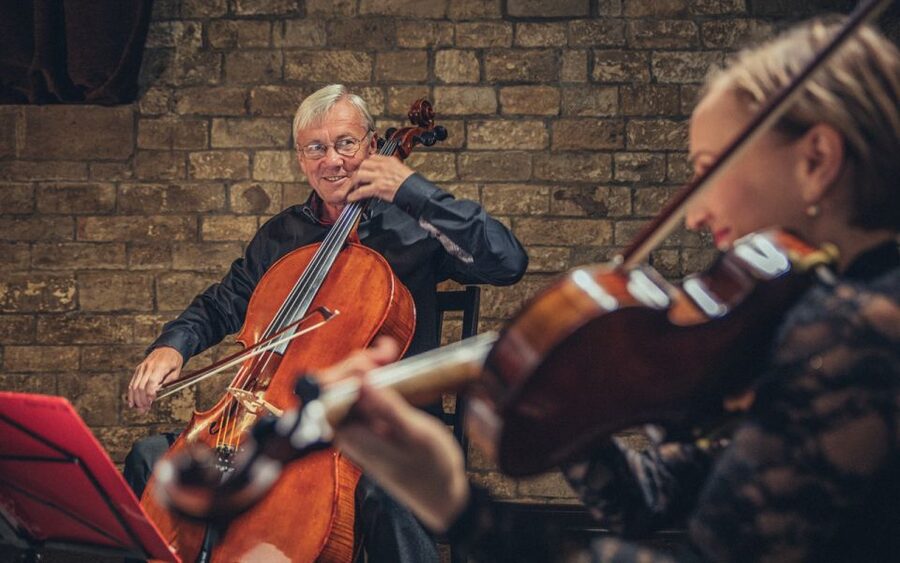
I would book this for the setting, the Czech composers, and the modest price. St. Martin in the Wall gives the music a clear connection to Prague, and the quartet format keeps the performance personal rather than grand or impersonal.
Choose something else if you want a full orchestra, a formal dress-up night, or a program devoted to one composer. Also think twice if you need a precisely timed evening or prefer every fast passage to be sharply defined.
For most visitors, this is a sensible one-hour cultural stop: easy to reach, inexpensive, wheelchair accessible, and packed with familiar music. Go expecting a charming historic church and a brisk sampler of classical favorites, and you are likely to find it a worthwhile addition to your Prague plans.
FAQ
Where does the concert take place?
The concert takes place at St. Martin in the Wall Church, Martinska 8, 11000 Prague.
How long does the concert last?
The concert is described as lasting about 70 minutes, while the activity duration is also listed as 1 hour to 65 minutes. Plan for roughly 65 to 70 minutes.
What music will be performed?
The program includes Smetana’s Moldau; Dvorak’s Humoresque, Largo, and waltzes; Pachelbel’s Canon in D; selections from Bizet’s Carmen; Vivaldi’s Winter; Bach’s Air; Mozart’s Divertimento in F; Albinoni’s Adagio; and Brahms’s Hungarian Dances Nos. 5 and 6.
Who performs the music?
The Old Prague Music Ensemble performs the concert as a string quartet.
Is there a dress code?
There is no dress code. Elegant dress is welcomed but not required.
Can I take photographs or record the concert?
Flash photography and video recording are not allowed.
Is the concert wheelchair accessible?
Yes, the activity is listed as wheelchair accessible.
How close is the church to Prague’s main sights?
The church is near Old Town Square and Wenceslas Square. Old Town Square is about a 15-minute walk away. Mustek and Narodni Trida are the nearest listed Metro stations, and trams 6, 9, 18, 22, and 91 stop at Narodni Trida.
Just added around Prague
- Prague: Historical Walking Tour with Focus on World War 2★ 4.3 · 12 reviews
- WWII and Communism History in Prague’s Old Town Private Tour★ 5.0 · 4 reviews
- World War II 4WD Tour from Prague with Lunch★ 4.4 · 3 reviews
- Unique salt cave in Prague★ 4.9 · 10 reviews
- Walking tour of Prague in French : Nové Město★ 4.9 · 16 reviews
- Walking tour of Prague in french: Old Town & Charles Bridge★ 4.9 · 62 reviews
- Prague: Market Tour and Traditional Czech Cooking Class★ 4.7 · 19 reviews
- Ultimate Unlimited Beer Pong with Czech Beer★ 4.6 · 5 reviews