
Reviewed · PRAGUE
Prague: Skip-the-line Strahov Monastery and Library Tour
Strahov Monastery is home to two of Prague’s most beautiful library halls, where frescoed ceilings, carved wood, old manuscripts, and scientific curiosities turn a book collection into a work of art. I like the private guide format, which lets you ask questions and set the pace, and I like the pre-booked ticket, which saves you from waiting at the ticket office. The main caution is time: the walk through Hradčany can take close to two hours, leaving less time at the monastery than some visitors expect.
I also like that this is more than a quick look at the library. You visit the Strahov Gallery, Basilica of the Assumption of Our Lady, and monastery grounds, while the guide explains how the complex survived religious conflict, two world wars, and decades of communist rule. At $161 per person, it is a serious expense, especially for a couple or family, so you should value personal guiding and historical context rather than simply admission to the monastery.
Key points about the Strahov tour
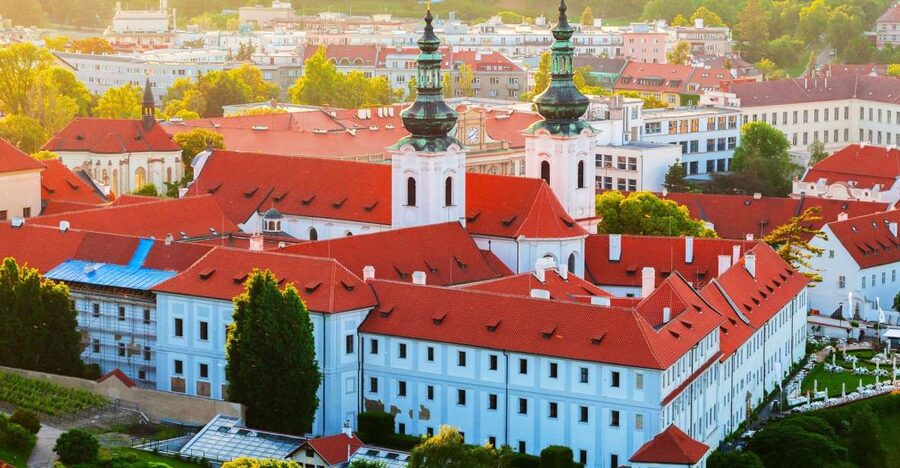
- The library halls are the main event: See the Theological and Philosophical Halls from a respectful viewing distance, with their frescoed ceilings and ornate woodwork.
- The route begins in Hradčany: Meet at the statue of Tomáš Garrigue Masaryk, then walk through Hradčany Square past Prague Castle and Loreto.
- Your guide controls the pace: This is a private group, and guides such as Valentina, Valentyna, and Ilia have received especially warm praise for clear, engaging explanations.
- Several sights are included: Your ticket covers the monastery, library, Picture Gallery, Basilica of the Assumption of Our Lady, and gardens.
- Expect a moderate walk: The route includes about 25 to 30 minutes of walking, plus uneven surfaces and some steps inside or around the complex.
- The skip-the-line benefit has limits: You bypass the ticket-office queue, but not security checks or the entrance line.
Starting at Hradčany Square
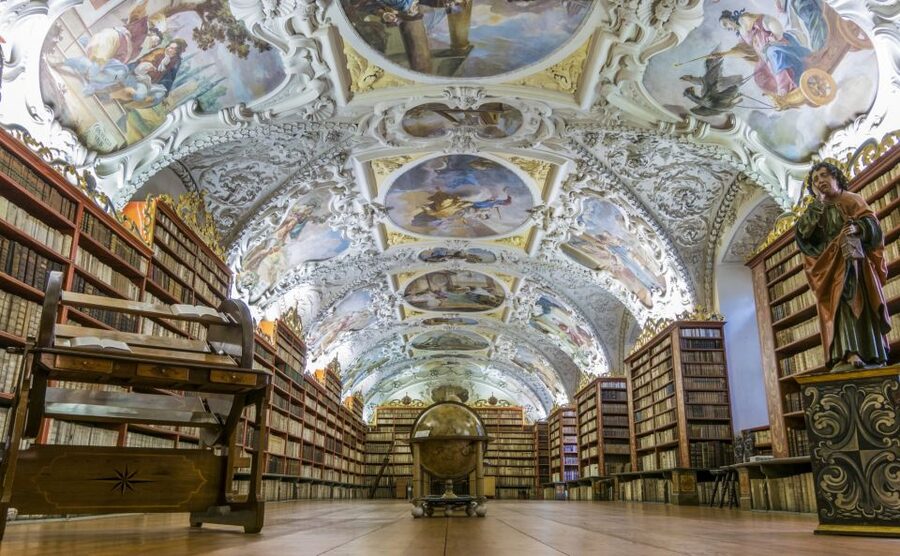
Your meeting point is in front of the statue of Tomáš Garrigue Masaryk at Hradčanské náměstí. This puts you in one of Prague’s most rewarding historic areas from the first minute, rather than beginning at a generic street corner or directly at the monastery.
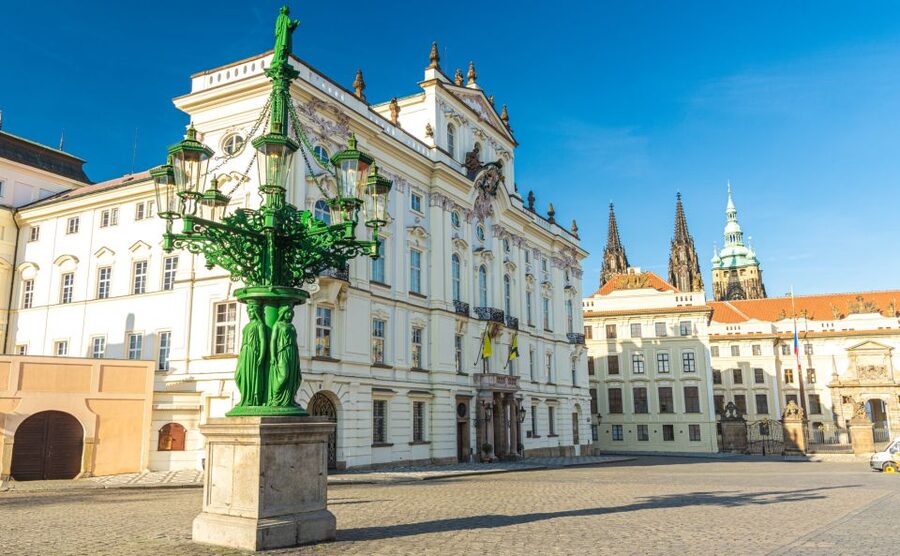
Hradčany Square is framed by grand Baroque buildings and sits beside the Prague Castle complex. Your guide uses the walk to explain how people lived in the district and how its grand residences fit into Prague’s religious and royal story. This opening section gives the monastery a setting. You are not simply being delivered to a single attraction, you are seeing how Strahov fits into the larger Hradčany district.
The route also passes the Prague Castle complex and the Loreto pilgrimage site. The exact amount of time spent outside each place depends on your guide and your interests, but these landmarks help you understand why the hilltop district contains so many churches, palaces, and religious institutions.
I would arrive ready to walk rather than treating this as a museum visit with a short transfer. The operator describes the walking portion as approximately 25 to 30 minutes, though one recent itinerary took close to two hours before reaching the monastery. That difference matters. Some guides may give a fuller neighborhood tour, while others may move more directly toward Strahov.
A few more Prague outings worth weighing up
- Prague: Skip-the-line Castle Ticket and Optional AudioGuide
★ 4.3 · 11,121 reviews - Prague Zoo: Skip-the-Line Entry Ticket
★ 4.8 · 3,440 reviews - Prague Jewish Town/Skip-the-Line Official Entry Ticket
★ 4.3 · 524 reviews
Reaching Strahov Monastery
The Order of Canons Regular of Prémontré has occupied this site for centuries, and the monastery has had to endure far more than ordinary changes in fashion. Religious conflicts, two world wars, and the communist regime all affected Prague’s religious institutions. Your guide explains how Strahov survived those periods and why its collections still matter.
The monastery is not presented as a frozen relic. Its story includes worship, scholarship, art, political pressure, and the preservation of books and objects through unstable times. That background makes the library halls more meaningful. You see not only beautiful rooms, but a place where written material was gathered, protected, and used across generations.
The pre-booked ticket is useful here. It lets you skip the queue at the ticket office, which can make the arrival smoother, particularly when you are visiting Prague on a tight schedule. Do not read skip-the-line as instant entry. You may still wait at the entrance or security check, and the tickets are tied to a specific date.
The tour is private, so you are not sharing the guide with a large group. That gives you room to ask about a particular painting, religious practice, book, or architectural detail. It also means the $161 price is paying for guide time and personal attention, not just admission.
Inside the Theological Hall

The Theological Hall is one of the two famous library rooms included on the visit. It is known for its decorated ceiling, carefully worked wood, and shelves filled with historic books. You normally view the library from a designated distance rather than walking freely among the shelves. That protects the collection, but it also means you should not expect the hands-on freedom of a modern reading room.
This is where a good guide makes a clear difference. Without explanation, you can appreciate the ceiling and shelves as a beautiful interior. With context, you can understand why a monastery library was important, how religious texts were organized, and why the room was designed to impress as well as serve a practical purpose.
The collection includes manuscripts and other materials connected with the preservation of learning. Your guide can point out details you might miss while trying to take photographs or simply looking upward. The room rewards patience. Give yourself time to notice the ceiling painting, the arrangement of the shelves, and the way the decoration supports the room’s religious purpose.
Photography rules and viewing arrangements can affect how long you stay. The key point is that the library is seen as a protected historic interior, not as an ordinary public library. If the halls are your main reason for booking, tell your guide at the start so the visit gives them proper attention.
The Philosophical Hall and cabinets of curiosities
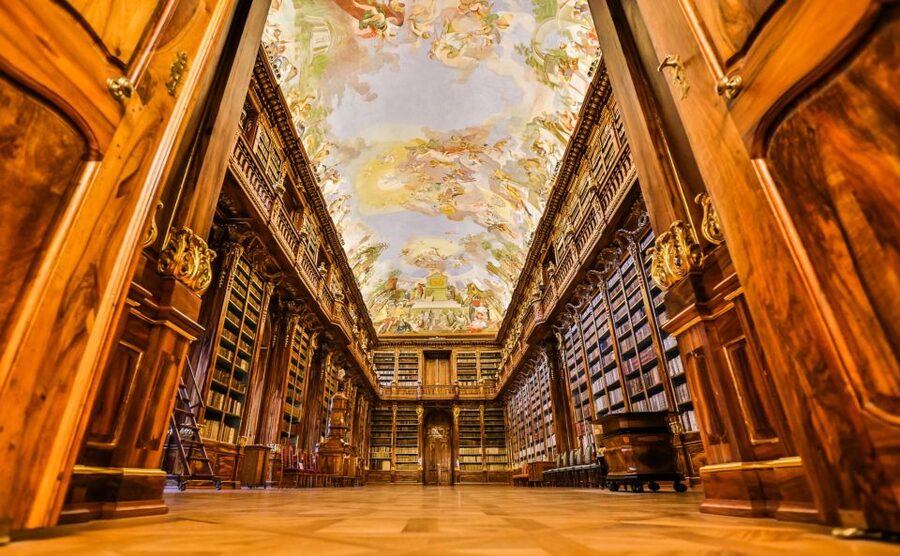
The Philosophical Hall provides a different mood from the Theological Hall. Its scale, decoration, and subject matter reflect the broader intellectual ambitions of the monastery. This is the room that helps you see Strahov as a center of study as well as a place of worship.
You can expect another decorated interior, extensive shelving, and a strong visual contrast between the architecture and the books. The guide’s role is especially useful here because the room can be admired in a few minutes, but its purpose takes longer to explain.
The tour also includes cabinets of curiosities. These collections bring together unusual objects and specimens, offering a glimpse into the older habit of organizing the world through books, objects, art, and scientific observation. The term can sound grand, but the appeal is simple: you get a sense of what earlier scholars considered worth collecting and displaying.
One recent visit specifically appreciated the Philosophical and Theological Libraries, the cabinets of curiosities, and the art gallery. I would group these together mentally as the monastery’s intellectual side. They show that Strahov was not only concerned with prayer and ceremony. It also preserved objects and ideas.
Same city, a completely different afternoon:
- Prague: 50-Minute Sightseeing Evening Cruise
★ 4.2 · 33,780 reviews - Prague: Medieval Dinner with Unlimited Drinks
★ 4.4 · 19,847 reviews - Prague: Castle Tour with Local Guide and Entry Ticket
★ 4.6 · 10,422 reviews - Prague Castle 2.5-Hour Tour Including Admission Ticket
★ 4.7 · 8,927 reviews
Strahov Gallery and religious art
The Strahov Gallery adds a visual history of Prague and Central European religious art. The collection includes works from the Gothic, Renaissance, and Baroque periods, with paintings and sculptures that reflect changing artistic styles and forms of devotion.
This stop is valuable if you enjoy art but do not want to spend half a day in a large museum. The gallery offers a compact way to see how religious images changed over time. A licensed guide can explain what you are looking at and connect it with the monastery’s religious setting.
The gallery may not be the main reason most people book this tour. The libraries are more famous and more visually unusual. Still, the art collection prevents the visit from becoming a single-room photo stop. It adds depth to the monastery and gives you another way to understand how religious communities used art.
Ask your guide to focus on the periods or subjects that interest you. Because this is a private tour, you do not have to accept the same level of detail for every painting. If you are traveling with children, the cabinets of curiosities may offer a more immediate point of interest than a long discussion of Baroque painting.
Basilica of the Assumption of Our Lady
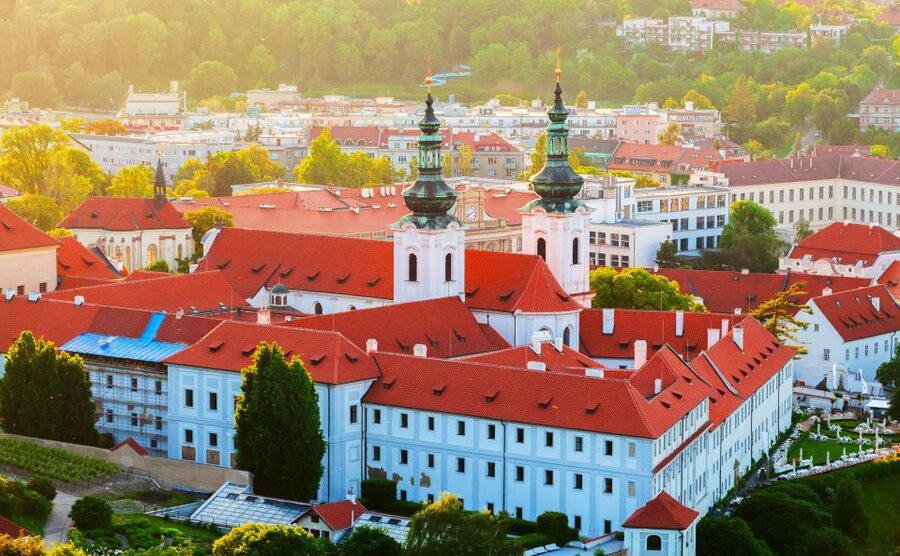
The Basilica of the Assumption of Our Lady is the tour’s main place of worship. Its Baroque design includes elaborate frescoes and serene altars, creating a very different feeling from the libraries.
The library rooms are controlled and scholarly. The basilica is ceremonial and spiritual. Seeing both in one visit helps you understand the monastery as a living religious complex rather than a collection of attractive rooms.
Your guide can explain the basilica’s role and point out architectural details that are easy to overlook. The visit should also be approached with respect. It is a sacred space, so noise, clothing, and photography may be subject to rules at the time of your visit.
The basilica may be particularly meaningful if you are interested in Catholic art or Prague’s religious traditions. If your main interest is architecture, the frescoes, altars, and Baroque decoration provide plenty to examine. If your interest is secular history, the guide can connect the church to the wider story of the monastery and its changing fortunes.
Gardens, walking pace, and access
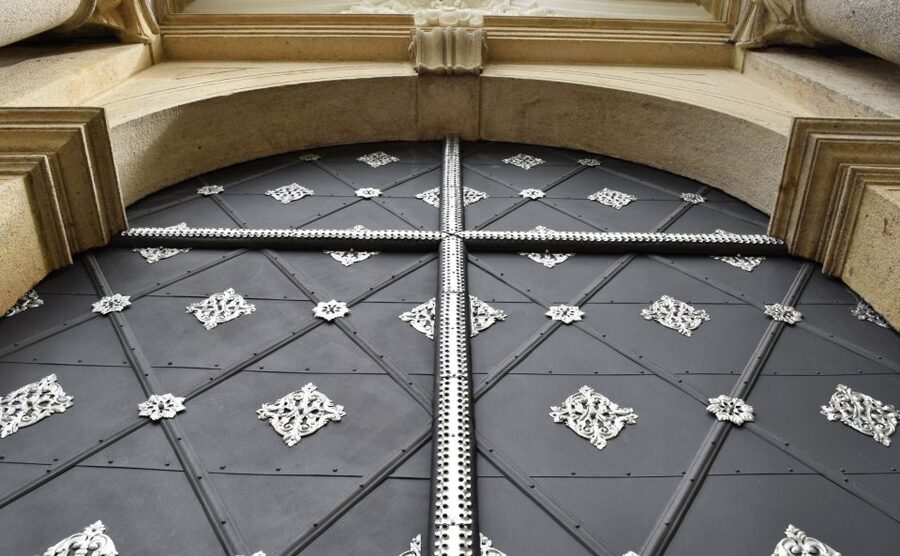
The ticket includes the monastery gardens, adding an outdoor element to a tour otherwise centered on interiors. The gardens give you a chance to slow down and see the complex in a less formal setting. The available time depends on the guide, the season, and how long your group spends inside.
This is a moderately paced walking tour. The operator gives an estimate of 25 to 30 minutes on foot, but the route also includes uneven surfaces and some steps. Wear shoes that you can use comfortably on historic paving and be prepared for rain or changing weather. The tour operates rain or shine.
The activity is described as wheelchair accessible, and the company asks visitors with disabilities to contact customer support in advance for arrangements when possible. Because the route includes steps and uneven sections, you should discuss your exact needs before booking instead of relying only on the general accessibility label.
The private format helps here. Your guide can adjust the pace to your group and make special arrangements when possible. Still, the route cannot be assumed to suit every mobility need without advance confirmation.
Guide quality and language choices
The tour is offered with a licensed guide in English, German, Russian, Spanish, French, Italian, Polish, or Czech. The strongest part of the guiding is the personal explanation. The best guides do not simply name a hall and move on. They connect the rooms, the collections, and the monastery’s survival through difficult periods.
Valentina, also referred to as Valentyna in one account, received especially warm praise for her engaging explanations and for keeping the group moving between the sites. Ilia was also described as helpful and very informed, with an engaging approach to the tour. Guide assignment can vary, so you should not book on the assumption that one specific person will lead your visit.
I like the private arrangement for couples, families, and small groups with different interests. You can ask for more art, more religious history, more stories about the district, or more time in the library rooms. If you prefer to move quickly and see only the famous interiors, tell the guide early.
The main tradeoff is cost. A private guide offers more flexibility, but $161 per person is high if you only want entrance to the monastery and library. One Italian visitor felt it was better value to go directly to Strahov and buy tickets independently, especially because the neighborhood walk used much of the three-hour period. That is a fair criticism.
Is $161 per person good value?
At $161 per person, I would not call this a budget activity. The price makes the most sense when you are splitting it among a private group and want a licensed guide in your preferred language. It also saves you the ticket-office queue and bundles several parts of the complex into one guided visit.
The value is weaker if you mainly want to see the two library halls and leave. The monastery is the central attraction, and independent admission may cost less. You should also consider how much you want from the Hradčany walk. For some people, passing Prague Castle and Loreto with a guide is part of the appeal. For others, it is time taken away from the library.
The strongest case for booking is your desire for context and convenience. You receive an organized route, explanations, a private pace, and admission to the monastery, library, Picture Gallery, basilica, and gardens. The weakest case is a short Prague visit where every minute and every dollar matters.
Free cancellation up to 24 hours before the tour and the option to reserve now and pay later make planning easier. Those terms do not change the price, but they reduce the risk of committing while your schedule is still moving.
Who should book this Prague tour?
I would recommend it most to first-time visitors who want a guided introduction to Hradčany and who enjoy architecture, religious art, books, and local history. It is also a good fit for couples or families who prefer a private guide instead of joining a large group.
You will likely appreciate it if you want to ask questions, need a flexible pace, or want a guide in one of the eight listed languages. The tour works well for visitors who might otherwise walk past Strahov without understanding what makes the libraries important.
I would think twice if you are a strict budget traveler, already understand Prague’s religious history, or only want a quick look inside the library. In that case, going directly to Strahov may be more efficient and less expensive, though you would give up the guided walk and personal explanations.
Should you book the Strahov Monastery tour?
Book it if you want the story behind the rooms, not just a few photographs of beautiful ceilings. The private guide, several included sights, and Hradčany route make this a fuller visit than a simple admission ticket.
Skip it if the $161 price feels too high for three hours or if the library halls are your only goal. The most important practical question is how you want to spend your time: walking through one of Prague’s historic districts with a guide, or heading directly to Strahov and exploring independently.
FAQ
How long is the Strahov Monastery and Library tour?
The tour lasts three hours. The time includes the Hradčany walk and visits to the monastery complex, library, Picture Gallery, basilica, and gardens.
Where does the tour meet?
Meet your guide in front of the statue of Tomáš Garrigue Masaryk at Hradčanské náměstí, Prague 1, Hradčany.
What languages are available?
Guides are available in German, English, Russian, Spanish, French, Italian, Polish, and Czech.
Is this a private tour?
Yes. The tour is arranged for a private group, and the guide can adapt the pace and focus to your interests.
Does the tour include skip-the-line entry?
Pre-booked tickets let you skip the queue at the ticket office. You may still wait at the entrance or security checks.
What does the admission ticket cover?
Admission includes the Strahov Monastery complex, Theological and Philosophical Halls, Picture Gallery, Basilica of the Assumption of Our Lady, and gardens.
Are special exhibitions included?
No. Special exhibitions and the monastery brewery are not included.
Is the tour wheelchair accessible?
The activity is described as wheelchair accessible. Because the route includes uneven surfaces and some steps, contact the operator in advance to discuss your needs and possible arrangements.
How much walking is involved?
The tour includes approximately 25 to 30 minutes of walking, with some uneven surfaces and steps. The guide can adjust the pace for your group.
Can I cancel the booking?
You can cancel up to 24 hours before the tour for a full refund. The activity also allows you to reserve now and pay later.
Just added around Prague
- Prague: Historical Walking Tour with Focus on World War 2★ 4.3 · 12 reviews
- WWII and Communism History in Prague’s Old Town Private Tour★ 5.0 · 4 reviews
- World War II 4WD Tour from Prague with Lunch★ 4.4 · 3 reviews
- Unique salt cave in Prague★ 4.9 · 10 reviews
- Walking tour of Prague in French : Nové Město★ 4.9 · 16 reviews
- Walking tour of Prague in french: Old Town & Charles Bridge★ 4.9 · 62 reviews
- Prague: Market Tour and Traditional Czech Cooking Class★ 4.7 · 19 reviews
- Ultimate Unlimited Beer Pong with Czech Beer★ 4.6 · 5 reviews