
Reviewed · WALKING TOURS
Prague Renaissance & Baroque Gardens Walking Tour
Prague’s grandest gardens tell stories that the city’s crowded streets often hide. In three hours, you’ll move from the Renaissance Royal Garden at Prague Castle to Wallenstein’s theatrical statues and fountains, then finish at the elegant Vrtba Garden, where the upper terrace gives you a fine view across Prague. I especially like the focus on garden symbolism and the small group, limited to eight people.
I also like that the tour uses Prague’s tram system to reach the castle gardens, rather than treating each site as a disconnected photo stop. Guides Bonita and Vadim bring art, mythology, and local history into the walk, though you should budget extra for Vrtba Garden and be ready for steep stairs near its upper terrace.
Key points at a glance
- Three very different gardens: Compare the open Royal Garden, Wallenstein’s formal Italian-style setting, and Vrtba’s compact Baroque terraces.
- A scholar-led walk: Guides such as Bonita and Vadim explain the political meaning behind statues, myths, architecture, and plant life.
- Small group of up to eight: The size allows room for questions and some adjustment to the group’s interests.
- A tram ride is part of the plan: You meet at Malostranská Metro station and travel together by tram 22 toward Prague Castle.
- Vrtba’s upper terrace requires stairs: You can wait on the second terrace if climbing is difficult.
- Plan for additional admission costs: Vrtba Garden is listed at CZK 130 for adults, with reduced prices for students and seniors.
Why these gardens reveal a different Prague
Many Prague walks concentrate on churches, bridges, and grand squares. This one shifts your attention to the spaces behind palaces and official buildings. That change matters because these gardens were designed to make power visible through fountains, sculpture, rare plants, and carefully framed views.
You’ll see gardens from two major periods. Renaissance design favors order, classical references, and a connection to the wider European world. Baroque design adds drama, movement, surprise, and a thick layer of mythological symbolism.
I like tours that explain why a statue is in a particular place instead of treating it as decoration. Here, Greek and Roman gods, heroes, military scenes, and plants all become clues. The guide may show you how ancient myths were used to support the image of modern rulers and nobles.
The pace is also appealing. This is a three-hour walk, not a full-day excursion, so it fits neatly into a Prague itinerary. You get enough time for context without giving up an entire afternoon to one theme.
More walking tours in Prague:
- Prague: 3-Hour Walking Tour of Old Town & Prague Castle
★ 4.7 · 5,696 reviews - Prague: Ghost Walking Tour Where Legends Come To Life
★ 4.4 · 5,253 reviews - Prague: Jewish Quarter Walking Tour with Admission Tickets
★ 4.7 · 3,729 reviews
Starting at Malostranská and taking tram 22
The meeting point is Bagel Lounge Malostranská, at Letenská 118/1, near Malostranská Metro station. From there, the group takes tram 22 together toward the castle gardens.
That shared ride is useful in two ways. First, you avoid having to work out the best route to the first garden on your own. Second, the trip gives the guide a natural moment to set the scene for Prague Castle and the surrounding district.
The tour requires a moderate level of fitness. You’ll walk between garden areas, stand during explanations, and handle some uphill or stair sections. Comfortable shoes are sensible, especially because Vrtba Garden includes steep steps leading to its highest terrace.
Departure times are listed at 10 a.m. and 2 p.m. The morning option gives you a chance to continue sightseeing afterward. The afternoon departure works well if you want a slower start, though the available light and garden opening schedules can vary by season.
The Royal Garden and Queen Anne’s Summer Palace
The first major section is the Royal Garden at Prague Castle, created in the 16th century on the site of medieval vineyards. Its original purpose was not simply to provide a pleasant walk. It was a place for court life, imported plants, rare botanical specimens, and displays of the ruler’s reach beyond Bohemia.
The garden became known for exotic plants from distant regions. That detail makes the setting more interesting than a simple arrangement of lawns and paths. You’re looking at an early attempt to bring the wider world into a royal enclosure.
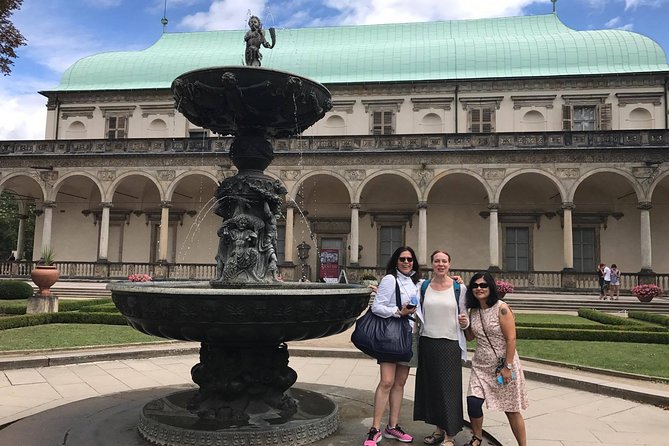
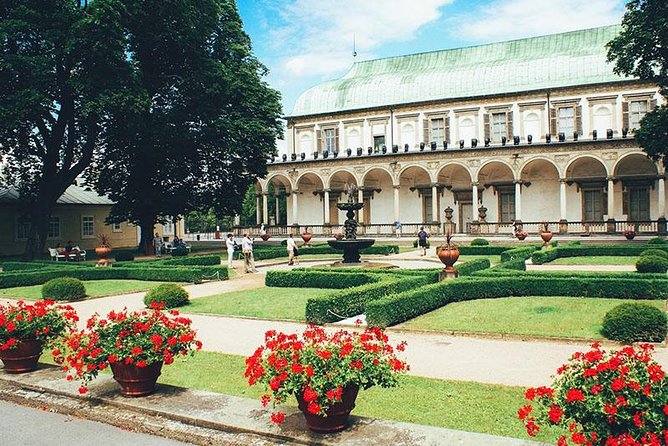
The highlight is Queen Anne’s Summer Palace, also called the Belvedere. Completed in the middle of the 16th century, it is presented as one of the purest examples of Renaissance architecture outside Italy.
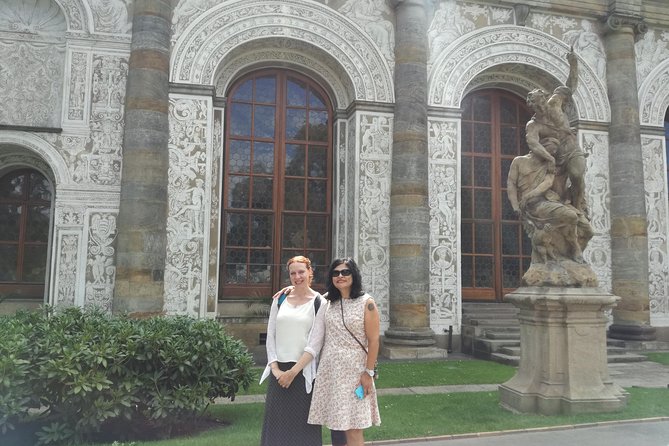
Take time to examine the building rather than only photographing it. The exterior arcades have Tuscan-style columns, while the frieze and wall reliefs show scenes of mythology, hunting, and warfare. One relief depicts Ferdinand I wearing the Order of the Golden Fleece and offering Queen Anna a fig-tree blossom.
That small detail captures the style of the entire tour. Architecture, marriage, politics, nature, and classical imagery are all tied together. The guide’s job is to help you read those connections.
Fig House, Orangery, and the story of imported plants

The route also includes the Fig House and Orangery on the castle estate. These sites connect royal taste with practical horticulture.
You’ll hear about figs, almonds, oranges, and lemons being grown in central Europe, where the climate made such plants difficult to maintain. The story of tulips arriving in Prague adds another layer. Plants were not merely pretty additions. They showed wealth, access, curiosity, and contact with faraway places.
This part will appeal to you if you enjoy gardens as cultural history rather than only as places for flowers. It also gives the tour a welcome change of scale. The large castle setting and formal buildings are balanced by details about cultivation and plant collecting.
The available description places the Royal Garden, Queen Anne’s Summer Palace, and the Ball Game Hall in the same general section of the walk. The listed timing for the palace and hall is brief, about five minutes at each, so expect a focused explanation rather than a long interior visit.
Same city, a completely different afternoon:
- Prague: 50-Minute Sightseeing Evening Cruise
★ 4.2 · 33,780 reviews - Prague: Medieval Dinner with Unlimited Drinks
★ 4.4 · 19,847 reviews - Prague: Skip-the-line Castle Ticket and Optional AudioGuide
★ 4.3 · 11,121 reviews - Prague: Castle Tour with Local Guide and Entry Ticket
★ 4.6 · 10,422 reviews
Ball Game Hall above the Stag Moat
The Ball Game Hall sits on the south side of the Royal Garden, directly above the Stag Moat. Built in the middle of the 16th century, it was first used for ball games before later serving as a riding school and stables.
You may find this stop most rewarding if you enjoy buildings with several lives. Its changing use reflects the shifting needs of the castle complex. It is also a reminder that royal gardens were working spaces, not just ornamental grounds.
Do not expect a long stop here. The listed visit lasts about five minutes. The value comes from seeing the building in relation to the garden, the moat, and the wider castle estate.
Wallenstein Garden and its theatrical Baroque setting
From the castle area, the walk continues to Wallenstein Garden, the gardens of the Czech Senate. The garden was built in the 17th century for Wallenstein Palace and follows an Italian-style plan.
This is where the tour’s Baroque character becomes especially clear. The setting includes an aviary, an artificial grotto, a gallery of mythological figures, and a fountain by Adrian de Vries. The mixture can feel theatrical, and that is the point. Baroque gardens are meant to surprise you as you move through them.
The artificial grotto deserves close attention. Its rough surface contrasts with the formal order elsewhere in the garden. The mythological sculptures add another layer of meaning, and the guide can explain how ancient figures were selected to support the ambitions of the garden’s owner.
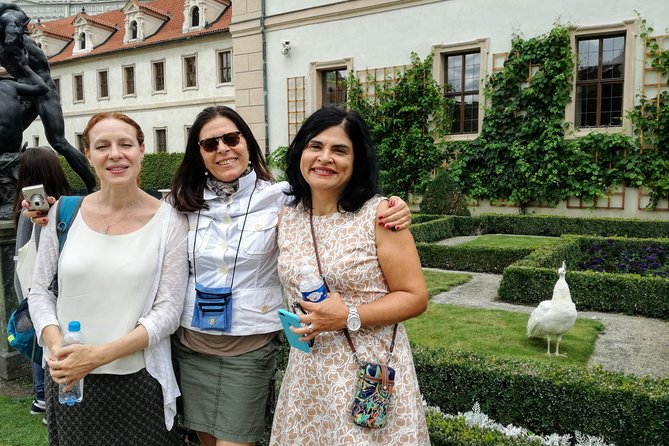
Peacocks add a touch of color and motion. You may see them moving through the grounds alongside the statues and fountains. They are a pleasant bonus, but the real reason to visit is the way the garden combines architecture, sculpture, water, and political display.
Admission to Wallenstein Garden is listed as free. Access can be affected by the operating schedule of the Senate grounds, so it is sensible to check current conditions when booking.
Vrtba Garden and the climb to the top terrace
The final major stop is Vrtba Garden, usually written as Vrtbovská Garden in the tour details. Created around 1720, it is a walled Baroque garden tucked into Prague’s Lesser Town.
Its smaller size is part of its appeal. Instead of a broad public park, you get a carefully arranged sequence of terraces, stairways, sculpture, and planting. The design draws your eye upward, with each level offering a new angle on the garden and the city.
The statues and sculptural decoration date from the early 18th century. Their subjects and arrangement are not random. As with Wallenstein Garden, classical stories help turn the garden into a statement about education, taste, status, and authority.
The upper terrace provides some of the best city views on the walk, including views toward Prague Castle. This is likely to be the tour’s strongest photo stop, but it is also the point that requires the most physical effort.
The stairs near the top are steep. If you have trouble climbing, you can wait with the group on the second terrace while the guide continues upward. The group returns in about ten minutes. A private tour may allow more changes to this part of the route, according to the tour information.
Vrtba admission is not included. The listed price is CZK 130 for an individual and CZK 100 for students and seniors. Bring enough local currency or confirm the current payment method before you go.
What the guide adds to the walk
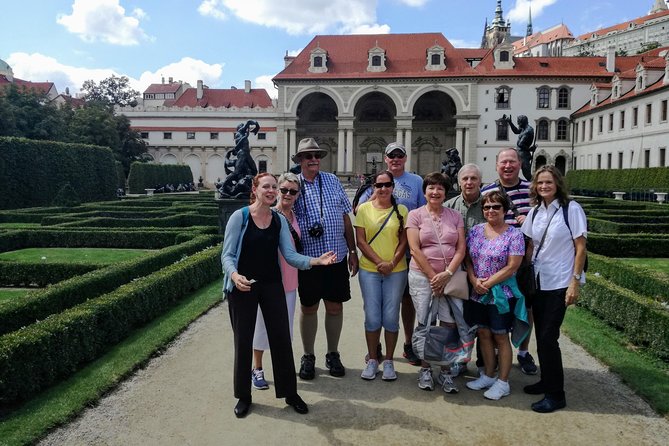
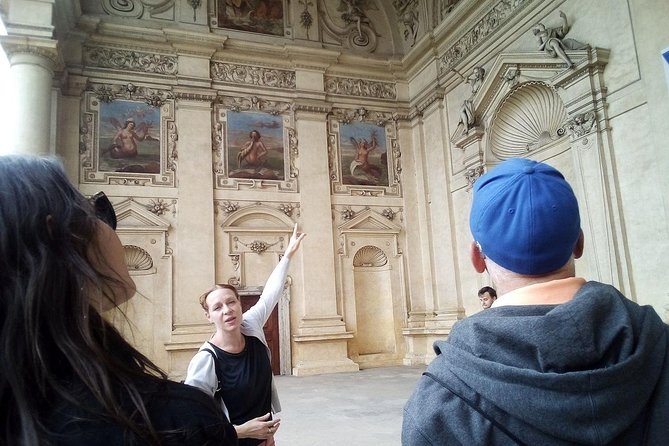
The guide is the main reason to choose this tour instead of visiting the gardens independently. The sites are attractive on their own, but the symbols can be easy to miss.
Bonita is described as a passionate guide with a strong command of Prague’s art and history. Her approach includes storytelling, local connections, and close attention to Greek and Roman mythology. Vadim is also associated with the tour, and the small group format allows the guide to respond to your questions rather than delivering a fixed speech to a large crowd.
That matters in these gardens. A fountain may look like decoration until you learn who designed it. A figure from classical mythology may seem ornamental until you understand how it served a ruler’s public image. A greenhouse may appear practical until you learn what imported plants meant in 16th-century central Europe.
The tour also has value for people who already know Prague. The focus is narrow enough to reveal new material, even if you have visited the castle and Lesser Town several times. Local residents have found fresh ways to understand familiar places through the garden stories and symbolism.
Price, group size, and overall value
The listed price is $126.03 per person. That is a substantial price for a three-hour walk, so the value depends on how much you want interpretation and personal attention.
The group is limited to eight people. Compared with a large sightseeing group, that gives you a better chance to hear the guide clearly, ask about specific statues, and pause when something catches your interest. For a history, art, or garden enthusiast, that small-group attention can justify the cost.
You should also account for the listed extra fees. Vrtba Garden costs CZK 130 for adults, or CZK 100 for students and seniors. The information also lists a CZK 90 admission fee for gardens under Prague Castle, with a reduced CZK 60 price for students and seniors, although another section says garden admission is included except for Vrtba. Because those details conflict, confirm exactly what is covered before paying.
The experience includes a professional scholar guide and the three-hour guided history walk. It does not include food, drinks, or personal transport beyond the group’s tram journey. The tour is offered in English.
Who will enjoy this garden walk
I would choose this tour if you enjoy art, architecture, horticulture, or the political stories behind beautiful places. It is also a good pick for a return visit to Prague, when you have already seen the major sights and want a more focused subject.
You will get the most from it if you like explanations that go beyond dates and names. The tour asks you to look at statues, reliefs, plants, and garden layouts as messages.
It may not suit you if you want a fast, casual stroll with little commentary. The reviews describe the tour as especially rewarding for curious, engaged people, and that feels accurate from the structure. You are expected to pay attention.
The physical demands are moderate, but the steep Vrtba stairs matter. You can remain on the second terrace if needed, but you should still be comfortable walking between sites and standing for explanations.
Practical details before you book
Confirmation is provided when you book, and the tour is near public transportation. It is scheduled for about three hours, with 10 a.m. and 2 p.m. departure choices.
The stated meeting point is Bagel Lounge Malostranská, near Malostranská Metro station. The meeting information says the activity ends back at the meeting point, while the route description says the guide leaves you at Vrtba Garden. Confirm the final end point before the day of the tour so you can plan your next stop.
Free cancellation is available if you cancel at least 24 hours before the start time. Changes or cancellations made within 24 hours are not accepted for a refund.
Should you book the Prague garden tour?
Book it if you want Prague explained through sculpture, plants, architecture, and power rather than only through its most famous streets. The combination of the Royal Garden, Queen Anne’s Summer Palace, Wallenstein Garden, and Vrtba Garden gives you a clear contrast between Renaissance order and Baroque drama.
I would especially recommend it for first-time visitors who want a thoughtful introduction, and for returning visitors who feel they have already seen the standard Prague route. The small group and scholar guide add real value.
Skip it if you dislike stairs, prefer independent wandering, or want a low-cost garden visit. The price is not modest, and the extra admission fees need clarification. For the right audience, though, this is a focused and memorable way to see Prague from behind its palace walls.
FAQ
How long does the Prague Renaissance and Baroque Gardens Walking Tour last?
The tour lasts approximately three hours.
Where does the tour begin?
The meeting point is Bagel Lounge Malostranská at Letenská 118/1, near Malostranská Metro station in Prague.
What time can I take the tour?
You can choose between a 10 a.m. and a 2 p.m. departure.
How large is the group?
The group has a maximum of eight people.
Is admission to the gardens included?
Vrtba Garden admission is not included. The listed price is CZK 130 for adults and CZK 100 for students and seniors. The tour information also lists a separate Prague Castle garden fee, so confirm which admissions are covered when booking.
Are there steep stairs on the tour?
Yes. Vrtba Garden has steep stairs leading to its highest terrace. If climbing is difficult, you can wait on the second terrace while the group continues upward and returns about ten minutes later.
What happens if I need to cancel?
You can receive a full refund if you cancel at least 24 hours before the experience starts. Cancellations or changes made less than 24 hours before the start time are not accepted for a refund.
Just added around Prague
- Prague: Historical Walking Tour with Focus on World War 2★ 4.3 · 12 reviews
- WWII and Communism History in Prague’s Old Town Private Tour★ 5.0 · 4 reviews
- World War II 4WD Tour from Prague with Lunch★ 4.4 · 3 reviews
- Unique salt cave in Prague★ 4.9 · 10 reviews
- Walking tour of Prague in French : Nové Město★ 4.9 · 16 reviews
- Walking tour of Prague in french: Old Town & Charles Bridge★ 4.9 · 62 reviews
- Prague: Market Tour and Traditional Czech Cooking Class★ 4.7 · 19 reviews
- Ultimate Unlimited Beer Pong with Czech Beer★ 4.6 · 5 reviews
Walking Tours, compared.

3-Hour Walking Tour of Old Town & Prague Castle
Read our review →
Ghost Walking Tour Where Legends Come To Life
Read our review →
Jewish Quarter Walking Tour with Admission Tickets
Read our review →
Prague Guided Walking Tour and Cruise with Authentic Czech Lunch
Read our review →
Old Town and Jewish Quarter Guided Walking Tour
Read our review →
Prague Ghost and Legend of Old Town Walking Tour
Read our review →
Prague 3-hour Afternoon Walking Tour including Prague Castle
Read our review →
Ghosts and Legends Nighttime Guided Walking Tour
Read our review →Browse the lists this tour appears in