
Reviewed · PRAGUE
Prague Essential
Prague’s great sights are packed into a walkable center, and this private tour uses that fact well. In about two and a half hours, you move from Charles Bridge through the Old Town, past Mozart’s theater and the Powder Tower, then into the Jewish Quarter before finishing at Rudolfinum. Darya leads the walk in English, with stories that give each famous stop a human edge.
I like the private format, since your group can keep its own pace and ask questions without competing with a crowd. I also like the route’s range: medieval towers, royal dreams, Jewish memory, music, and university life all appear in one compact walk. The main consideration is pace. With many stops and only a few minutes at several of them, this is an introduction, not a slow museum visit.
Key points to know before you book
- Charles Bridge begins the story: Learn why Charles IV treated the bridge’s first stone as a special event, then hear the local tradition about making a wish.
- Darya is the guide: Her storytelling and clear English are central to the experience, especially at the clock, Klementinum, and Old Town Square.
- A private walk keeps things flexible: Only your group participates, so the experience feels more personal than a large city tour.
- The route covers a lot: You see Old Town Square, Mozart’s Estate Theatre, Charles University, the Powder Tower, two synagogues, and Rudolfinum.
- Most stops are brief: Several are scheduled for five or ten minutes, so expect exterior viewing and explanation rather than extended entry time.
- The walk ends at Rudolfinum: The finish near the concert hall is useful if you want to continue exploring Prague’s Old Town or nearby riverfront.
Why this compact Prague route works
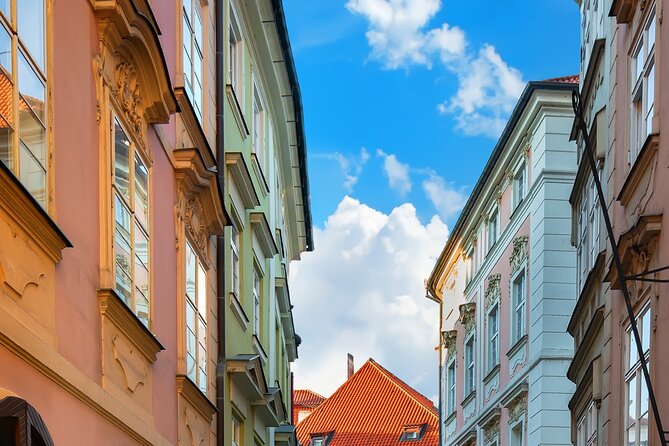
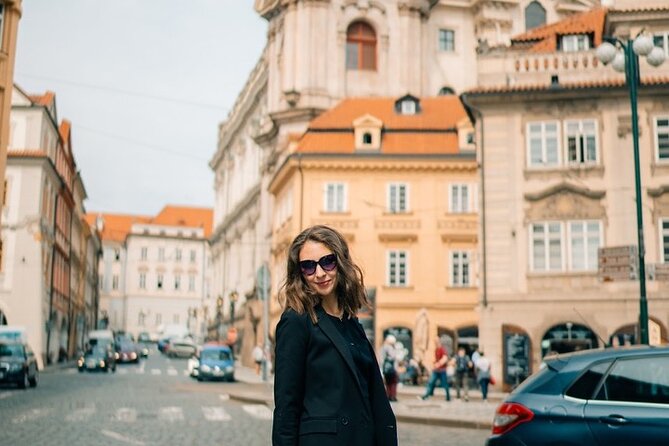
This tour is built for your first hours in Prague. It does not try to cover the whole city. Instead, it links the core sights in Staré Město, or Old Town, with a thread of stories about power, faith, art, science, and tragedy.
That mix matters. A quick look at the Astronomical Clock can feel like a photo stop unless someone explains what you are seeing. Charles Bridge can seem like a pretty crossing unless you learn why it mattered to Charles IV. The Jewish Quarter can seem like a series of elegant buildings unless you understand how memory and loss shape the area.
Darya’s role is to connect those pieces. The strongest praise for this experience centers on her storytelling, warmth, and ability to give a group a clear introduction in two hours. One guest described seeing the main sights without noticing how quickly the time passed. That is a good sign for anyone who wants orientation without a full-day commitment.
The tradeoff is clear. You will not have time for long interior visits, quiet contemplation at every site, or detailed art analysis. The route is better at showing you what Prague is about than at finishing the subject.
Other Prague days people book alongside this one:
- Prague: 50-Minute Sightseeing Evening Cruise
★ 4.2 · 33,780 reviews - Prague: Medieval Dinner with Unlimited Drinks
★ 4.4 · 19,847 reviews - Prague: Skip-the-line Castle Ticket and Optional AudioGuide
★ 4.3 · 11,121 reviews
Charles Bridge and the opening story
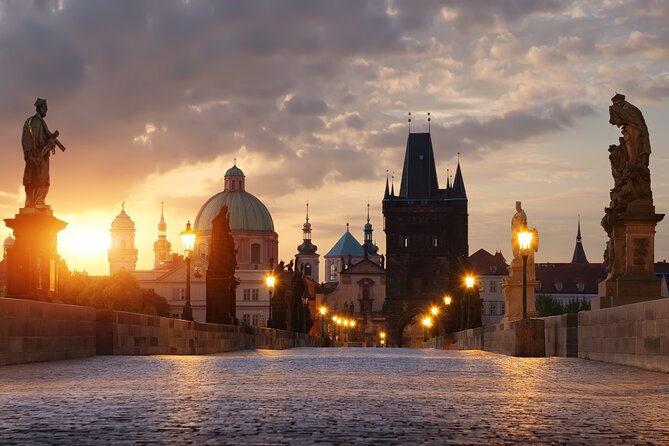
Meet at 10:00 a.m. by the statue of Charles IV on Křižovnické náměstí, close to the eastern end of Charles Bridge. This is a practical starting point because the bridge immediately gives you one of Prague’s most recognizable scenes and puts the city’s medieval story in motion.
The bridge is described as an energetically charged place, and the tour uses that mood rather than treating it as just another crossing. You hear about Charles IV, the ruler associated with the bridge, and the special date chosen for laying its first stone. The exact significance of that date becomes part of the story, along with the familiar custom of making a wish.
I like beginning here because the bridge gives you a visual anchor. You can look at the stone span, the river, and Prague’s historic skyline while hearing why this crossing mattered. You are not simply told to admire the view. You are given a reason to pay attention to the setting.
Charles Bridge can be crowded, and the tour does not promise an empty crossing. The private format helps with questions, but it cannot remove the city’s foot traffic. Bring comfortable shoes and expect to keep moving.
Klementinum’s quieter courtyard
After the bridge, the route turns toward Klementinum, the former Jesuit college complex. The tour spends about ten minutes here and focuses on the courtyard rather than promising a full visit to every part of the complex.
That choice can work well. A courtyard gives you a break from the main flow of the Old Town and a chance to hear about the Jesuit order, its role in Prague, and the secrets associated with the walls. The description presents the Jesuits as dangerous people, which signals a story with tension rather than a dry architectural lecture.
The listed admission for this stop is free. Still, you should treat this as a guided look at the site, not automatically as a ticketed interior tour. The experience information does not list a separate visit to a library, tower, or other interior attraction.
Klementinum is especially useful for you if religious and political history interest you. It adds a layer that a simple Old Town walk might skip. The short time means Darya will need to keep the explanation focused, but that can be an advantage if you want a strong overview.
Reading Prague’s Astronomical Clock
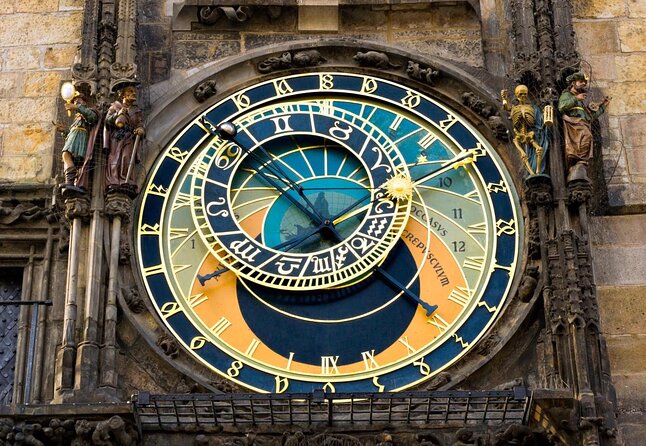
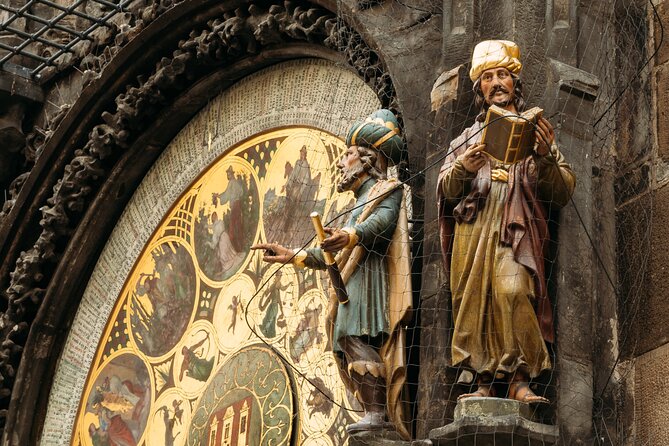
The Old Town Hall and Astronomical Clock get another ten minutes. Hundreds of people gather each day to watch the apostles appear from the small window near the top of the clock, but the tour aims to give you more than the brief mechanical display.
You will hear why Prague’s clock is considered unusual, how the master behind the work fits into the story, and how to read the clock’s many parts. That last point is valuable. The face is easy to photograph and hard to understand. A guide can turn a complicated object into something you can actually look at with purpose.
The timing deserves attention. The tour does not state that you will arrive for a particular hourly showing, so do not book this walk solely to catch the apostles at a precise moment. The emphasis is on explanation, not a guaranteed performance time.
This is one of the places where Darya’s storytelling appears most useful. A few minutes can give you a working understanding of the clock, while a longer technical lecture might lose the group. If you want to study the mechanism or visit the Old Town Hall separately, plan another visit.
Same city, a completely different afternoon:
- Prague: Castle Tour with Local Guide and Entry Ticket
★ 4.6 · 10,422 reviews - Prague Castle 2.5-Hour Tour Including Admission Ticket
★ 4.7 · 8,927 reviews - Prague: Oldtown, Medieval Underground & Dungeon History Tour
★ 4.2 · 8,244 reviews - Prague: Vltava River Night Cruise with Buffet
★ 4.3 · 7,338 reviews
Old Town Square, where Prague’s big events unfolded
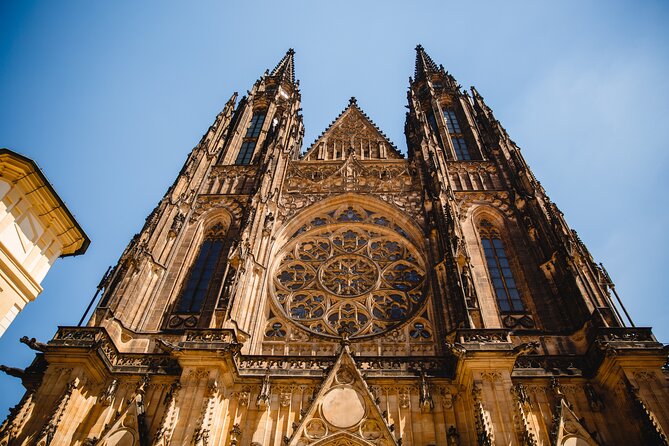
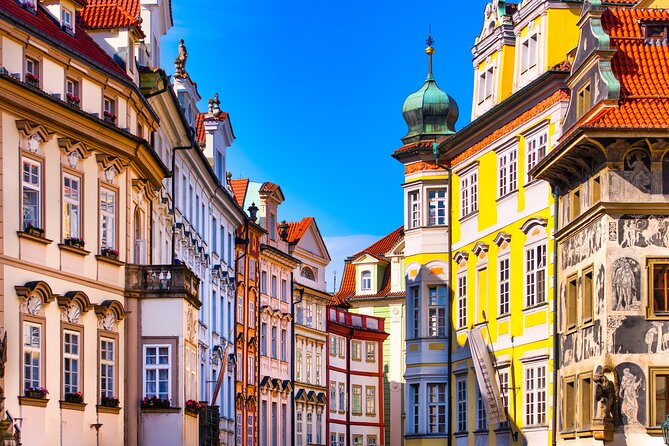
Old Town Square is the heart of the route, both geographically and historically. You spend about ten minutes hearing how it served as a market, a stage for major public events, and a place of terrible executions.
That combination is important. Prague’s central square is handsome and lively, but its past is not only decorative. The tour treats the square as a witness to joyful, ordinary, and painful moments. That gives the surrounding buildings more weight.
Ten minutes will not cover every façade or event. It will give you a short orientation to the square’s role in Prague’s story. I would pay close attention here, since the information can help you make sense of the city after the tour ends.
The square is also one of the busiest points on the route. Stay near your guide and keep the group’s meeting point in mind. The private arrangement helps, but a small group can still be separated in a crowded public space.
Mozart at the Estate Theatre and student life at Karolinum
The route continues to the Estate Theatre, a grand building tied to Mozart’s performances. The stop lasts about ten minutes, and the available information does not include admission.
That makes this a viewing and storytelling stop rather than a scheduled theater performance. For music lovers, the connection to Mozart gives the building immediate appeal. Even if you do not attend a concert, you can place the theater within Prague’s cultural story.
Next comes Karolinum, the main campus of Charles University. This stop is shorter, at about five minutes. The focus is the university’s fascinating past, not a detailed tour of academic rooms or collections.
The contrast between the theater and university is useful. One represents performance and public culture. The other points to learning, institutions, and the long life of Prague as a European center of education. Because the Karolinum stop is brief, think of it as a prompt to return, not a full visit.
No admission is listed as included for either place. If entering a building is important to you, confirm the arrangements before booking or plan a separate visit.
The Powder Tower and the edge of Old Town
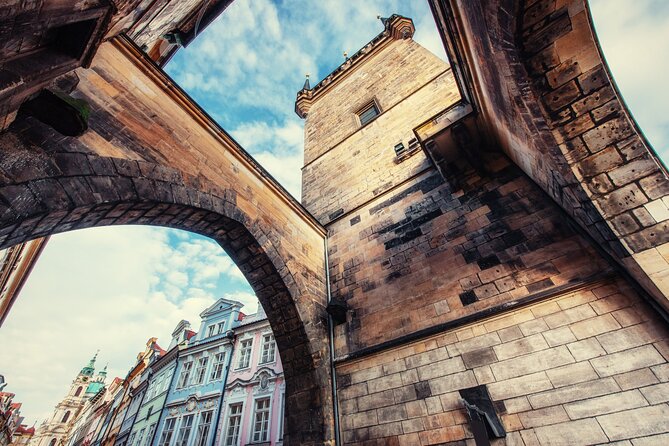
Prasna brana, usually called the Powder Tower in English, is a striking Gothic gateway into the Old Town. The tour allows about five minutes here.
This is a short stop, but the tower has a clear visual role. It helps you understand how the historic center was marked and entered. Its Gothic form also gives the walk a change of texture after the clock, square, theater, and university.
Five minutes is enough for a concise explanation and photographs. It is not enough for a detailed architectural study or interior visit. The admission is not included in the tour price, so you should not expect time inside unless arrangements say otherwise.
For me, this stop works best as part of the route’s rhythm. You see how Prague’s important buildings are not isolated attractions. They sit along an old urban path, each one adding a different piece to the city.
The Old-New Synagogue and the Golem legend
The Jewish Quarter brings a more serious tone. At the Old-New Synagogue, the tour spends about ten minutes discussing what is described as the oldest synagogue in Europe and the legend of the Golem connected with the building.
The Golem story gives the stop an immediate sense of mystery, but the synagogue is not only a setting for folklore. Its place in Prague’s Jewish history makes it one of the route’s most important sites. The guide’s job is to keep the legend from becoming the whole story.
Admission is not included. The itinerary does not promise an interior visit, so you should expect to see the building and hear its story during the walk. If you want extended time inside, plan that separately and allow for the synagogue’s own opening arrangements.
This is a good stop for you if you want the tour to move beyond kings and architecture. It adds faith, community, legend, and the complicated layers of Prague’s past.
Pinkas Synagogue and the work of remembrance
The Pinkas Synagogue follows with another ten-minute stop. It is described as a place of memory dedicated to Jewish victims of the Second World War.
The tone here is understandably more solemn. Rather than treating every stop as a photo opportunity, the route gives space to one of Prague’s clearest sites of remembrance. The subject asks for attention and respect, especially after the lighter Golem legend.
Again, admission is not listed as included. The tour information does not promise an interior memorial visit, so you should regard the stop as a guided introduction unless you receive different instructions when booking.
I value this part of the route because it prevents the Jewish Quarter from being reduced to old stone and dramatic tales. You encounter both the legend attached to the Old-New Synagogue and the documented human loss remembered at Pinkas Synagogue.
Rudolfinum, the final stop
The tour ends at Rudolfinum, a beautiful Neo-Renaissance concert hall on the river. The walk finishes in front of the building at Alšovo nábřeží, rather than returning you to the starting point.
That end point is practical. You can continue around the Old Town, explore the nearby riverfront, or use the finish as a reference point for the rest of your day. The building itself makes a graceful final image after the medieval and Jewish Quarter stops.
The route’s final sequence also leaves you with music and architecture after the memorial sites. Rudolfinum’s concert-hall identity connects back to the Estate Theatre and gives the walk a cultural finish.
The listed route does not include a performance or interior admission. You are seeing the building and hearing about its role, with the option to return later if you want more time.
Price, pace, and what you receive
At $96.12 per person, this is not the cheapest way to see Prague’s center. Its value rests on the private format and the guide’s storytelling, not on included admissions. Only your group takes part, and the tour is offered in English.
That price can make sense for a couple, family, or small group that wants a personal introduction without joining a large crowd. It is less attractive if you mainly want a free walking route or plan to spend hours inside the synagogues, Old Town Hall, Klementinum, or the Powder Tower.
The tour lasts about two hours and thirty minutes. The route includes many stops, so you get breadth rather than long visits. I would choose it early in a Prague stay, then return to the places that deserve more time.
The tour is booked, on average, ten days ahead. That suggests planning is sensible, especially if you want the 10:00 a.m. start or have limited time in the city. Confirmation arrives at booking, and the experience is near public transportation.
Most people can participate, according to the supplied information. You should still expect a walking tour through public streets, squares, and busy historic areas. Wear shoes suited to roughly two and a half hours on foot.
Free cancellation is available up to 24 hours before the start time for a full refund. Changes or cancellations inside that window are not accepted for a refund.
Who should book Prague Essential
I would choose this tour if you want:
- A private first look at Prague’s historic center
- A guide-led explanation of famous sights instead of silent photo stops
- A route that mixes architecture, politics, religion, music, education, and memory
- An English-language walk with Darya
- A compact experience that fits into a morning
- A clear starting point for planning the rest of your Prague visit
I would look elsewhere if your main goal is extensive interior access, a slow photography walk, or detailed attention to one subject. The short stops are useful for orientation, but they limit how much any one site can reveal.
Should you book this private Prague walk?
Book it if you want Prague’s essential center explained by a personal guide rather than encountered as a list of buildings. The strongest reason to choose it is Darya’s story-led approach, paired with a route that moves from Charles Bridge to Rudolfinum and takes in both famous sights and harder history.
Skip it if the $96.12 price feels high for a mostly outdoor introduction, or if you already know the Old Town and want long visits inside museums and synagogues. For a first morning in Prague, though, the tour gives you useful bearings, memorable stories, and a sensible list of places to revisit at your own pace.
FAQ
How long does Prague Essential last?
The tour lasts approximately 2 hours and 30 minutes.
What time and where does the tour start?
It starts at 10:00 a.m. by the Charles IV Statue at Křižovnické náměstí in Prague’s Old Town.
Where does the tour finish?
The tour ends in front of Rudolfinum at Alšovo nábřeží 79/12.
Is the tour private?
Yes. Only your group participates in the activity.
Is the tour offered in English?
Yes. English is the listed language.
Are admission tickets included?
Admission is listed as free at Klementinum, the Old Town Hall with Astronomical Clock, and Old Town. Admission is not included for the Estate Theatre, Karolinum, Powder Tower, Old-New Synagogue, Pinkas Synagogue, or Rudolfinum.
Just added around Prague
- Prague: Historical Walking Tour with Focus on World War 2★ 4.3 · 12 reviews
- WWII and Communism History in Prague’s Old Town Private Tour★ 5.0 · 4 reviews
- World War II 4WD Tour from Prague with Lunch★ 4.4 · 3 reviews
- Unique salt cave in Prague★ 4.9 · 10 reviews
- Walking tour of Prague in French : Nové Město★ 4.9 · 16 reviews
- Walking tour of Prague in french: Old Town & Charles Bridge★ 4.9 · 62 reviews
- Ultimate Unlimited Beer Pong with Czech Beer★ 4.6 · 5 reviews
- Prague: Market Tour and Traditional Czech Cooking Class★ 4.7 · 19 reviews