
Reviewed · KUTNA HORA DAY TRIPS FROM PRAGUE
From Prague: Kutna Hora UNESCO Site Tour with Bone Chapel
Kutná Hora’s Bone Chapel is the hook: a small, eerie church decorated with human skulls and bones. But the better surprise is the town around it, a former silver-mining powerhouse filled with Gothic churches, royal buildings, and stories from the Hussite Wars. You travel by train from Prague, then use local buses and trains to reach the sights.
I like the way the tour joins the famous Sedlec Ossuary with St. Barbara’s Church, since you get both the macabre and the magnificent in one day. I also like having a guide handle the confusing transport connections and explain how silver from Kutná Hora helped finance the Prague groschen, a major medieval currency.
The main drawback is pace. Six hours must cover the train ride, several sights, local transport, and lunch, so some stops feel brisk. The tour also involves walking and is not suitable for people with mobility impairments.
Key points to know before booking
- The Bone Chapel is brief but unforgettable: Sedlec Ossuary is the day’s most unusual stop, though photography inside is forbidden.
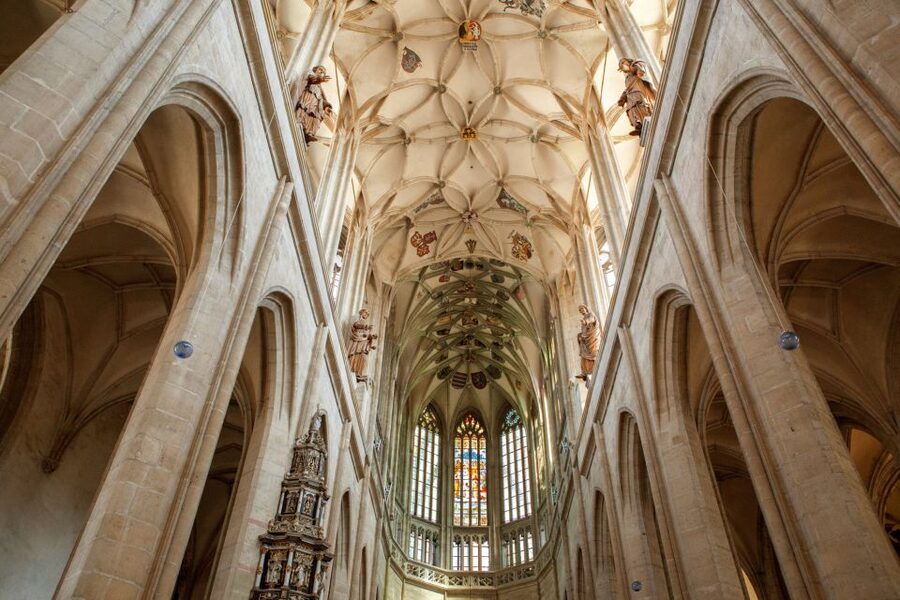
- St. Barbara’s Church adds real depth: Its Gothic design and stained glass show that Kutná Hora is far more than a bone-filled chapel.
- Your guide manages a complicated day: Train tickets, local buses, and short train connections are included and organized for you.
- Guides make the history accessible: Brandon, Karel, Pavel, Oliver, Jan, Gaby, and others are praised for clear English, humor, and strong local knowledge.
- Lunch is not included: Guides often recommend or organize a Czech restaurant, but the arrangement should be clarified before you go.
- The price is reasonable for a six-hour outing: At $81 per person, admission and transportation are covered, leaving you to decide if the convenience is worth the group format.
Why Kutná Hora makes a strong break from Prague
Prague can easily fill several days, but it is also easy to spend your entire visit among its grand squares and crowded lanes. Kutná Hora gives you a different view of Bohemia: smaller, quieter, and built on silver rather than tourism.
The town became one of the Kingdom of Bohemia’s economic centers because of its mines. Its wealth helped support royal power, impressive churches, and the Prague groschen, a silver coin used well beyond the region. At its height, Kutná Hora competed with Prague in money and influence, and several Bohemian kings favored it as a residence.
That background matters because the architecture otherwise risks becoming a parade of pretty façades. With a good guide, the Stone House, Italian Court, and churches connect to the town’s rise and fall. You learn why a town of this size could once matter so much.
The tour also covers the Hussite Wars of the 15th century. This was not a quiet period of medieval church history. Religious conflict reshaped Bohemia, and Kutná Hora played a part in those struggles. I like this wider frame because it turns the walk into a story about power, money, faith, and war.
More Kutna Hora day trips:
- From Prague: Kutná Hora, St.Barbara’s Church, Sedlec Ossuary
★ 4.3 · 673 reviews - Day Trip to Kutná Hora by train from Prague
★ 4.5 · 587 reviews - Kutna Hora Day Trip from Prague
★ 4.0 · 570 reviews
Meeting at Prague’s main station
You meet at the Czech Railway Main Ticket Office on the minus 3 floor of Prague’s main train station. That wording is important. The meeting point is not simply outside the station or at a street-level entrance, and first-time visitors can lose time looking in the wrong place.
A useful visual clue is the guide’s red umbrella near the ticket office. Give yourself enough time to find the lower level, especially if you are carrying luggage or unfamiliar with Prague’s large station.
From there, you board a comfortable regional train to Kutná Hora. Train travel is part of the appeal. You see more of the Czech countryside than you would from a city coach, and the journey gives your guide time to introduce the town’s silver wealth and medieval role.
The day uses public transport rather than a private vehicle. That keeps the experience closer to ordinary Czech travel, but it also means you must follow the group’s timing. The guide handles the tickets and connections, which is valuable because the major sights are not all clustered together.
Sedlec Ossuary and the Bone Chapel
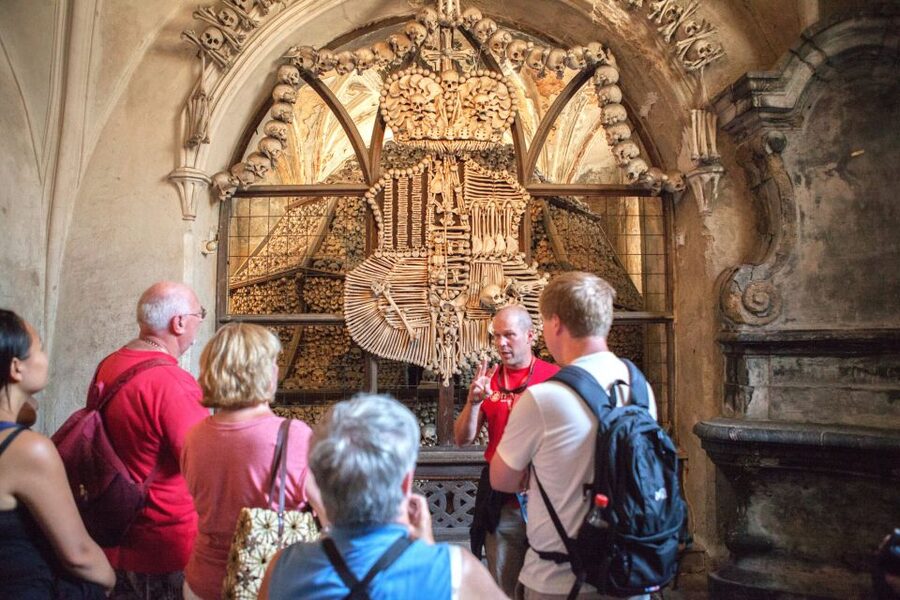
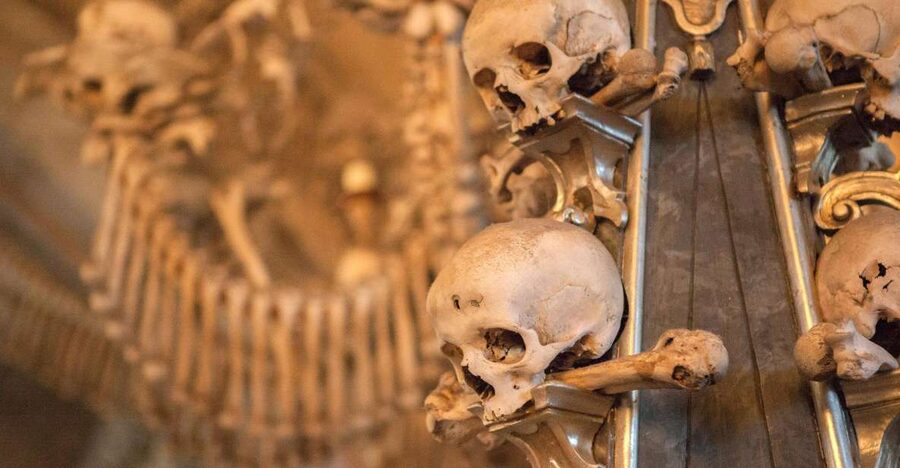
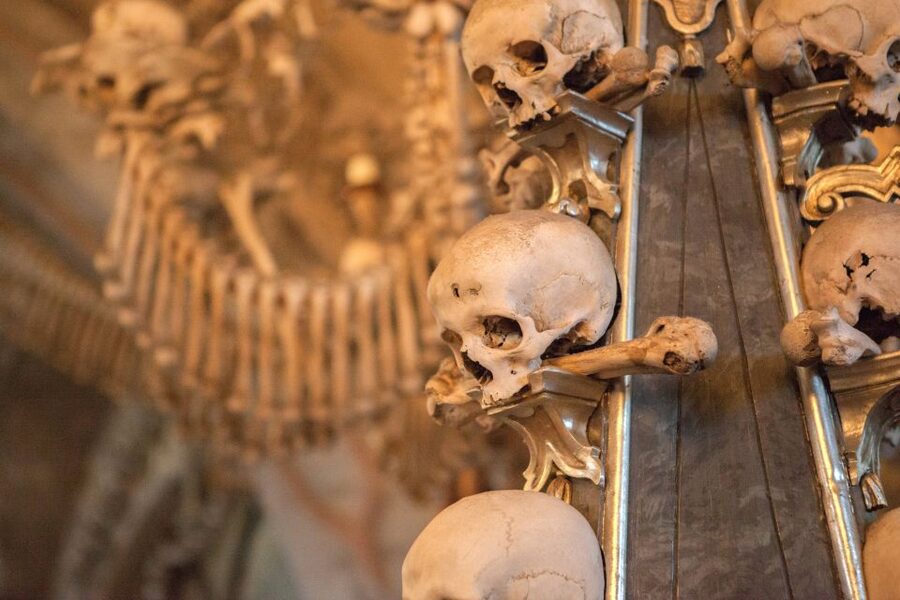
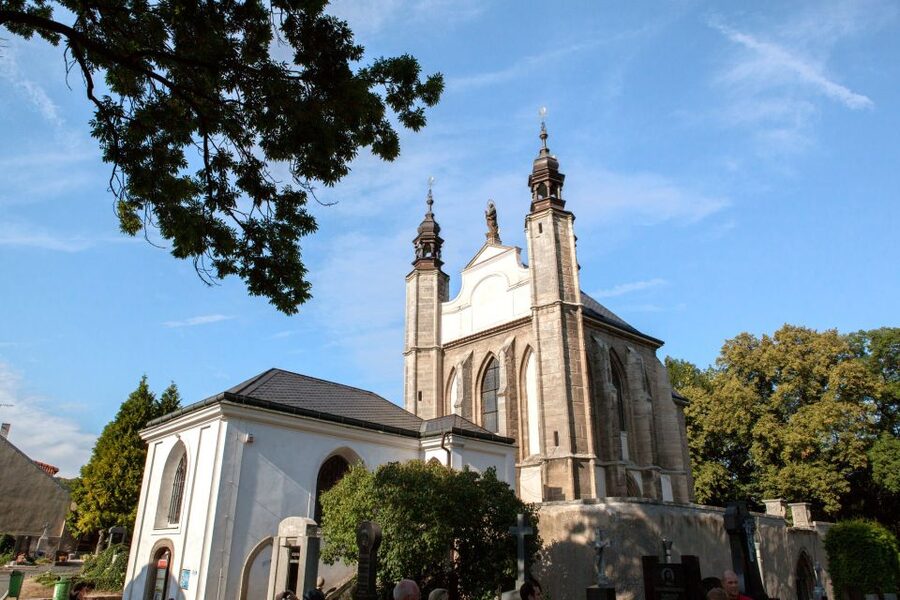
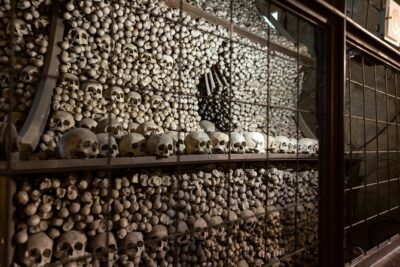
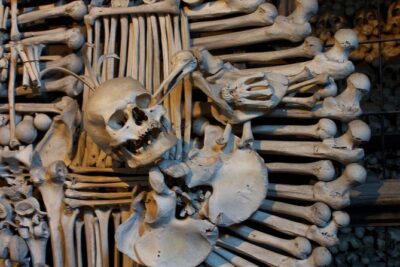
Sedlec Ossuary is the emotional centerpiece. The small chapel is decorated with human bones, including skulls and larger arrangements that give the interior its famous macabre character. It is not a long visit, but it is the sort of place you remember long after the details of the day blur.
The setting also gives the chapel meaning beyond shock value. Ossuaries reflect the practical problem of dealing with large numbers of remains, especially around religious sites. Here, the bones became part of the chapel’s visual identity, making Sedlec one of the most unusual religious spaces in the Czech Republic.
Photography is forbidden inside the Bone Church. This rule is clear and worth respecting. If you are hoping to leave with photographs, adjust your expectations before arrival and pay attention to the room itself instead of trying to document every detail.
A useful point about the itinerary is that the ossuary is not presented as the whole story. Your guide explains that Kutná Hora contains much more than bones. That balance is one reason the tour works better than a quick independent stop at Sedlec followed by a return to Prague.
Some people would like more time here. The chapel is compact, and the schedule moves on to other sites. If the Bone Chapel is your only reason for booking, you may find the visit short. If you want to understand Kutná Hora as a whole, the limited time makes sense.
St. Barbara’s Church and the Gothic side of town
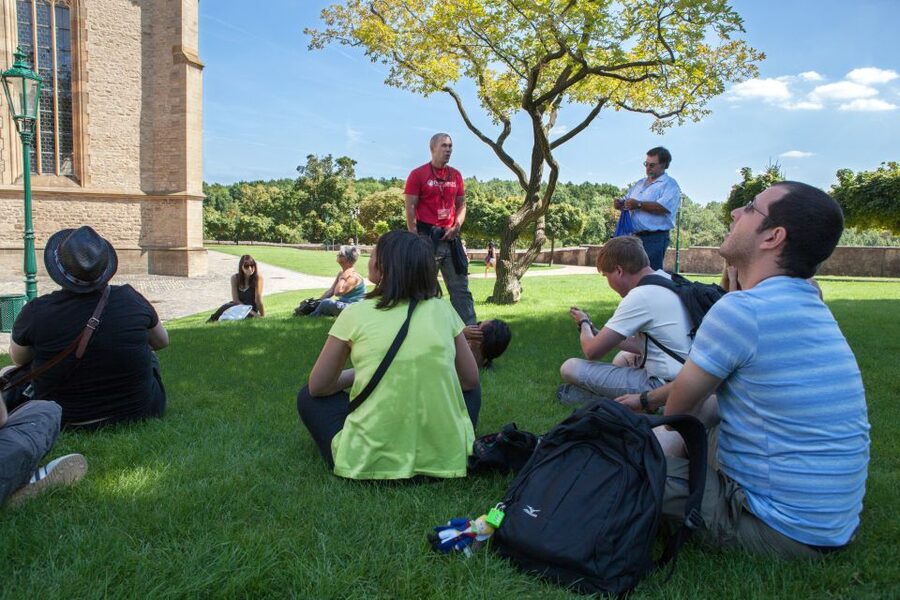
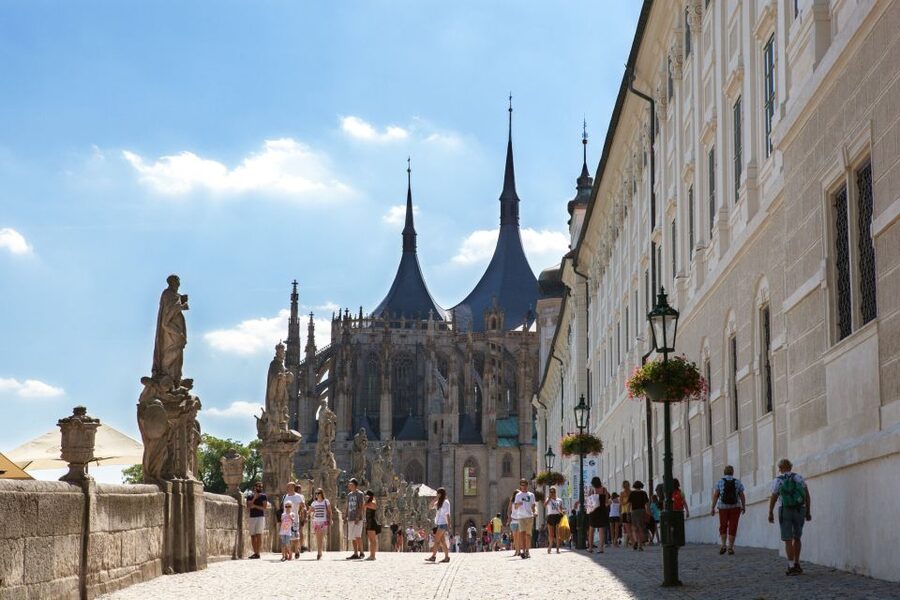
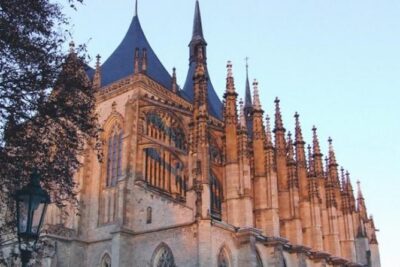
St. Barbara’s Church supplies the visual counterpoint to the ossuary. Where Sedlec feels dark, enclosed, and deliberately unsettling, St. Barbara’s is grand, airy, and richly decorated. Its Gothic form reflects the money once flowing through Kutná Hora’s mines.
The church is included in the admission price, so you do not need to budget separately for entry. Look for the stained glass, which gives the interior a lighter and more colorful feel than the Bone Chapel. The church is also one of the places where the town’s former wealth becomes easy to see.
I would pay close attention to the guide here. Details about the church make more sense when tied to mining, royal patronage, and Kutná Hora’s competition with Prague. The building is not just an attractive stop for photographs. It is evidence of what the silver economy could fund.
You should also expect some walking around the church and through the historic center. The tour is not suitable for people with mobility impairments, and that warning should be taken seriously. Even without long hikes, a sightseeing day involving stations, streets, churches, and local transport requires you to stay on your feet.
Same city, a completely different afternoon:
- Prague: 50-Minute Sightseeing Evening Cruise
★ 4.2 · 33,780 reviews - Prague: Medieval Dinner with Unlimited Drinks
★ 4.4 · 19,847 reviews - Prague: Skip-the-line Castle Ticket and Optional AudioGuide
★ 4.3 · 11,121 reviews - Prague: Castle Tour with Local Guide and Entry Ticket
★ 4.6 · 10,422 reviews
Italian Court, Sankturin House, and the old center
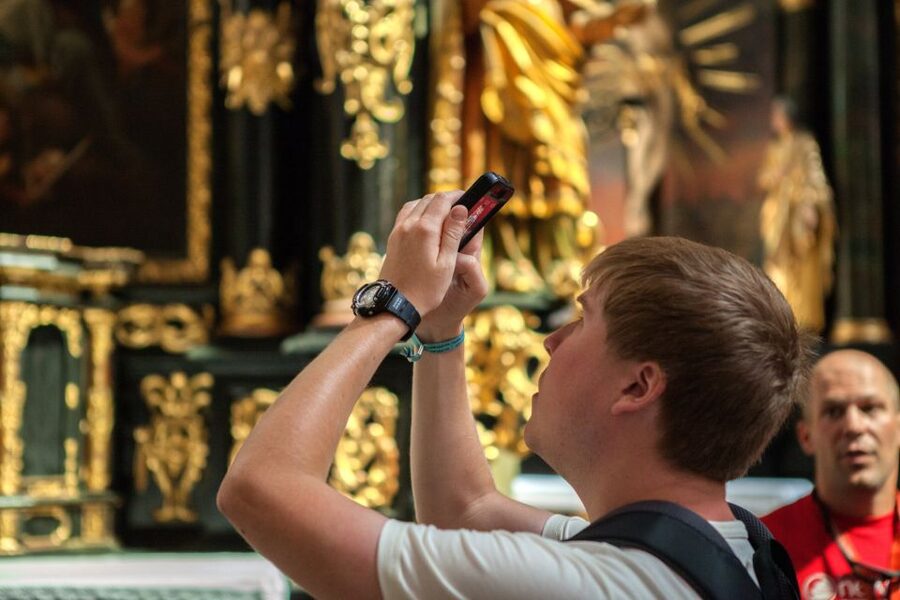
The Italian Court is one of the tour’s most useful stops for understanding Kutná Hora’s wealth. Its name points to the role of Italian expertise in the town’s coin production, while the building connects the mining industry to royal finance.
The Prague groschen was once hard currency in Central Europe. Learning how local silver became coins gives the town a practical identity. Kutná Hora was not wealthy by accident. It was part of a system that extracted, processed, and circulated valuable metal.
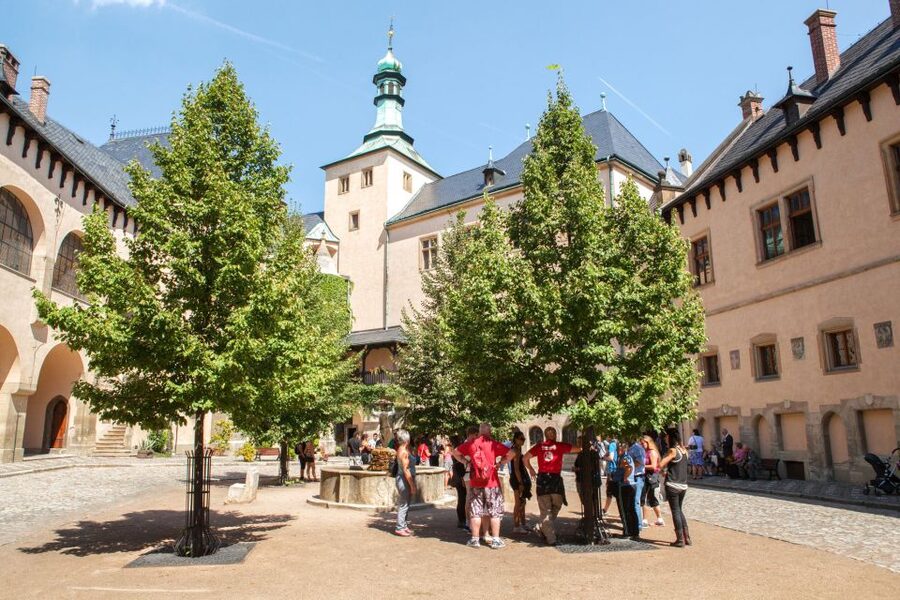
The itinerary also includes Sankturin House, the Stone House, and medieval Ruthardka Street. These stops break up the church visits and let you see the town as an urban place rather than a collection of monuments.
The Stone House is especially useful as a reminder that prosperity reached private buildings as well as royal and religious ones. Ruthardka Street adds a medieval-scale lane to the day, while the Plague Column reflects the religious and civic fears that shaped European towns.
The listing describes Sankturin House as Bohemia’s oldest Cistercian Monastery. The wording is unusual, but the stop is part of the town’s religious story and helps connect Kutná Hora with the Cistercian presence at Sedlec. Your guide can give the local context while you move between the more famous sights.
The Hussite Wars and Kutná Hora’s difficult past
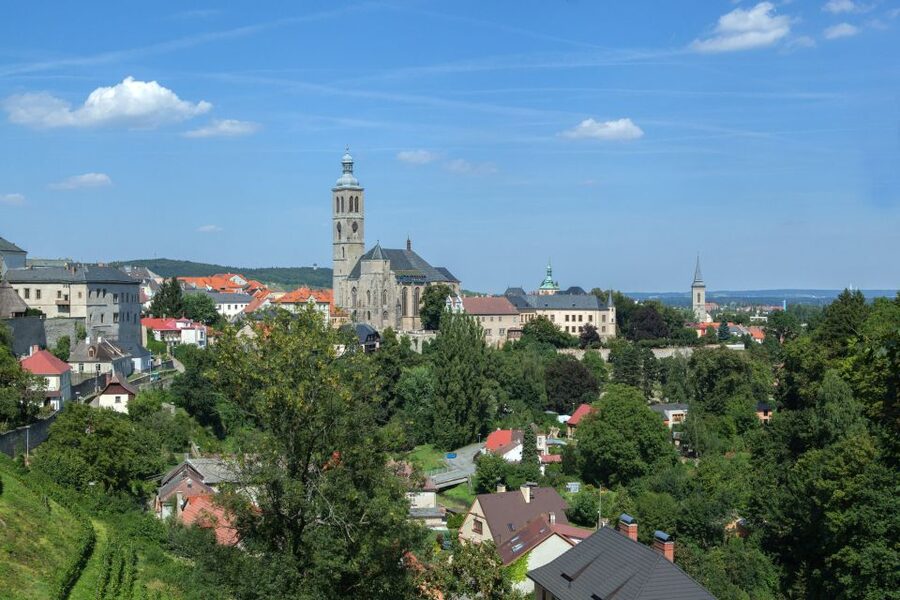
A good day trip should give you more than dates and building names. The discussion of the Hussite Wars does that by showing Kutná Hora in a time of political and religious pressure.
The Hussite movement grew from arguments over the church and religious practice, then developed into open conflict. Kutná Hora’s importance and wealth placed it inside the wider struggle. The town’s story was not simply one of silver, royal favor, and handsome churches.
I like this part of the route because it gives the buildings a harder edge. A medieval town could be rich and influential while still living through war, disease, and religious division. The Plague Column fits that wider picture, as does the presence of powerful church institutions.
Guides such as Karel, Pavel, Jan, Brandon, Oliver, Gaby, and Gabriella are repeatedly praised for mixing facts with humor and personal conversation. That matters on a history-heavy outing. You are more likely to remember a story told well than a list of dates read from a plaque.
Public transport, timing, and group pace
This is not a private car tour. You use the regional train from Prague and local buses or trains in and around Kutná Hora. The guide keeps the group together and manages the connections, which removes much of the stress from planning the route yourself.
That convenience is one of the strongest reasons to book. A first-time visitor must otherwise work out how to connect Prague, Sedlec, the town center, and the main churches. On the tour, your guide may choose a local bus instead of making the group walk a less interesting stretch, as Pavel did for one group.
The schedule can become complicated when train works, snow, or other delays affect the route. The tour has to keep moving because so many stops fit into six hours. Still, the organization appears to be a real strength, with guides prepaying transport in some cases and making sure nobody is left behind.
Group size can vary. One winter departure had only five people, which meant quieter visits and easier conversation. A larger group requires more care at stations and churches, but guides such as Gabriella and Jan have experience keeping people together.
The tradeoff is simple: you gain convenience and context, but you give up some independence. If you want to linger inside the Bone Chapel or spend a long, slow lunch in town, this schedule may feel tight.
Lunch in Kutná Hora
Food and drinks are not included in the $81 price. In practice, guides often recommend a traditional Czech restaurant, and several departures included a group lunch stop. Some guides pre-order food so it is ready when the group arrives, which helps protect sightseeing time.
The restaurant stop can be a strong part of the day. You may get a chance to try Czech food and local beer at prices that feel better than central Prague. One restaurant, Dacicky, is specifically praised for generous portions, fair prices, and Kozel beer served from a tank.
There is a catch. Lunch arrangements are not always fully clear before the day begins. You may need to ask whether the group is eating together, how much time is planned, and if you can choose your own restaurant.
The schedule can leave only enough time for a quick meal. That is practical when the tour has several churches and transport connections, but it is less satisfying if you enjoy lingering over food. You can also opt out of the group lunch, as one participant did, and find a quieter restaurant with a view toward St. Barbara’s Church.
Bring a little flexibility. Winter holidays and the off-season can mean that some restaurants are closed, so following the guide’s recommendation may be easier than searching on your own.
Is $81 good value?
At $81 per person, this is not the cheapest way to leave Prague, but the price covers the English-speaking guide, train tickets, admission to St. Barbara’s Church, and entry to Sedlec Ossuary. You are also paying for route planning and the ability to move between separated sights without figuring out each connection yourself.
The value is strongest if you care about history or dislike transport puzzles. The guide turns a set of scattered attractions into a clear six-hour story, and the included admissions prevent small extra costs from piling up.
The value is weaker if you are comfortable planning Czech public transport and want long, unstructured visits. You could prefer a self-guided day if the Bone Chapel and St. Barbara’s Church are your only priorities and you do not need the historical explanation.
Free cancellation up to 24 hours before departure and the option to reserve now and pay later make the booking less rigid. Those policies are useful if your Prague schedule is still shifting, though you should still confirm the available start time before committing.
Who will enjoy this day trip most?
I would recommend it to first-time Prague visitors who want one substantial day outside the capital. It is also a good fit for people who like architecture, religious history, medieval politics, and unusual cultural sites.
Families can manage it. A pair of children aged five and seven enjoyed one departure, though the six-hour schedule and Bone Chapel’s subject matter will not suit every child. Explain beforehand that the ossuary contains real human remains and that the church is a quiet, serious place.
History fans will get the most from the route, especially if the Hussite Wars and medieval finance interest you. The tour also suits curious eaters who want a traditional Czech lunch without spending time choosing a restaurant.
I would think twice if you dislike group schedules, have difficulty walking, or want to spend most of the day taking photographs inside the ossuary. Photography is not allowed there, and the tour has too many stops to let you linger everywhere.
Should you book the Kutná Hora tour?
Book it if you want the easy version of a complicated day. You get the Bone Chapel, St. Barbara’s Church, the Italian Court, medieval streets, silver-mining history, and transport from Prague without having to assemble the pieces yourself.
The strongest part is not one building. It is the contrast between Sedlec’s bone decoration and Kutná Hora’s grand Gothic architecture, tied together by a guide who can explain the money, religion, and conflict behind both.
Skip it if you want a slow independent visit or cannot manage a walking-heavy schedule. For most Prague visitors with six hours to spare, though, the $81 cost is fair, especially because admissions and train tickets are included. Look for the red umbrella at the lower level of the main station, ask early about lunch, and let the guide handle the connections.
FAQ
How long does the Kutná Hora tour last?
The tour lasts six hours, including travel from Prague, local transport, sightseeing, and time for a meal stop.
Where does the tour meet in Prague?
It meets at the Czech Railway Main Ticket Office, České dráhy, on the minus 3 floor of Prague’s main train station.
How do I identify the guide at the meeting point?
The guide may be found near the ticket office with a red umbrella.
Is transportation included?
Yes. Train tickets are included, and the tour uses regional trains and local public transport during the day.
Is admission to Sedlec Ossuary included?
Yes. Entrance to the Sedlec Ossuary, also called the Bone Chapel, is included.
Is admission to St. Barbara’s Church included?
Yes. The entrance ticket to St. Barbara’s Church is included.
Can I take photographs inside the Bone Chapel?
No. Photography is forbidden inside the Bone Church in Sedlec.
Is lunch included in the price?
No. Food and drinks are not included, though the guide may recommend or organize a restaurant stop.
What language is the tour conducted in?
The tour has a live English-speaking guide.
Is the tour suitable for people with mobility impairments?
No. The tour is not suitable for people with mobility impairments.
Can I cancel the booking?
You can cancel up to 24 hours in advance for a full refund. You can also reserve now and pay later.
Just added around Prague
- Prague: Historical Walking Tour with Focus on World War 2★ 4.3 · 12 reviews
- WWII and Communism History in Prague’s Old Town Private Tour★ 5.0 · 4 reviews
- World War II 4WD Tour from Prague with Lunch★ 4.4 · 3 reviews
- Unique salt cave in Prague★ 4.9 · 10 reviews
- Walking tour of Prague in French : Nové Město★ 4.9 · 16 reviews
- Walking tour of Prague in french: Old Town & Charles Bridge★ 4.9 · 62 reviews
- Prague: Market Tour and Traditional Czech Cooking Class★ 4.7 · 19 reviews
- Ultimate Unlimited Beer Pong with Czech Beer★ 4.6 · 5 reviews
Kutna Hora Day Trips from Prague, compared.
Kutná Hora, St.Barbara’s Church, Sedlec Ossuary
Read our review →
Kutna Hora Day Tour Including Sedlec Ossuary from Prague
Read our review →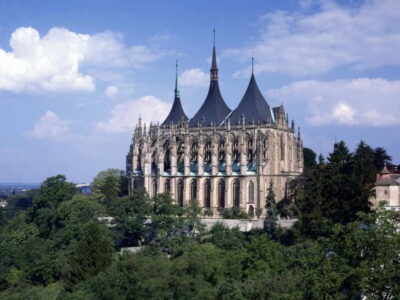
Half Day Trip to Kutna Hora and Bone Church from Prague
Read our review →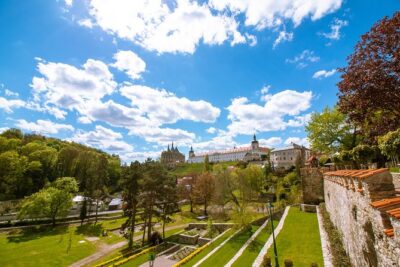
Kutna Hora Private Day Trip from Prague by Train
Read our review →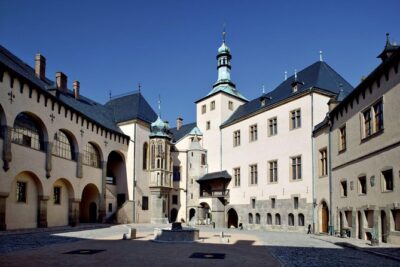
Browse the lists this tour appears in