
Reviewed · WALKING TOURS
Prague Renaissance and Baroque Gardens Walking Tour
Prague’s grandest gardens tell a story that the city’s churches and castles cannot tell alone. This three-hour walk links the Royal Gardens, the Wallenstein Garden, and the tucked-away Vrtba Garden, showing how rulers used plants, fountains, statues, and views to display power. I especially like the Singing Fountain, which makes a faint musical sound as water hits its bronze bowl, and the Fig House and Orangery, where Mediterranean fruits were first grown in Central Europe. The catch is simple: this is a stair-heavy walk, and admission to the Castle Gardens and Vrtba Garden costs extra.
I also like the human stories behind the gardens. You hear why Emperor Ferdinand I brought Italian designers to Prague, then meet the dramatic Albrecht von Wallenstein through the garden he commissioned. Guide Miriam has been praised for an informative, relaxed style, while Bonita Rhoads has also led this experience. Group size can be private or small, which matters on narrow paths and steep stairways.
Key points to know
- Italian design in Prague: Learn how Ferdinand I imported Italian gardeners and architects to create Renaissance gardens north of the Alps.
- A musical fountain: See the 1564 Singing Fountain in front of the Belvedere Summer Palace.
- Early Central European citrus growing: Visit the Fig House and Orangery, linked to the first cultivation of figs, almonds, oranges, and lemons in the region.
- Wallenstein’s theatrical garden: Look for albino peacocks, Mannerist statues, a grotto wall, and myth-themed fountains.
- Vrtba’s rooftop reward: Climb through a Baroque garden to a high courtyard with a marine-themed grotto and wide Prague views.
- A demanding walk: Expect stairs, steep sections, and narrow passages. A private booking lets the guide adjust the route.
Why Prague’s gardens are worth three hours
Most first-time visits to Prague focus on the Old Town, Charles Bridge, and Prague Castle. That is sensible, but gardens reveal another side of the city. They show how medicine, food, religion, science, politics, and personal ambition shaped daily life.
The earliest gardens in Prague were practical places. Medieval communities grew herbs for cooking and medicine, and some traces remain in Gothic cloisters. Vineyards on the hills around Prague also reach back before the time of Charles IV.
The large palace garden arrived later, during the 1500s. Emperor Ferdinand I wanted formal grounds inspired by the Italian Renaissance, with ordered paths, exotic plants, sculpture, and pleasant places to rest. He brought Italian gardeners and architects to Bohemia, helping introduce classical design north of the Alps.
That background gives the walk a clear purpose. You are not simply moving from one pretty garden to another. You are watching Prague’s taste change from useful herb plots to royal pleasure grounds, then from Renaissance balance to Baroque drama.
More walking tours in Prague:
- Prague: 3-Hour Walking Tour of Old Town & Prague Castle
★ 4.7 · 5,696 reviews - Prague: Ghost Walking Tour Where Legends Come To Life
★ 4.4 · 5,253 reviews - Prague: Jewish Quarter Walking Tour with Admission Tickets
★ 4.7 · 3,729 reviews
Starting near Malostranská and reaching the Castle Gardens
The meeting point is at the door of Bagel Lounge Malostranska. From there, the route works upward toward the gardens below and around Prague Castle. Check the starting time when you book, since several departure times may be available.
The Royal Gardens are the natural opening chapter. Ferdinand I commissioned the Belvedere Summer Palace as a gift for his wife, Queen Anne. She died before the building was finished, which gives the elegant project a sad personal note.
The building was designed by the Italian Paola della Stella and is often described as the finest Renaissance structure outside Italy. Its beauty is not just a matter of decoration. The proportions, open setting, and relationship between palace and garden show the Renaissance interest in order, symmetry, and classical ideas.
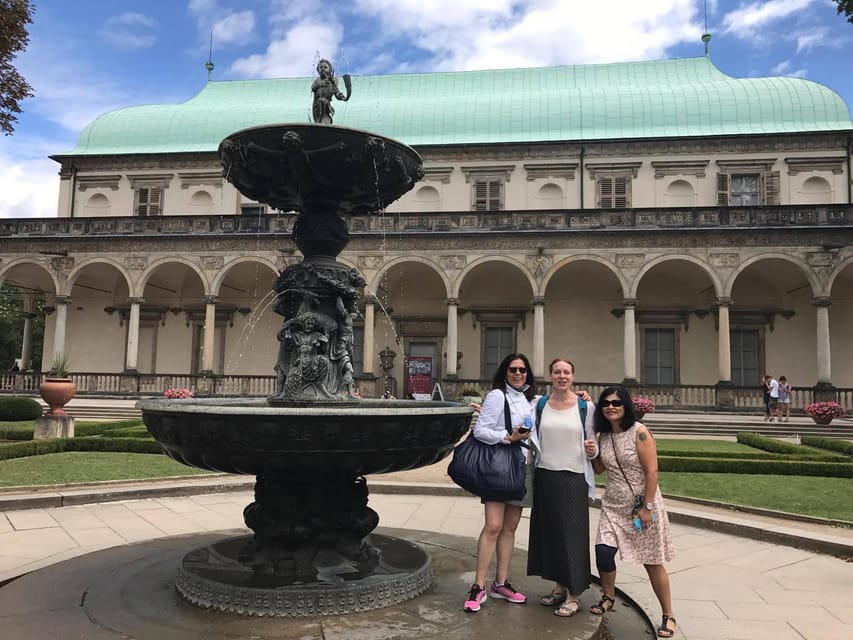
In front of the Belvedere is a small Giardinetto, or little garden, with the Singing Fountain. Cast in bell bronze in 1564, the fountain produces a resonant sound when water drops into its bowl. It is a modest effect compared with Prague’s huge monuments, but that is part of its charm. You need to pause and listen rather than simply snap a photograph and move on.
A relief at the palace depicts Ferdinand presenting his wife with a flower from the Royal Gardens. Details like this help explain how the grounds worked as symbols. Flowers were not only decoration. They could express affection, status, wealth, and control over nature.
The Fig House and Orangery show royal taste
The Fig House and Orangery are among the most unusual stops because they connect garden design with food and science. Figs, almonds, oranges, and lemons were grown here for the first time in Central Europe.
For a ruler, growing Mediterranean plants in Prague was a display of money and skill. It required imported knowledge and careful cultivation. These plants also carried a sense of the exotic, making the garden a place where visitors could encounter things they would not normally see in Bohemia.
The route also introduces the story of tulips. They were unknown in Europe before being introduced to the Royal Gardens as an exotic gift from the Sultan of Constantinople. This detail makes the garden feel connected to wider trade and diplomacy, not isolated behind palace walls.
Do not expect a long botanical lecture on every plant. The value here is the explanation of why certain plants mattered. A simple orange tree becomes evidence of royal resources, global exchange, and changing European taste.
Crossing the castle grounds and descending to the South Gardens
After the Royal Gardens, the walk includes a look toward the stag moat. You then cross a castle courtyard and descend the Bull Stairs toward the South Gardens.
The change in level is important. Prague’s gardens are often arranged on slopes, and the route uses those slopes to connect one garden room with another. You visit the Garden of Paradise and the Garden on the Bulwark before continuing through terraced gardens beneath the castle.
This section is also where the physical demands become clearer. Stairs may be narrow or steep, and the route goes up and down rather than following a flat urban pavement. Wear shoes with a firm grip and keep your pace comfortable.
If you have mobility limits, a private tour is the better choice. The guide can adjust the rhythm, omit some sites, and spend more time in places that are easier to reach. The standard route should not be treated as step-free or suitable for every walking ability.
Same city, a completely different afternoon:
- Prague: 50-Minute Sightseeing Evening Cruise
★ 4.2 · 33,780 reviews - Prague: Medieval Dinner with Unlimited Drinks
★ 4.4 · 19,847 reviews - Prague: Skip-the-line Castle Ticket and Optional AudioGuide
★ 4.3 · 11,121 reviews - Prague: Castle Tour with Local Guide and Entry Ticket
★ 4.6 · 10,422 reviews
Wallenstein Garden turns power into theater
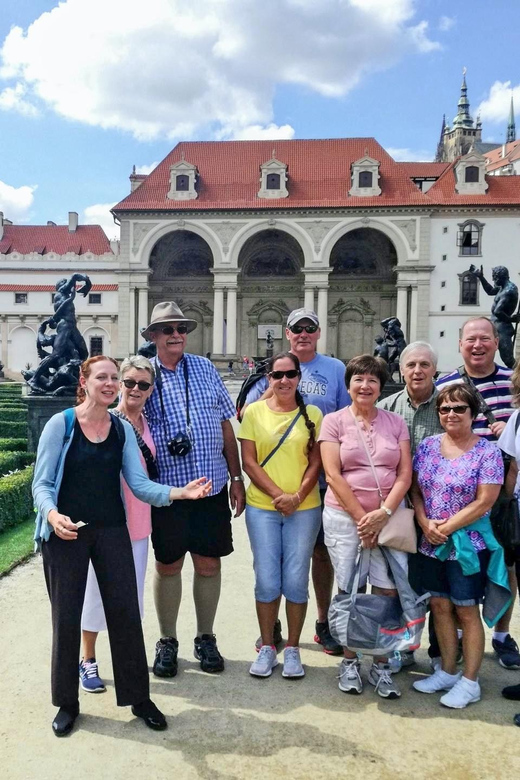
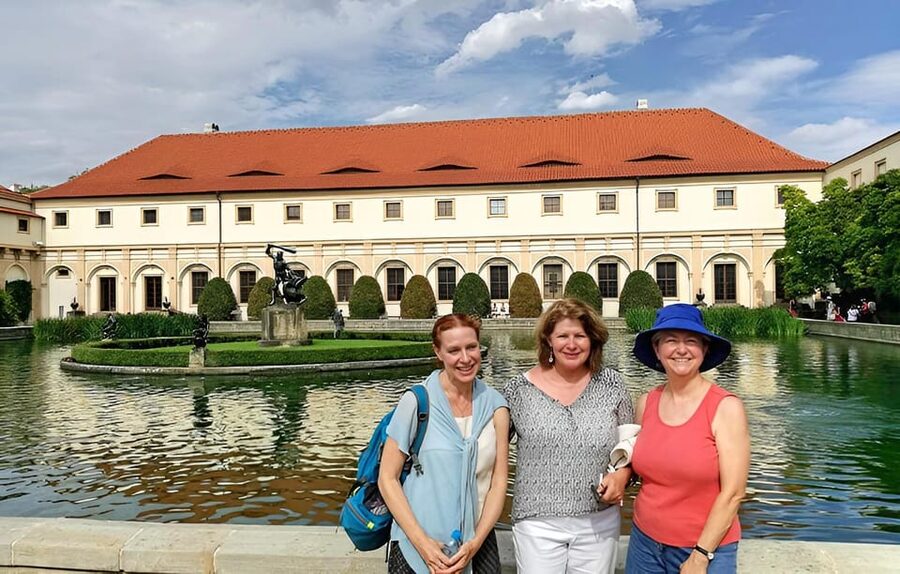
At the bottom of the hill, the Wallenstein Garden changes the mood. It is larger, more theatrical, and more openly concerned with spectacle. Here, the style has moved from Renaissance classicism toward the Baroque.
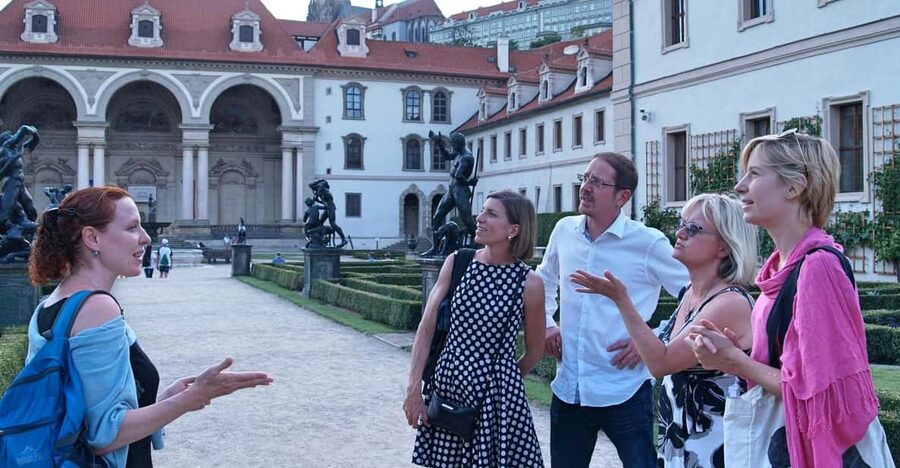
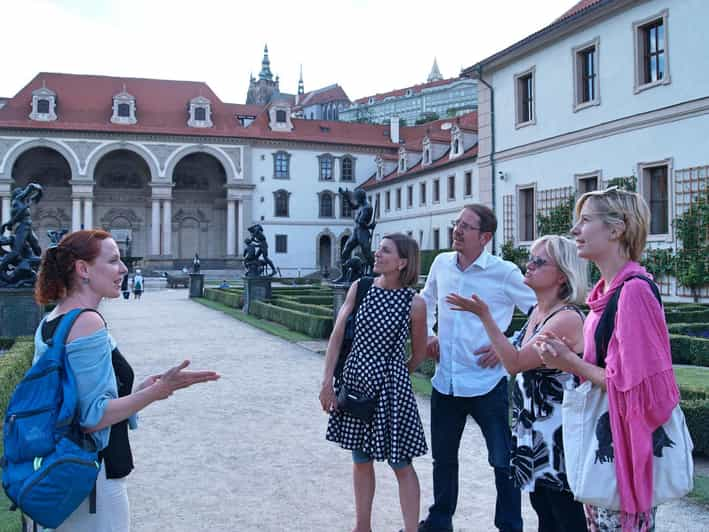
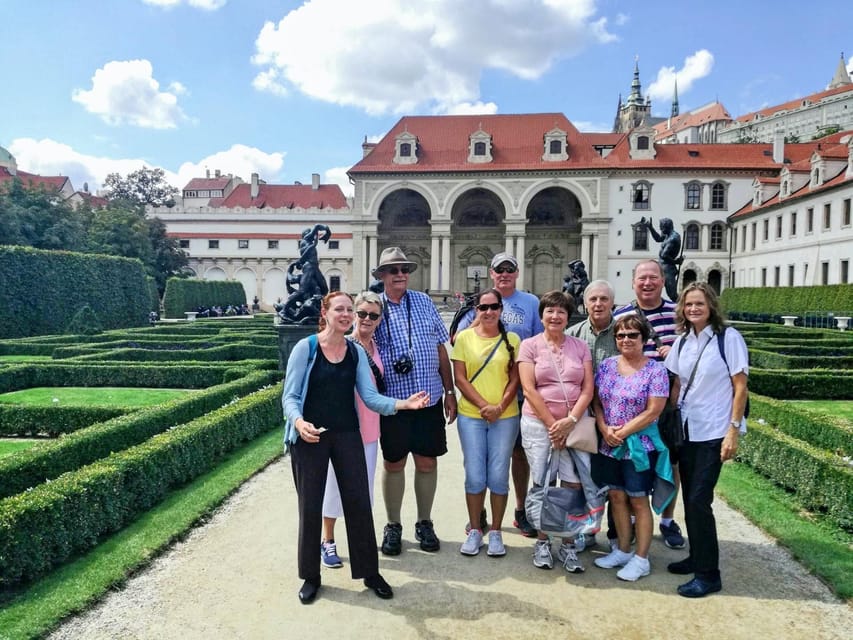
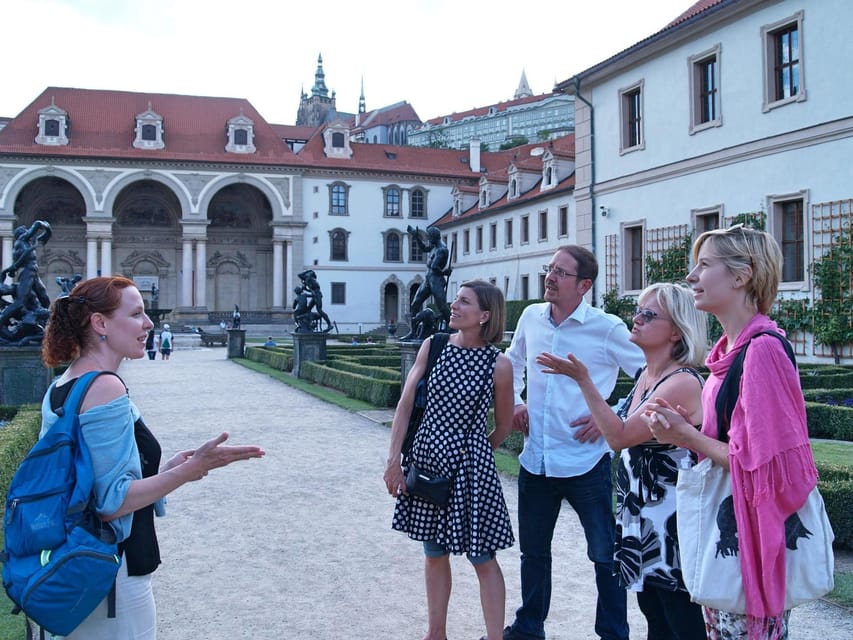
Albrecht von Wallenstein commissioned the garden, and his life gives the setting extra drama. He was a powerful military leader and nobleman whose ambition reached far beyond a quiet residence. The garden reflects that ambition through its size, formal design, sculpture, and carefully staged views.
The albino peacocks are an easy favorite, but the garden offers more than unusual birds. Mannerist statues introduce strange, exaggerated, and sometimes unsettling forms. Mythical fountains add movement and narrative. A grotto wall brings an artificial piece of nature into the formal setting.
That mixture is a useful way to understand Baroque taste. Renaissance design often aims for balance and control. Baroque design wants surprise, motion, contrast, and emotional effect. The Wallenstein Garden does not merely frame a palace. It puts on a show.
You will want time to look closely at the statues and fountains, but the exact visit can depend on the pace of the group. A small or private group should make it easier to stop for questions and photographs without holding up a larger party.
Vrtba Garden rewards the climb

The final major stop is Vrtba Garden in Mala Strana. Dating from 1720, this Baroque walled garden is much more intimate than the Royal Gardens or Wallenstein Garden.
Its compact design makes it valuable. You can see how an 18th-century noble family used a confined urban site to create a sequence of terraces, stairs, sculpture, and planted areas. It offers a glimpse of private aristocratic life rather than a broad royal complex.
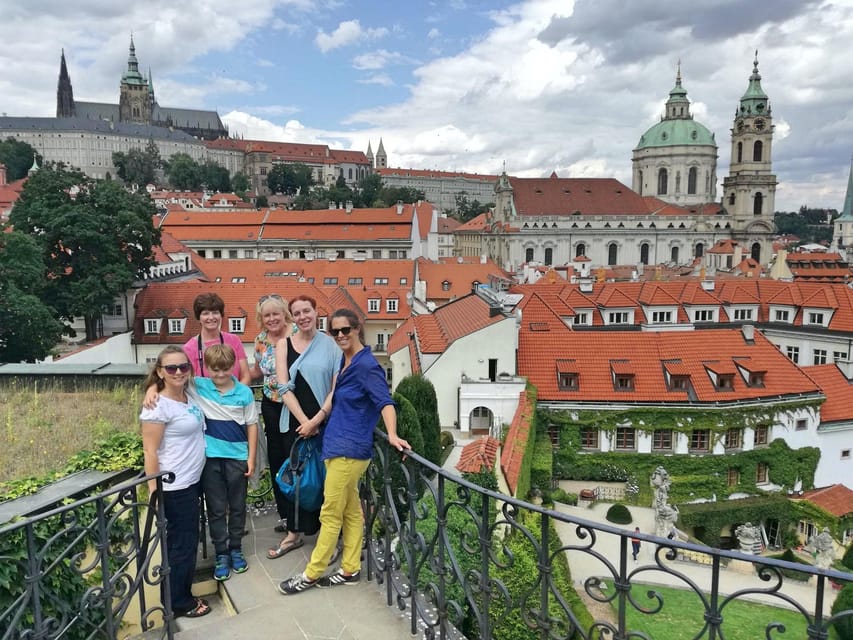
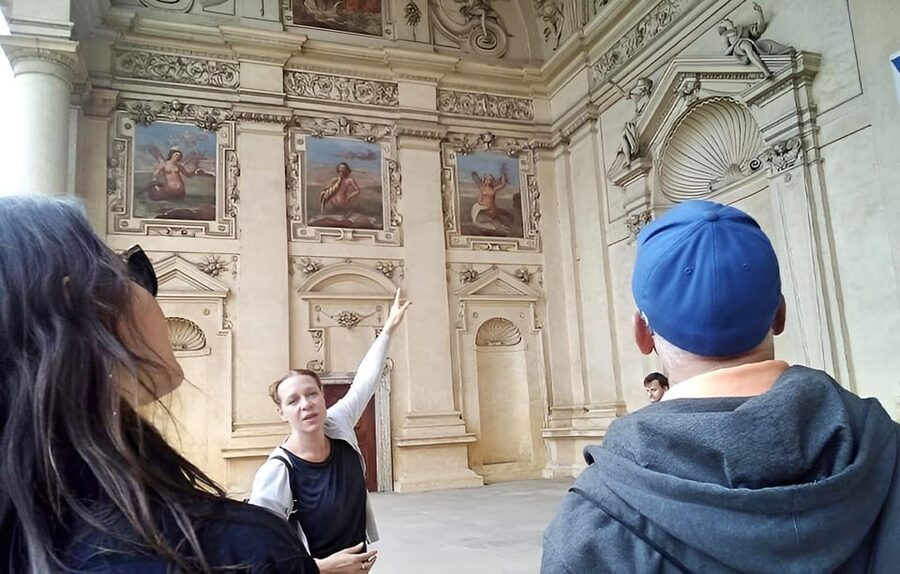
The climb ends at the top courtyard, where a marine-themed grotto adds a playful touch. From there, you get striking views across Prague. The city becomes part of the garden’s design, with rooftops and landmarks forming the distant backdrop.
This is one of the strongest reasons to include Vrtba in your plans. Many standard sightseeing routes pass through Mala Strana without entering it. The garden is easy to miss from the street, yet its upper terrace gives you both a close look at Baroque decoration and a broad view over the city.
Admission to Vrtba Garden is not included, so budget for that separately. The same applies to the gardens under Prague Castle. At $123 per person, the tour is not a cheap add-on, and the extra entrance fees matter when you calculate the total.
What the $123 price buys you
The value depends on how you prefer to see Prague. If you only want access to gardens and are comfortable reading signs or finding each entrance yourself, $123 is a substantial price for three hours.
If you want the gardens explained as one connected story, the cost makes more sense. You are paying for an English-speaking historian guide, route planning, historical context, and help noticing details that are easy to miss. The tour also links sites that sit at different levels around the castle and Mala Strana, saving you the work of organizing the order.
The private or small-group option strengthens the value for people who ask many questions or need a slower pace. It is also more useful for families or anyone concerned about stairs, since the guide can tailor the route when booked privately.
The price does not cover admission to the Castle Gardens or Vrtba Garden. Confirm current entrance costs before booking, since those charges sit on top of the tour price. The three-hour length is a good fit if you want a focused garden visit without giving up an entire day.
Who will enjoy this walk most
I would recommend this experience to anyone who has already seen Prague’s main monuments and wants a quieter, more decorative side of the city. It suits people interested in architecture, horticulture, royal life, garden design, and the politics of display.
It is also a good choice if you like history delivered through specific objects. The Singing Fountain, the citrus-growing buildings, the tulip story, Wallenstein’s statues, and Vrtba’s grotto all give the guide something concrete to explain.
The tour is less suitable if you dislike stairs or want a slow stroll on level ground. The route regularly changes elevation, and some stairs are narrow or steep. A private booking can help, but it cannot turn every section into a flat path.
Miriam has been praised for being both informative and relaxed, a useful combination for a walk with many historical stops. Bonita Rhoads has also been described as an excellent guide in past tour feedback. Guide assignment is not guaranteed, so book this mainly for the route and subject, not a particular person.
Useful planning details before you book
The tour lasts three hours and is offered in English. Private and small-group formats are available, which can make a real difference in gardens where paths and stairways are tight.
Meet at the door of Bagel Lounge Malostranska. Since the route includes outdoor gardens and elevated terraces, check the weather and wear practical shoes. Bring enough time and energy for a steady walk rather than treating this as a brief stop between nearby sights.
You can cancel up to 24 hours before the tour for a full refund, and the reserve-now, pay-later option gives you some flexibility while arranging your Prague schedule. Availability and starting times should be checked for your chosen date.
The strongest practical tip is to be honest about mobility needs before booking. A private tour allows the guide to leave out difficult sections and focus on accessible sites at a personal pace.
Should you book the Prague gardens walk?
Book it if you want Prague explained through gardens rather than only through palaces and churches. The route offers unusual details, from Renaissance citrus growing to a water fountain that sings, then builds toward Wallenstein’s theatrical grounds and Vrtba’s high city views.
Skip it if you want a low-cost garden visit or a flat, unhurried walk. The $123 price is easiest to justify when you value a historian’s guidance, a carefully arranged route, and a small or private group. For curious walkers who can manage stairs, this is a thoughtful way to see how Prague’s rulers shaped nature into art, status, and spectacle.
FAQ
How long does the Prague Renaissance and Baroque Gardens Walking Tour last?
The tour lasts three hours.
What language is the tour offered in?
The tour is offered in English with a live guide.
Where is the meeting point?
Meet at the door of Bagel Lounge Malostranska.
What is included in the price?
The price includes a three-hour guided history walk and a historian guide.
Are garden admission fees included?
No. Admission to the gardens under Prague Castle and admission to Vrtba Garden are not included.
Which gardens are visited?
The route includes the Prague Castle Gardens, the Fig House and Orangery, the South Gardens, the Wallenstein Garden, and Vrtba Garden.
Is the tour available as a private experience?
Yes. Private and small-group options are available.
Is the route suitable for people with mobility issues?
The regular route includes stairs that can be narrow or steep. A private tour may be arranged so the guide can adjust the route, leave out some sites, and match a slower personal pace.
Can I cancel the tour for a refund?
You can cancel up to 24 hours in advance for a full refund. The reserve-now, pay-later option is also available.
Just added around Prague
- Prague: Historical Walking Tour with Focus on World War 2★ 4.3 · 12 reviews
- WWII and Communism History in Prague’s Old Town Private Tour★ 5.0 · 4 reviews
- World War II 4WD Tour from Prague with Lunch★ 4.4 · 3 reviews
- Unique salt cave in Prague★ 4.9 · 10 reviews
- Walking tour of Prague in French : Nové Město★ 4.9 · 16 reviews
- Walking tour of Prague in french: Old Town & Charles Bridge★ 4.9 · 62 reviews
- Prague: Market Tour and Traditional Czech Cooking Class★ 4.7 · 19 reviews
- Ultimate Unlimited Beer Pong with Czech Beer★ 4.6 · 5 reviews
Walking Tours, compared.

3-Hour Walking Tour of Old Town & Prague Castle
Read our review →
Ghost Walking Tour Where Legends Come To Life
Read our review →
Jewish Quarter Walking Tour with Admission Tickets
Read our review →
Prague Guided Walking Tour and Cruise with Authentic Czech Lunch
Read our review →
Old Town and Jewish Quarter Guided Walking Tour
Read our review →
Prague Ghost and Legend of Old Town Walking Tour
Read our review →
Prague 3-hour Afternoon Walking Tour including Prague Castle
Read our review →
Ghosts and Legends Nighttime Guided Walking Tour
Read our review →Browse the lists this tour appears in