
Reviewed · PRAGUE
Prague: Private Prague Art Nouveau and Cubism Tour
Prague’s grandest architectural surprise may be hiding in plain sight. This private walking tour moves from the restored 1909 Main Railway Station through the New Town, then out toward Vyšehrad, showing how Art Nouveau and Cubism changed the city before World War I. You get more than pretty façades: you learn why these styles appeared, what they rejected, and how they helped preserve Prague’s older character.
I like the clear historical story, which ties each building to the wider changes of the early 20th century. I also like the route’s reach. It begins near the center but ends with bold Cubist houses that most first-time visitors would miss. The main caution is time: at about 3.5 hours, the final section may feel long if you prefer a short city walk.
Key points to know before booking
- Start at the middle of Platform No. 1: Meet by the UniCredit Bank ATM at Prague Main Railway Station and look for the guide carrying a red folder.
- See two very different styles: Art Nouveau favors flowing lines and decoration, while Cubism breaks forms into sharp, restless shapes.
- Guides Max and Eva receive especially strong praise: Max leads in English and German, while Eva is noted for explaining Prague’s many styles with unusual clarity.
- The route leaves the center: Public transportation takes you to the Vyšehrad area, where some of the tour’s boldest buildings appear.
- Plan for substantial walking: Bring comfortable shoes. Short walks connect many stops, and the complete route can take around 3.5 hours.
- It suits older children and adults best: Children under 12 are not accepted, and the private format works well for travelers who enjoy asking questions.
Why this Prague architecture walk feels different
Many Prague tours focus on medieval lanes, Baroque churches, and the castle. This one shifts your attention to a younger period, when Prague was changing fast and architects were arguing about what the modern city should look like.
That makes the tour a good choice if you have already covered the Old Town’s main sights. It also works during a longer stay, when you want to understand the city beyond its postcard views. You will still see famous locations such as Municipal House, Wenceslas Square, and the House of the Black Madonna, but the route also points out less obvious buildings along the way.
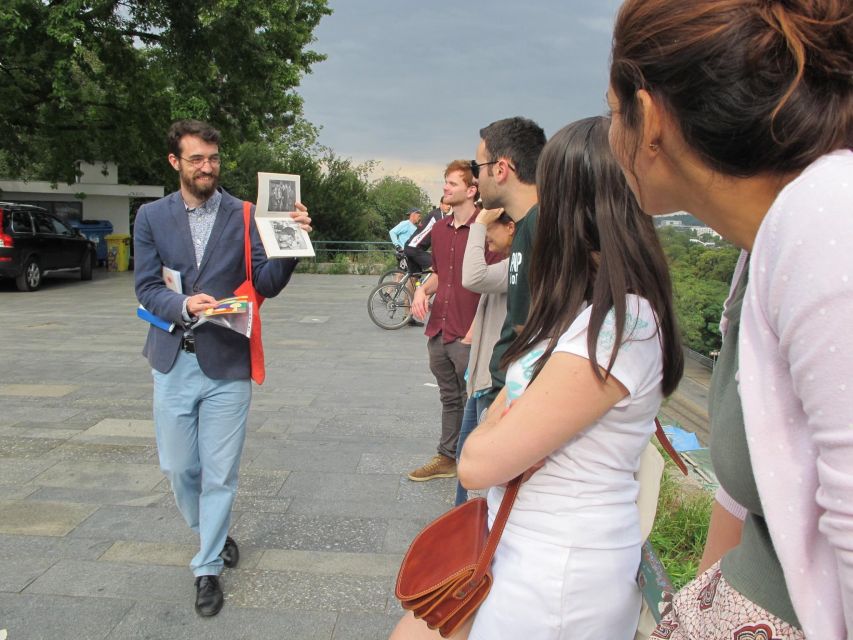
The private format matters here. Architecture tours can become a string of dates and names if the guide simply talks at you. Max and Eva are praised for answering questions and making the subject approachable. Max is especially noted for explaining the rise of Art Nouveau and its Czech variations in a clear way, while his German-language tours have also received strong praise. Eva brings a similar strength, explaining the contrast between Prague’s styles while covering a lot of ground.
The central idea is simple: Art Nouveau was not just decoration, and Cubism was not just odd geometry. Each style reflected a different response to the old rules of architecture.
A few more Prague outings worth weighing up
- Prague Old Town: Private Tour
★ 5.0 · 1,223 reviews - Prague Airport Private Arrival Transfer
★ 4.5 · 991 reviews - Prague Airport Private Departure Transfer
★ 4.5 · 780 reviews
Starting at Prague Main Railway Station
The meeting point is on Platform No. 1 at Prague’s Central Train Station, near the UniCredit Bank ATM. Your guide carries a red folder, which should make the meeting easier in a busy station.
The station itself is part of the story. The building dates from 1909, a period when railway stations were becoming symbols of progress, movement, and civic pride. Beginning here gives the tour a fitting opening: you start with a major public building from the Belle Epoque, then trace modern architecture through the city.
You spend about 15 minutes at the station. That is enough time to set the period in context without turning the tour into a lecture before the walking starts.
From here, the route moves on foot. The early sections use short connections of roughly three to five minutes, so you are not spending the morning on long transfers. Still, wear shoes that can handle several hours on city streets.
Jubilee Synagogue and the early Art Nouveau story
The Jubilee Synagogue is one of the first major stops, with about five minutes set aside for sightseeing. It helps show how Prague’s architects and communities combined established traditions with newer decorative ideas.
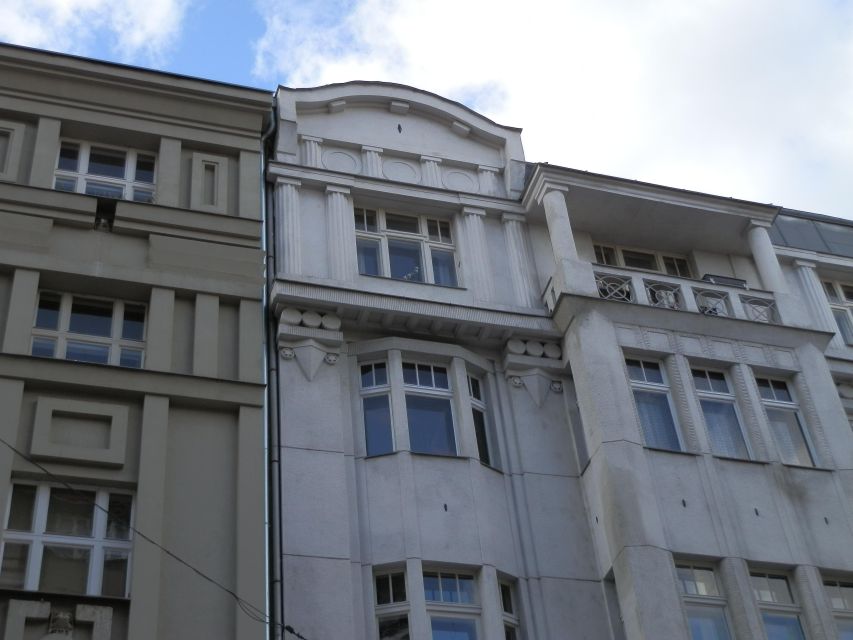
The point is not simply to collect another attractive building. Your guide explains how Art Nouveau grew out of 19th-century styles and why it felt revolutionary at the time. Its curved lines, plant-like forms, and attention to crafted detail offered a new visual language after decades of borrowing from earlier historical styles.
The stop is brief, so expect an exterior-focused look rather than a long interior visit. That pattern continues through much of the tour. The value lies in seeing several examples close together and hearing how they relate, not in spending half an hour at every address.
Municipal House and Prague’s Belle Epoque confidence
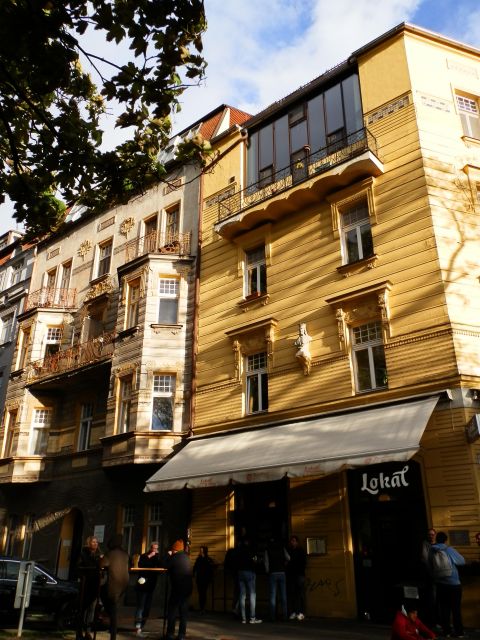
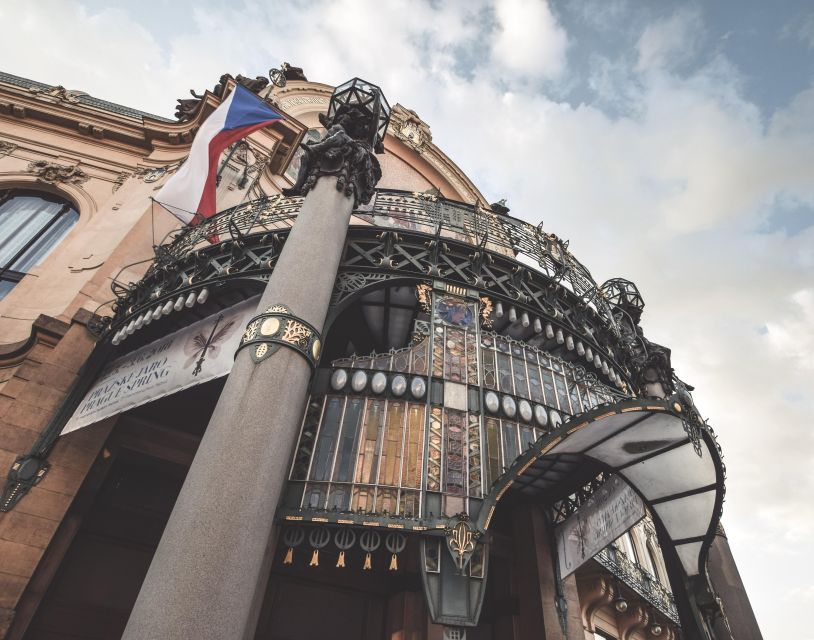
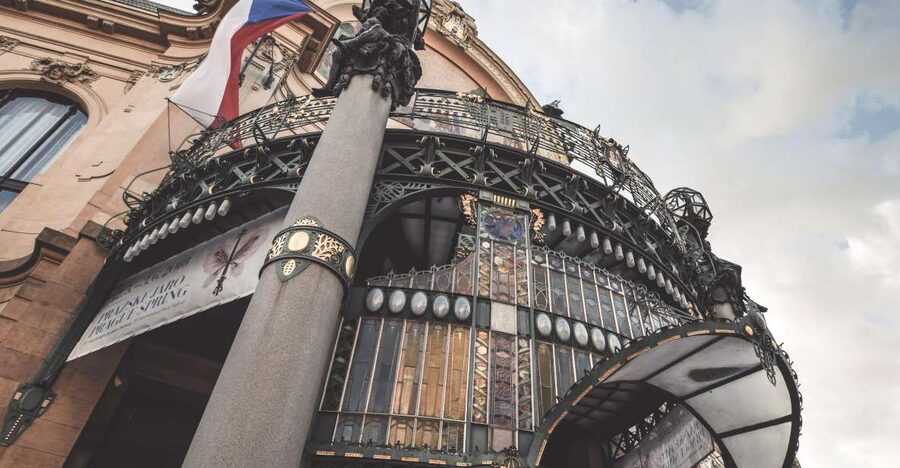
Municipal House receives about 10 minutes, making it one of the more substantial central stops. This is a key point on the route because it presents Art Nouveau on a grand civic scale.
Here, you can see how the style served more than private homes or decorative details. Public architecture used Art Nouveau to express confidence, culture, and a modern urban identity. Your guide can help you notice the parts that a casual passerby might overlook, including the relationship between the building’s overall design and its smaller ornamental features.
This is where the historical explanation becomes useful. Art Nouveau developed during a period of political and social change, and Prague’s buildings show how local architects adapted an international style to the city’s own traditions. The tour also explains how modern architects helped protect Prague’s older identity rather than simply replacing it.
Same city, a completely different afternoon:
- Prague: 50-Minute Sightseeing Evening Cruise
★ 4.2 · 33,780 reviews - Prague: Medieval Dinner with Unlimited Drinks
★ 4.4 · 19,847 reviews - Prague: Skip-the-line Castle Ticket and Optional AudioGuide
★ 4.3 · 11,121 reviews - Prague: Castle Tour with Local Guide and Entry Ticket
★ 4.6 · 10,422 reviews
House of the Black Madonna and the move toward Cubism
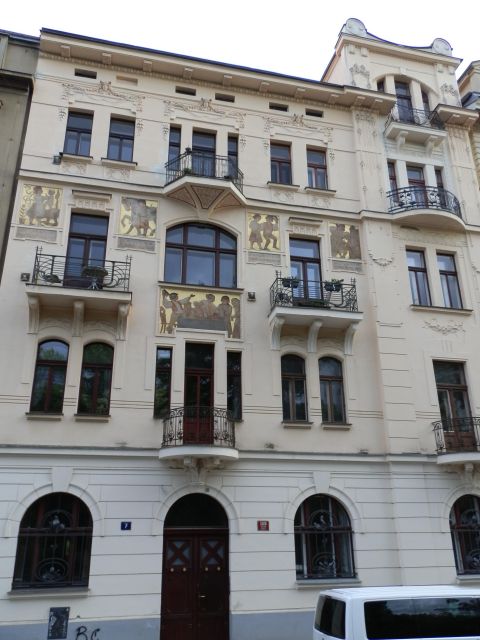
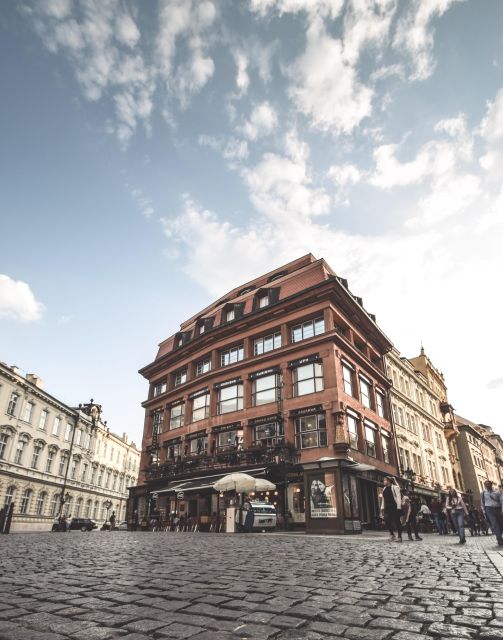
The House of the Black Madonna is one of the tour’s most important stops, with around 10 minutes for sightseeing. It introduces the move from flowing Art Nouveau toward the harder, more fractured language of Cubism.
Cubism began partly as a revolt against the popular Art Nouveau style. Instead of soft curves and natural forms, Cubist architecture favors angles, planes, and strong geometric tension. The result can look strange at first, especially beside Prague’s older buildings.
That contrast is exactly why this stop works. You can compare the two approaches within the same city walk instead of treating them as unrelated chapters. Your guide explains that both styles were short-lived in their original form, as World War I brought major changes to European society, politics, and design.
The House of the Black Madonna is also useful for understanding why Prague is such a strong setting for this subject. Ancient streets and modern experiments sit close together, so the city becomes a series of visual arguments about the past and the future.
Wenceslas Square, with time to read the city
The tour then reaches Wenceslas Square, where you spend about 20 minutes. This is the longest scheduled sightseeing stop in the central part of the route.
Wenceslas Square gives you room to think about the city at a larger scale. It is not only a landmark or a shopping street. It shows how Prague’s urban center developed as a place for movement, commerce, public life, and national expression.
Your guide uses the square to connect individual buildings with the wider city. That is one of the stronger features of the experience. You are not only looking at façades one by one. You are learning how architectural choices reflect changing ideas about public space and modern life.
The stop also offers a natural pause before the route leaves the most central area. By this point, you will have covered several major buildings and a number of less obvious ones. If you prefer a compact tour, this is roughly where you may begin wondering how much more walking remains. The route continues for good reason, but the full length will not suit everyone.
The short tram rides and the city beyond the center
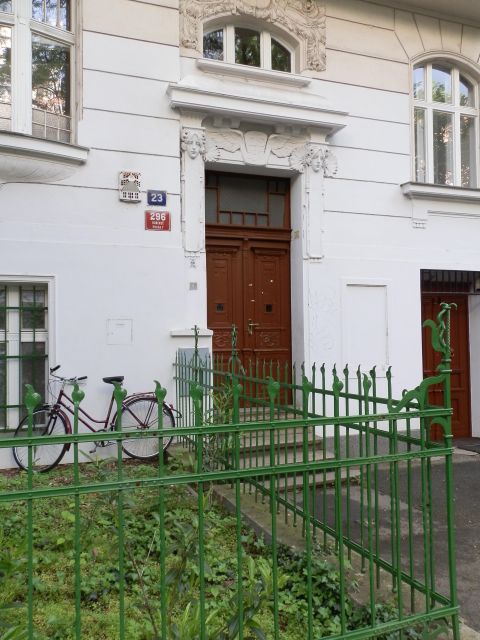
After the central sights, the tour uses public transportation for short rides. Tickets for the transport are included, so you do not need to sort out fares during the experience.
The tram sections take about five minutes each. They break up the walking and shift the mood of the tour. Instead of staying among Prague’s best-known central monuments, you move toward a less familiar area below the Vyšehrad fortress.
This change is important. The tour’s subject is not limited to grand public buildings in the center. It also includes residential and smaller-scale Cubist work, where architects took more risks. The public transport connection lets you see how these ideas appeared outside the usual sightseeing zone.
The final area is a good reason to book this experience rather than a standard central architecture walk. You are not simply shown a list of famous addresses. You are taken to a district where the Cubist experiments feel more concentrated and personal.
Three Cubist Houses and the boldest part of the route
The Three Cubist Houses receive about five minutes of sightseeing. This section gives you a chance to see Cubism as a group of buildings rather than a single unusual façade.
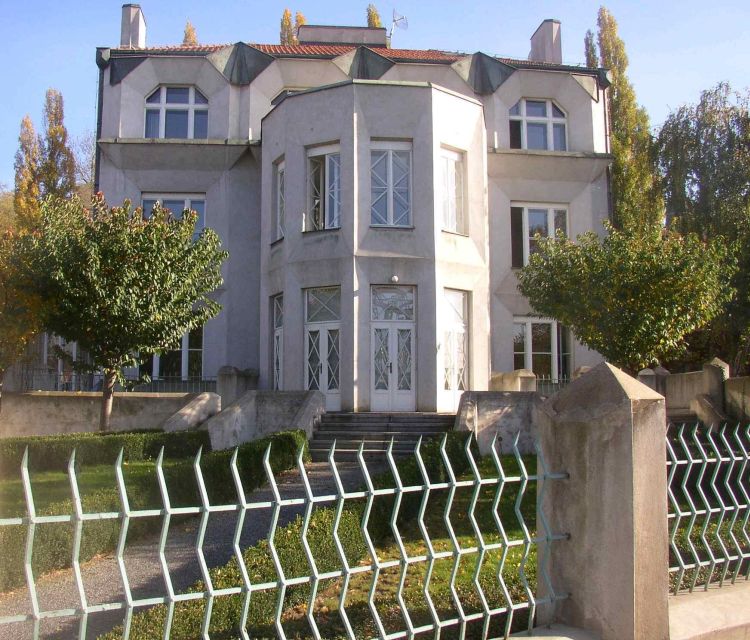
The style can be difficult to understand from a book or a museum panel. In person, the angular shapes and broken surfaces make the argument much clearer. You can see how architects tried to give buildings a sense of movement and structure without relying on the smooth, decorative language of Art Nouveau.
The stop is short, but the guide’s explanation carries much of the value. Ask questions here if you want to understand how the buildings differ from one another or why Cubism took such a daring form in Prague.
Kovařovicova vila and Cubist houses near Vyšehrad
Kovařovicova vila is another five-minute stop. The villa helps show that Cubism was not limited to monumental public architecture. It could also shape a private residence, giving domestic buildings a sharper and more experimental character.
The final stop is Cubist House Vyšehrad No. 98. This part of the route is especially suited to people who want to see architecture away from Prague’s main tourist circuit. The setting below Vyšehrad adds a strong contrast: older Prague is close by, but the buildings you are examining belong to a period that looked toward a very different future.
You might find the last section the most rewarding part of the tour because it feels less familiar. You might also find it tiring. One person who took the tour felt that the full route was too long and that 2.5 to 3 hours would have been enough. That is fair advice if you have limited stamina or several other plans that day.
The nearby tram stop makes the ending practical. You can return toward central Prague without retracing the route on foot, and the required tickets are already included.
What the $84 price gets you
At $84 per person, this is not a bargain-priced general city walk. The value comes from the private guide, the specialist subject, and the route beyond the center.
You are paying for a focused interpretation of Prague’s architecture rather than a broad introduction to the city. If you are curious about design, urban history, or the years before World War I, the cost is easier to justify. A private format also gives you space to ask about buildings that catch your eye, which is more useful than listening to a fixed speech in a large group.
The price includes public transportation, which is a small but helpful benefit. You do not need to buy tickets for the rides to and from the Vyšehrad area. The full experience lasts one day in booking terms, but the actual tour takes about 3.5 hours.
The main value question is your interest. If you want famous sights and a fast overview, choose a shorter mainstream tour. If you like learning why a city looks the way it does, this route offers more substance for the money.
Who should book this tour
I would choose this tour if you meet one or more of these descriptions:
- You have already visited Prague’s main historic sights.
- You enjoy architecture but want explanations in plain language.
- You are staying in Prague for several days and want a less familiar route.
- You prefer a private group where you can ask questions.
- You want to see both central landmarks and buildings near Vyšehrad.
- You are comfortable walking for several hours and using trams.
The tour is offered in English and German. It is wheelchair accessible, although you should still consider the length of the route and the number of walking connections when deciding if it fits your needs.
Children under 12 are not suitable for this experience. Older children may enjoy the shapes and visual contrasts, but the historical discussion is aimed more at adults and mature teenagers.
Practical advice for making the most of it
Meet at the exact station location, on the middle of Platform No. 1, rather than simply waiting somewhere inside the station. Look for the red folder, and allow enough time to reach the platform.
Wear comfortable shoes. The route includes repeated walks of three to five minutes, longer stretches through the New Town, and sightseeing in several different areas. The tram rides provide breaks, but this is still an active half-day.
I would also avoid scheduling a major museum visit immediately afterward. The tour covers a lot of ground and asks you to pay attention to visual details. Giving yourself room afterward makes the final Cubist section feel less like an endurance test.
Booking is flexible: you can reserve now and pay later, and cancellation is free up to 24 hours before the start for a full refund. Check the available starting times because the tour is valid for one day and runs at selected times.
Should you book Prague’s Art Nouveau and Cubism tour?
Book it if you want Prague to make more sense through its buildings, not just through its famous views. The strongest parts are the clear explanation of Art Nouveau, the shift into Cubism, the private guide format, and the trip to the less familiar area near Vyšehrad.
Skip it if you want a short, relaxed walk or if your interest ends with castles, churches, and medieval streets. The route is long, and the final section may feel unnecessary to anyone who prefers a compact central tour.
For an architecture-minded visitor, though, the $84 price buys a distinctive view of Prague. With a guide such as Max or Eva, you get a thoughtful route that shows how modern design altered the city while still keeping its older identity in view.
FAQ
Where does the Prague Art Nouveau and Cubism tour start?
It starts at Prague’s Central Train Station, in the middle of Platform No. 1, near the UniCredit Bank ATM. The guide carries a red folder.
How long does the tour last?
The full route takes about 3.5 hours. One part of the route includes several short public transportation rides.
What languages are available?
The tour is available in English and German.
Is this a private tour?
Yes. It is arranged for a private group.
Are public transportation tickets included?
Yes. Tickets for the public transportation used during the tour are included in the price.
Is the tour wheelchair accessible?
Yes, the activity is listed as wheelchair accessible.
Can children join the tour?
Children under 12 are not suitable for this experience.
What should I bring?
Bring comfortable shoes because the tour includes several hours of walking.
Just added around Prague
- Prague: Historical Walking Tour with Focus on World War 2★ 4.3 · 12 reviews
- WWII and Communism History in Prague’s Old Town Private Tour★ 5.0 · 4 reviews
- World War II 4WD Tour from Prague with Lunch★ 4.4 · 3 reviews
- Unique salt cave in Prague★ 4.9 · 10 reviews
- Walking tour of Prague in French : Nové Město★ 4.9 · 16 reviews
- Walking tour of Prague in french: Old Town & Charles Bridge★ 4.9 · 62 reviews
- Prague: Market Tour and Traditional Czech Cooking Class★ 4.7 · 19 reviews
- Ultimate Unlimited Beer Pong with Czech Beer★ 4.6 · 5 reviews