
Reviewed · PRAGUE CLASSICAL CONCERTS
Prague: Tyn Church Classical Music Concert
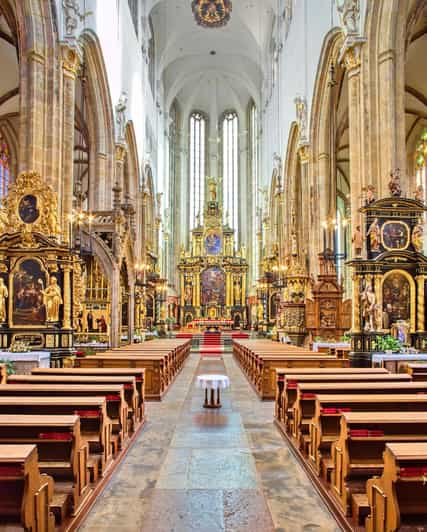
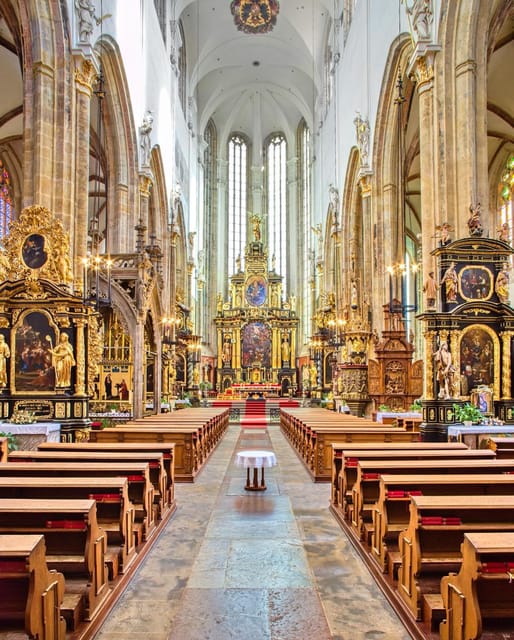
Prague’s Church of Our Lady before Týn gives this concert something a concert hall cannot: Gothic architecture and church acoustics surrounding familiar classical music. For 70 minutes, musicians from the Prague Philharmonic perform works by Vivaldi, Bach, Mozart, Beethoven, Smetana and other major composers, joined by soprano Anda-Louise Bogza, organist Aleš Bárta and violinist Vlastimil Kobrle.
I like the strong mix of famous melodies, from The Four Seasons and Beethoven’s Fifth to The Moldau and Canon in D. I also like the chance to hear specialists with serious credentials, including Bárta, known for his Bach recordings, and Kobrle, concertmaster of the Czech Radio Symphony Orchestra. The main consideration is that this is a greatest-hits style program rather than a full evening devoted to one composer, and one account found the soprano looking a little tired.
Key points to know before booking
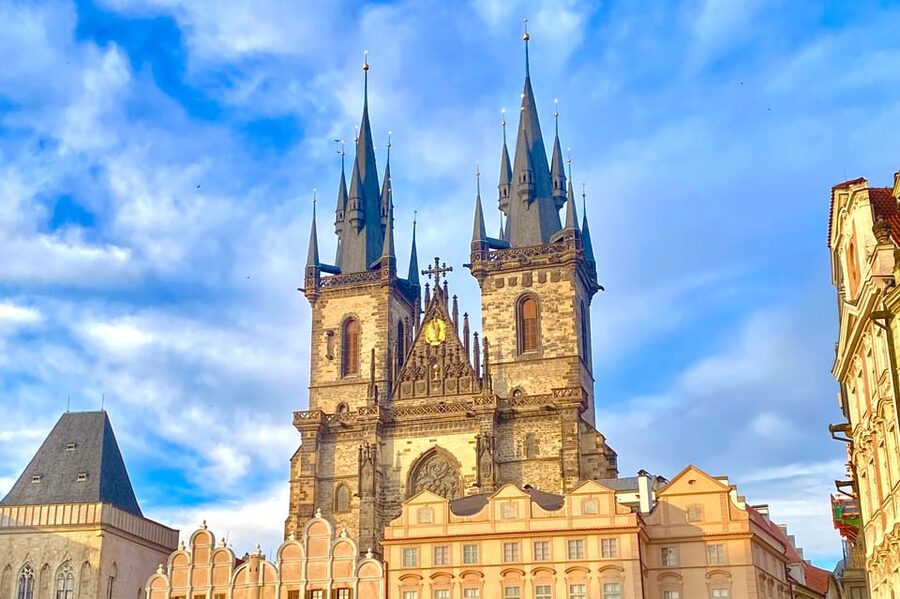
- Týn Church setting: Hear the concert inside the Church of Our Lady before Týn in Prague’s Old Town Square.
- Three featured soloists: Anda-Louise Bogza sings, Aleš Bárta performs on organ and Vlastimil Kobrle plays violin.
- Seventy-minute program: The music moves quickly through well-known works by Vivaldi, Bach, Mozart, Beethoven, Schubert, Smetana, Händel and Pachelbel.
- Prague Philharmonic musicians: The string players come from the Prague Philharmonic Orchestra.
- Good value for a short evening outing: At $36 per person, the ticket includes admission and a printed concert program.
- Flexible booking: You can cancel up to 24 hours before the concert for a full refund and reserve without paying immediately.
Why the Týn Church setting matters
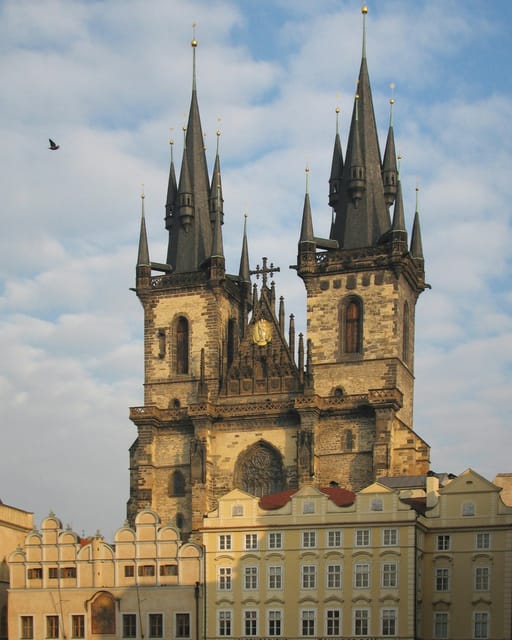
The venue is the Church of Our Lady before Týn, the dramatic church facing Prague’s Old Town Square. Its tall Gothic form is one of the most recognizable sights in the city, so the concert gives you more than a seat and a music stand. You hear the program inside a historic religious space that is part of Prague’s visual identity.
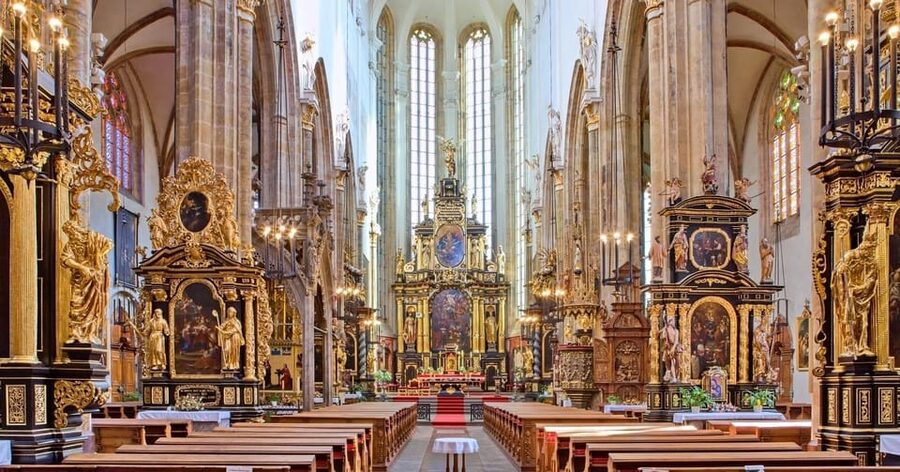
I like this kind of concert because the setting does real work. You are not simply checking a church off your sightseeing list in daylight, then moving on. The building becomes part of the evening, with its scale, silence and acoustics shaping how the music reaches you.
The acoustics are especially important for a program that includes strings, organ, voice and solo violin. One especially positive account praised the building’s acoustics for giving the sound extra brightness. That also means the room may make the music feel less controlled than it would in a modern concert hall. A church can add atmosphere, but sound in a large stone interior is not always as sharply defined as sound in a purpose-built venue.
The experience can also give you a quieter look at the church than a busy sightseeing stop allows. One person valued the chance to contemplate and visit the building with very few people present. That quieter feeling is not something you should treat as guaranteed, but it is a useful reason to choose a church concert instead of simply admiring the facade from the square.
More classical concerts in Prague:
- Prague: Entry Ticket Classical Concert at the Mirror Chapel
★ 4.7 · 4,636 reviews - Prague Castle: Midday Classical Concert at Lobkowicz Palace
★ 4.6 · 1,106 reviews - Prague: Classical Concert in the Spanish Synagogue
★ 4.7 · 1,104 reviews
A program built around familiar favorites
This is an approachable program. You do not need a long background in classical music to recognize several of the main themes, and you can still find variety if you already know the standard repertoire.
The concert begins with Antonio Vivaldi’s The Four Seasons: Spring and Summer. These two sections offer a lively opening, with the violin taking a central role and the music suggesting changing weather, outdoor activity and heat. Since Vivaldi’s work is among the most familiar pieces in the classical canon, it gives you an easy way into the evening.
J. S. Bach’s Magnificat brings a larger choral and sacred feeling to the program, though the exact presentation of the work is not specified. Bach’s music also appears later in Jesu, Joy of Man’s Desiring, a gentle and widely recognized piece that offers a calmer contrast to Vivaldi’s energy.
Beethoven’s Symphony No. 5, Allegro supplies the most instantly recognizable opening in the program. The famous four-note figure is concise and forceful, making it a natural choice for a 70-minute concert where each selection needs to make an immediate impression.
You will also hear Franz Schubert’s Ave Maria, a slower vocal selection that gives the soprano a chance to take the musical focus. Anda-Louise Bogza is associated with Prague’s National Theatre and has appeared as Aida at the Arena di Verona, along with performances at opera houses in Vienna, Milan, Dresden, Paris, Rome and Berlin. Those credits make her a particularly interesting part of the lineup for anyone who enjoys opera as much as instrumental music.
Bedřich Smetana’s The Moldau, or Vltava, is the program’s clearest Czech connection. The piece follows the course of the Vltava River through musical images, and its inclusion makes sense in Prague. It is not just another international favorite. It connects the concert to Czech culture and to the river you can see elsewhere in the city.
The program then moves through Händel’s Ombra mai fu from Xerxes, Mozart’s Divertimento in D Major, Pachelbel’s Canon and Gigue in D Major, and Mozart’s Requiem: Lacrimosa. These selections bring a mix of opera, chamber-style writing, formal classical music and sacred drama.
The result is a broad sampler rather than a single musical argument. I see that as a strength if you want a compact introduction to well-known composers. If you prefer a complete symphony, a full opera or a concert focused on one period, the wide range may feel less satisfying.
The three featured soloists
The soloists give the concert a clearer identity than an ordinary background-music performance.
Anda-Louise Bogza is the featured soprano. Her work connects the event to the opera world, particularly through her association with the National Theatre in Prague and the role of Aida at the Arena di Verona. The program gives her sacred and operatic material, including Ave Maria, Händel’s Ombra mai fu and Mozart’s Lacrimosa.
One practical point is worth keeping in mind. A comment about the performance found the soprano looking somewhat tired, while still describing the concert as worthwhile. That is a reminder not to expect a major opera production with scenery, costumes and a full theatrical presentation. This is a concert appearance in a church, and the vocal element is part of a larger mixed program.
Aleš Bárta handles the organ solo. He is particularly known for his Bach recordings, so his presence fits the program’s Bach selections and the church setting. The organ adds a sound you cannot get from the string section alone, and it helps connect the performance to the building’s religious purpose.
Vlastimil Kobrle provides the violin solo and is identified as one of Czechia’s acclaimed violinists. He is also concertmaster of the Symphony Orchestra of Czech Radio. His role is especially relevant during Vivaldi’s The Four Seasons, where the solo violin is central to the musical design.
Together, these three artists offer three different ways into the concert: voice, organ and violin. The strings from the Prague Philharmonic give the performance its core ensemble sound, while the soloists mark the major changes in texture.
What the 70-minute format feels like
A 70-minute concert is easy to fit into a Prague evening. You can pair it with dinner in the Old Town, schedule it after sightseeing, or use it as a cultural stop before returning to your hotel. Check the available starting time when you book, since the time is not fixed in the information provided.
The short length is also useful if you are traveling with someone who likes music but does not want a long formal concert. You get a substantial set of works without committing an entire night.
There is a tradeoff. The listed program contains ten works or selections, including large pieces such as the Magnificat, a Beethoven symphony movement and the Requiem’s Lacrimosa. In 70 minutes, the music must move at a brisk pace, and the evening is designed around recognizable sections rather than a long, uninterrupted work. If you want time to settle into one composer’s style, this format may feel too quick.
For first-time classical concertgoers, though, the quick changes can keep the evening lively. You move from Vivaldi’s violin writing to Bach’s sacred music, then Beethoven, Schubert, Smetana, Händel, Mozart and Pachelbel. You get many reference points in one sitting.
Same city, a completely different afternoon:
- Prague: 50-Minute Sightseeing Evening Cruise
★ 4.2 · 33,780 reviews - Prague: Medieval Dinner with Unlimited Drinks
★ 4.4 · 19,847 reviews - Prague: Skip-the-line Castle Ticket and Optional AudioGuide
★ 4.3 · 11,121 reviews - Prague: Castle Tour with Local Guide and Entry Ticket
★ 4.6 · 10,422 reviews
Is $36 a fair price?
At $36 per person, the ticket sits in a reasonable range for a cultural activity in central Prague, especially because it includes entry and a printed concert program. The value comes from three parts: the historic church, the live ensemble and the named soloists.
You are not paying only to hear recorded versions of familiar pieces. You are paying for a live performance in a setting that can make even a short selection feel like an event. The involvement of Prague Philharmonic string players also gives the ticket more weight than a generic church recital with no named performers.
I would consider it good value if you already plan to spend time in Old Town and want a polished evening activity without a full opera commitment. The price is easier to justify for music lovers who care about the soprano, organ and violin soloists.
The calculation is less favorable if you are choosing purely by the number of minutes. At $36 for 70 minutes, this is not a budget concert in the strictest sense. You also should not book it expecting a complete staged opera, a full symphony performance or a long organ recital. It is a compact program built to give you many familiar pieces in one sitting.
One positive note is the cancellation policy. You can cancel up to 24 hours in advance for a full refund, and you can reserve now while paying later. That flexibility helps if your Prague schedule is still changing.
Who will enjoy this concert most?
I would point this experience toward several kinds of visitors:
- First-time classical listeners who want recognizable music and a manageable 70-minute introduction.
- Opera fans interested in hearing soprano Anda-Louise Bogza outside a full stage production.
- Bach fans curious about organist Aleš Bárta, particularly because of his Bach recordings.
- Visitors who want Czech culture through Smetana’s The Moldau and a concert inside a major Prague church.
- Couples and solo visitors looking for a calm evening activity in the Old Town.
- Sightseers with limited time who want music, architecture and a central location in one stop.
I would be more cautious if your main goal is a complete, uninterrupted work. The broad program is designed for variety. It is also not suitable for unaccompanied minors, so families should check that requirement before booking.
Small details that improve the choice
The printed program is a useful inclusion. It lets you follow the order of the pieces and identify the composers, which matters when the evening moves through so many works. If you are not familiar with classical music, it gives you a simple framework without requiring preparation.
The church itself is part of the experience, but do not treat the concert as a substitute for a full guided church visit. The available details describe the concert setting and a chance to contemplate the building, not a separate architectural tour or historical lecture.
I also recommend thinking about your energy level. This is a seated cultural activity, but the music changes often and includes serious sacred works. It is not background entertainment in the same way as a casual café performance. If you give it your attention, the combination of voice, organ, violin and strings should feel more rewarding.
The strongest element for many people is the overall balance between atmosphere and recognition. The concert has enough major names to feel familiar, yet The Moldau and the church setting keep it tied to Prague rather than making it feel like a generic playlist played anywhere.
Should you book the Týn Church concert?
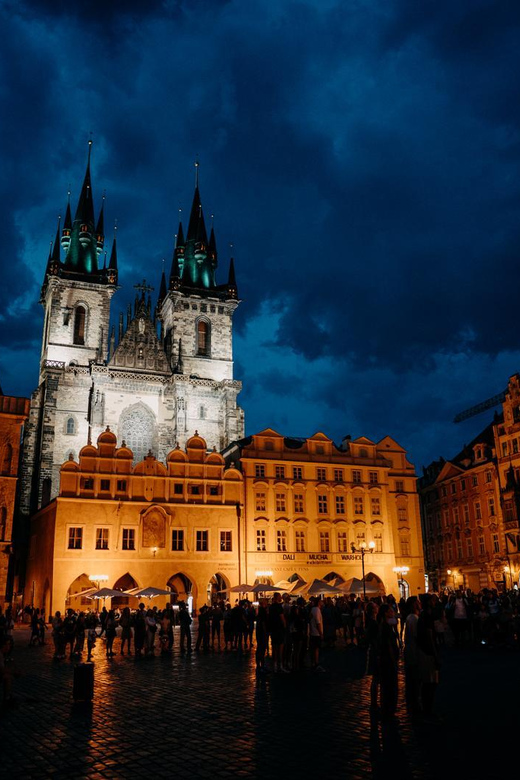
Book it if you want a short, polished classical concert in a memorable Prague setting, especially if Vivaldi, Bach, Mozart, Beethoven or Smetana are already part of your listening life. The $36 price is reasonable when you count the church, the live Prague Philharmonic musicians, the three featured soloists and the included program.
I would skip it if you want a full opera, a complete symphony or a concert devoted to one composer. The wide program moves quickly, and the vocal performance may not feel equally strong at every moment.
For most visitors with an open evening in Old Town, this is a sensible cultural choice. You hear music that is easy to recognize, see one of Prague’s major churches from within, and finish in time for dinner or another evening plan.
FAQ
Where does the concert take place?
The concert takes place at the Church of Our Lady before Týn in Prague’s Old Town Square.
How long does the concert last?
The concert lasts 70 minutes.
What music is performed?
The program includes works or selections by Vivaldi, Bach, Beethoven, Schubert, Smetana, Händel, Mozart and Pachelbel. Listed pieces include The Four Seasons: Spring and Summer, Magnificat, Beethoven’s Fifth Symphony: Allegro, Ave Maria, Jesu, Joy of Man’s Desiring, The Moldau, Ombra mai fu, Divertimento in D Major, Canon and Gigue in D Major, and Lacrimosa from Mozart’s Requiem.
Who performs in the concert?
The performers include musicians from the strings section of the Prague Philharmonic Orchestra, soprano Anda-Louise Bogza, organist Aleš Bárta and violinist Vlastimil Kobrle.
What does the ticket include?
The ticket includes entry to the concert and a printed concert program.
How much does the concert cost?
The listed price is $36 per person.
Can I cancel or pay later?
You can cancel up to 24 hours in advance for a full refund. You can also reserve now and pay later.
Just added around Prague
- Prague: Historical Walking Tour with Focus on World War 2★ 4.3 · 12 reviews
- WWII and Communism History in Prague’s Old Town Private Tour★ 5.0 · 4 reviews
- World War II 4WD Tour from Prague with Lunch★ 4.4 · 3 reviews
- Unique salt cave in Prague★ 4.9 · 10 reviews
- Walking tour of Prague in French : Nové Město★ 4.9 · 16 reviews
- Walking tour of Prague in french: Old Town & Charles Bridge★ 4.9 · 62 reviews
- Prague: Market Tour and Traditional Czech Cooking Class★ 4.7 · 19 reviews
- Ultimate Unlimited Beer Pong with Czech Beer★ 4.6 · 5 reviews
Prague Classical Concerts, compared.
Entry Ticket Classical Concert at the Mirror Chapel
Read our review →
Klementinum Mirror Chapel Classical Music Concert
Read our review →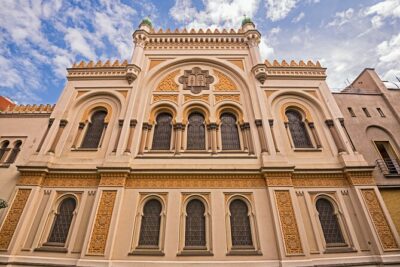
Browse the lists this tour appears in