
Reviewed · PRAGUE
Back In Time: Zážitkové muzeum historie
Prague’s Back In Time museum turns city history into a short, hands-on show. You move through key moments, from the founding of Prague by Libuše to the days of Charles IV and the Prague Uprising, then finish with a 5D cinema ride that adds motion and other effects. I like the clear historical path and the way modern technology gives children something to do, not just something to read.
I also like that the visit takes about one hour, making it easy to fit between sightseeing stops. The main caution is that the history appears to be presented in a quick, entertainment-first format, so you should not expect a full museum treatment or long explanations. One Polish visitor found the presentation well organized but light on historical content, a fair warning for serious history fans.
Key points to know before you go
- Prague history in one hour: Cover major legends, rulers, inventions, and conflicts without giving up half a day.
- A time machine sets the tone: The exhibition uses modern effects to move you between different periods of Czech history.
- The Golem and Libuše add local color: These stories connect Prague’s famous legends with the city’s traditional origin tale.
- Charles IV gets a personal focus: You get a look at the real life of the medieval king, not only his public monuments.
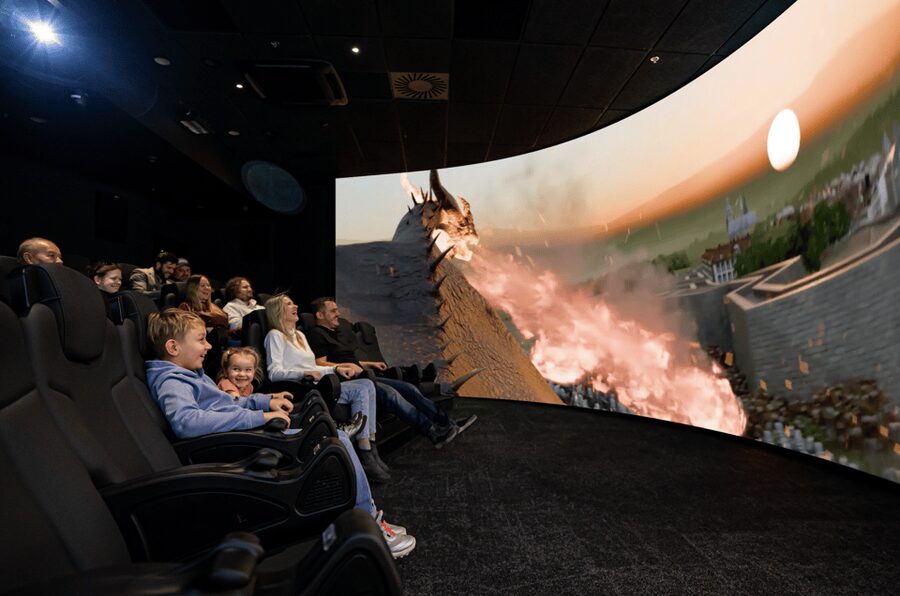
- The 5D cinema is the energetic finish: Expect a more physical, adrenaline-based experience than a standard film.
- Safety rules matter: Entry is limited to children at least six years old and people taller than 110 centimeters, with restrictions for epilepsy, claustrophobia, heart disease, and pregnancy.
Starting with Prague’s stories, not dates
A good history attraction gives you a reason to care before it gives you facts. Back In Time begins with stories that are easy to grasp, including the founding of Prague by the legendary Libuše and the tale of the Golem. These subjects help children connect the city they see outside with the stories that have shaped its identity.
You should think of this as an introduction rather than a full historical course. The experience presents important themes through scenes and effects, but the supplied information does not promise long wall texts, detailed timelines, or specialist commentary. If you want dates, political context, or a close look at original objects, plan to visit a traditional museum as well.
The format should work particularly well at the beginning of a Prague stay. After an hour here, you will have a set of names and stories to recognize around the city. Libuše, Charles IV, the Astronomical Clock, and the Prague Uprising can then serve as signposts for later sightseeing.
Other Prague days people book alongside this one:
- Prague: 50-Minute Sightseeing Evening Cruise
★ 4.2 · 33,780 reviews - Prague: Medieval Dinner with Unlimited Drinks
★ 4.4 · 19,847 reviews - Prague: Skip-the-line Castle Ticket and Optional AudioGuide
★ 4.3 · 11,121 reviews
The time machine and the first historical scenes
The time machine is one of the central ideas of the visit. Rather than treating history as a row of static displays, the museum uses interactive exhibits and recreated scenes to move you through different periods, including the Middle Ages and the Renaissance.
The benefit is simple: you can get a broad sense of change quickly. A child who would skip a page of historical text may pay attention when a room, scene, or special effect presents the past in a more direct way. Adults can use the same sections to build a basic framework for Prague before exploring churches, squares, bridges, and old streets.
The tradeoff is depth. A one-hour visit can show you only a small selection of Prague’s story. The material appears designed for a shared family experience, so you may find more atmosphere and movement than detailed scholarship.
That is not a flaw if you choose it for the right reason. I would see this as a lively orientation to Prague, not a replacement for the city’s larger museums or historic sites.
The Middle Ages, the Renaissance, and everyday context
The Middle Ages and Renaissance sections give the visit its broad time span. Authentic scenes are used alongside modern technology, allowing you to picture how the city changed across different periods.
The phrase authentic scenes should not be taken to mean a collection of original medieval objects. The attraction is built around displays and environments that recreate or suggest historical moments. That makes the experience easier to follow, especially for younger children, but it also means the focus is on seeing and feeling a period rather than studying artifacts in detail.
This part can be useful for families with limited time. Prague’s history is long and often complicated, and a short visit can prevent the subject from becoming a blur of kings, battles, and dates. You get a simple sequence that can make later stops feel less random.
For school groups, the same feature has practical value. Teachers can use the exhibition as a starting point for lessons about medieval Prague, the Renaissance, Czech rulers, local legends, and modern conflict. The attraction does not need to carry the entire lesson. Its job is to make the subject concrete enough for students to discuss afterward.
Meeting Libuše and the legend of the Golem
The Libuše section focuses on Prague’s legendary beginnings. Her role in the founding of the city belongs to traditional Czech storytelling, so it offers a different type of history from the sections about rulers or political events.
That mix is useful because Prague is understood through both documented events and enduring legends. You can enjoy the story as part of Czech culture without treating every legendary detail as a confirmed historical record. For children, the distinction can become a good conversation after the visit.
The legend of the Golem adds another famous Prague story. It is one of the city’s best-known tales, and placing it inside an interactive museum gives families a simple way to encounter it before exploring Prague in person.
Do not expect these sections to explain every version of the legends or provide an academic study of their origins. The attraction is offering a memorable first encounter. If a particular story catches your attention, you can use it as a reason to seek out more information during the rest of your stay.
Same city, a completely different afternoon:
- Prague: Castle Tour with Local Guide and Entry Ticket
★ 4.6 · 10,422 reviews - Prague Castle 2.5-Hour Tour Including Admission Ticket
★ 4.7 · 8,927 reviews - Prague: Oldtown, Medieval Underground & Dungeon History Tour
★ 4.2 · 8,244 reviews - Prague: Vltava River Night Cruise with Buffet
★ 4.3 · 7,338 reviews
Charles IV and the human side of a king
Charles IV receives a dedicated focus, including an explanation of what his real life was like. That detail matters because visitors often recognize his name from Prague landmarks without knowing much about the man himself.
The Charles Bridge, the medieval development of Prague, and the city’s wider importance are often linked with his reign. This exhibition does not claim to replace a specialist account, but a personal look at the king can make those famous places easier to understand.
I appreciate this kind of approach in a short attraction. A ruler becomes more memorable when the presentation moves beyond titles and construction projects. You may come away with enough context to look at Prague’s medieval center with greater interest.
At the same time, the experience is brief. If Charles IV is your main reason for visiting, allow time for other historical sites in Prague. Back In Time gives you an accessible introduction, not a complete account of his reign.
The Astronomical Clock: separating fact from legend
The founding of the Astronomical Clock is another featured subject. The attraction promises the real story, which gives this section a useful purpose for anyone who has seen the clock in Old Town Square.
Prague’s clock is one of its most famous sights, but many visitors see only the figures moving on the hour. A short explanation of its origins can add meaning to the stop. Afterward, you may notice the clock’s design and purpose instead of treating it as a quick photo opportunity.
This section also shows the museum’s general strength. It connects a familiar city sight with a story you can carry into your walk around Prague. The value is not only inside the exhibition. It is in helping you look at the city with a few more questions.
Again, keep your expectations measured. The attraction presents the story in a compact format, and the available information does not indicate that you will receive a technical study of the clock’s construction or astronomy.
The Prague Uprising and the shift to modern conflict
The Prague Uprising brings the exhibition into a more recent and serious period. Its inclusion prevents the visit from stopping with kings, legends, and medieval scenes.
This subject can help you see Czech history as more than a collection of old tales. The uprising belongs to a difficult chapter, and placing it beside earlier periods gives the visit a wider time range. It also offers a chance to talk with children about how the city’s story continued into modern times.
The treatment is likely to remain concise because the whole experience lasts about an hour. You should not expect a detailed account of causes, military events, or personal testimony. If this part of Prague’s history is important to you, use the museum as a prompt for further study rather than the final word.
The quick pace may suit families. Younger visitors can understand that the city has faced major change without spending a long time in a dense, text-heavy display.
The 5D cinema brings the adrenaline
The 5D cinema is the most overtly entertaining part of the visit. It is designed to make the screen feel active, with a dose of adrenaline rather than a quiet historical film.
The effect can be a strong finish for children and a welcome change of pace after the historical scenes. It gives the hour a clear ending and helps explain why the attraction works as a family outing. A child who is less interested in a legend or medieval ruler may remember the cinema most clearly.
There is an important safety point here. The experience is not suitable for people with epilepsy, claustrophobia, heart disease, or for pregnant women. Children must be at least six years old and taller than 110 centimeters, or about three feet six inches. These rules are not minor details, so check your group before booking.
If you prefer quiet museums, the 5D element may feel more like an amusement attraction than cultural sightseeing. That is not necessarily a problem, but it affects the kind of visit you are buying. You are paying for history presented through entertainment, not a calm gallery experience.
Who gets the best value from the $18 price
At about $18 per person, this is priced as a paid attraction rather than a quick free activity. The value depends on your group and your expectations.
For a family, the price can make sense because it combines historical content with interactive scenes and a 5D cinema. You get a shared activity that children can follow, and the one-hour length leaves the rest of the day open for Prague’s streets, parks, and major sights.
For a school group, the attraction can provide a useful change from classroom teaching. The themes cover legends, rulers, architecture, and conflict, giving teachers several points to discuss. The main question is whether the school wants a lively introduction or detailed historical instruction. This experience is better suited to the first goal.
For an adult traveling alone who already knows Prague’s history, the value is less certain. You may find the presentation too short or too light on content, especially if you prefer original artifacts, serious interpretation, or long explanations. The Polish assessment that the story was organized but offered limited content is worth keeping in mind.
The price is easier to justify when you want an indoor activity, are visiting with children, or need a compact introduction to the city. It is harder to justify as your main history stop in Prague.
Timing, access, and practical limits
The stated duration is one hour, though you should still allow a little extra time around the visit if you have a tightly planned day. The short format makes it easy to place between other central Prague activities.
The museum is wheelchair accessible, which helps when planning a mixed-mobility group. The age and height limits still apply, so accessibility does not remove the exhibition’s safety restrictions.
You can cancel up to 24 hours before the activity for a full refund, and the reserve-now, pay-later option keeps payment flexible. Those terms are useful if your Prague plans may change, but the main decision should still be based on suitability for your group.
The attraction is provided by Máj, House of Fun. No guide names or specific language options are supplied, so do not book this expecting a named personal guide or a particular spoken language unless you confirm it before paying.
Is Back In Time Prague worth booking?
Book it if you want a short, active introduction to Prague’s past, especially with children six and older. The legends of Libuše and the Golem, the Charles IV section, the Astronomical Clock story, and the 5D cinema give you a broad mix of culture and entertainment.
I would be more cautious if you want deep historical detail or original objects. The experience may feel thin for a serious history enthusiast, and the one-hour format leaves little room for extended explanation.
For most families and school groups, the balance is sensible: enough history to start a conversation, enough technology to hold attention, and a clear time limit. Treat it as a lively first chapter of your Prague visit, then continue the story outside in the city itself.
FAQ
How long does the Back In Time Prague experience last?
The experience lasts one hour.
How much does entry cost?
The listed price is $18 per person.
What historical subjects are included?
The experience includes the founding of Prague by Libuše, the legend of the Golem, the life of King Charles IV, the founding of the Astronomical Clock, and the Prague Uprising. It also covers periods such as the Middle Ages and the Renaissance.
Is there a 5D cinema?
Yes. A 5D cinema experience is included, with an adrenaline-focused presentation that makes the screen feel more active.
Is the museum suitable for children?
Children must be at least six years old and taller than 110 centimeters. The experience is presented as suitable for families and school groups.
Is the attraction wheelchair accessible?
Yes, the activity is wheelchair accessible.
Who should not take part?
The experience is not suitable for children under six, people under 110 centimeters tall, pregnant women, people with claustrophobia, people with epilepsy, or people with heart disease.
Can I cancel for a refund?
Yes. You can cancel up to 24 hours in advance for a full refund.
Can I reserve now and pay later?
Yes. The reserve-now, pay-later option lets you hold a place without paying immediately.
Just added around Prague
- Prague: Historical Walking Tour with Focus on World War 2★ 4.3 · 12 reviews
- WWII and Communism History in Prague’s Old Town Private Tour★ 5.0 · 4 reviews
- World War II 4WD Tour from Prague with Lunch★ 4.4 · 3 reviews
- Unique salt cave in Prague★ 4.9 · 10 reviews
- Walking tour of Prague in French : Nové Město★ 4.9 · 16 reviews
- Walking tour of Prague in french: Old Town & Charles Bridge★ 4.9 · 62 reviews
- Ultimate Unlimited Beer Pong with Czech Beer★ 4.6 · 5 reviews
- Prague: Market Tour and Traditional Czech Cooking Class★ 4.7 · 19 reviews