
Reviewed · WALKING TOURS
Prague Art Nouveau and Cubism Walking Tour
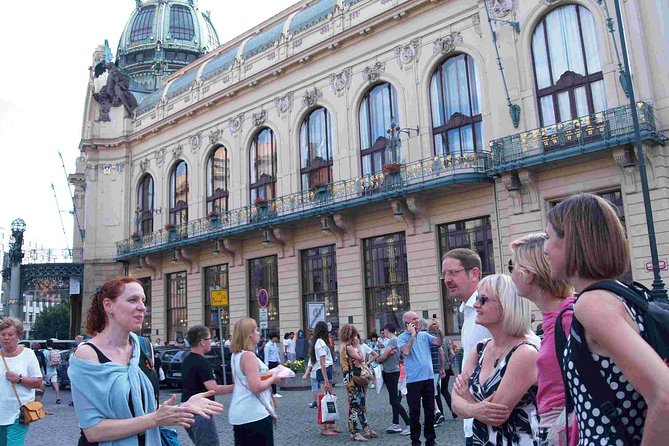
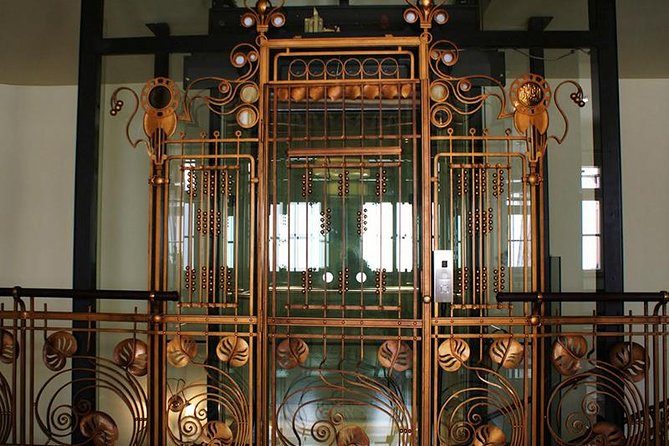
Prague’s Art Nouveau and Cubist buildings are not just pretty façades. They tell the story of a city caught between empire, national revival, modern technology, and avant-garde art. This three-hour walk links famous buildings with lesser-noticed interiors, from gingko-leaf decoration to crystal-like Cubist forms.
I especially like the small group of no more than eight and the way the guides connect design to politics, technology, and Czech identity. I also like the practical route, which includes places you might otherwise walk past, such as the Legion Bank and the Art Nouveau dome at the main train station.
The main consideration is the price, $126.71 per person. That is a serious sum for a walking tour, and food, drinks, transport, and hotel pickup are not included. Still, the format gives you much more than a quick look at façades, particularly if you get a guide such as Vadim, Bonita, Betty, Matous, or Vitam who adjusts the discussion to your interests.
Key points about this Prague architecture walk
- A compact group capped at eight: The small size makes questions and route adjustments practical.
- Art Nouveau beside Cubism: You see curving floral decoration, bold geometry, pyramids, and crystal-like forms in one walk.
- Historic interiors matter: Café Imperial, Lucerna, Prague Main Train Station, and other interiors add detail that street viewing misses.
- Architecture comes with politics: The guide explains Czech national revival, the First World War, economic change, and the effect of later European wars.
- A useful first-day activity: The tour can help you notice design details throughout the rest of your stay.
- Central start and finish: Begin at Ovocný trh in the Old Town and finish near Café Louvre on Národní Street.
Why Prague is such a good city for this tour
Prague is famous for its medieval lanes, Gothic towers, and Baroque churches, but its early 20th-century buildings deserve equal attention. Art Nouveau arrived with flowing lines, plant forms, decorative lettering, and new construction methods. In Prague, the style also absorbed ideas from Eastern art and local Czech culture.
Cubism took a different path. Instead of soft curves, it used sharp planes, triangles, pyramids, and faceted surfaces. Prague became one of Europe’s important centers for Cubist architecture, so this is one of the rare cities where you can compare the style in actual buildings rather than only in a museum.
The guide does not treat architecture as a parade of dates. You learn why a building looks the way it does and what its design says about the people who commissioned it. Discussions may include Czech national identity, industrial progress, the First World War, and the way political upheaval changed Prague.
That context is the real value. After the walk, you will likely look at a doorway, light fixture, or shop sign and notice the period style instead of seeing only another attractive building.
More walking tours in Prague:
- Prague: 3-Hour Walking Tour of Old Town & Prague Castle
★ 4.7 · 5,696 reviews - Prague: Ghost Walking Tour Where Legends Come To Life
★ 4.4 · 5,253 reviews - Prague: Jewish Quarter Walking Tour with Admission Tickets
★ 4.7 · 3,729 reviews
Starting at the House of the Black Madonna
The walk begins at Ovocný trh 19, in Prague’s Old Town, near the House of the Black Madonna. This is a smart starting point because the building offers an immediate lesson in Czech Cubism.
Its name comes from the black Madonna sculpture on the façade. The structure uses strong geometric shapes rather than the curling plant motifs associated with Art Nouveau. The effect can be easy to miss if you are hurrying through the Old Town, since the building shares the street with much older architecture.
You spend about ten minutes here. The guide can point out how the Cubist design fits into the older city around it and explain why this style became so important in Prague. Admission is not charged for the stop, though the tour does not promise an extended interior visit.
This is also where the walk teaches you a useful viewing habit: look up, then look at the corners, windows, lamps, and entrance details. Cubism is often easiest to spot in the hard angles and faceted surfaces, not in a single dramatic feature.
Obecni Dum and Prague’s first Art Nouveau hotel
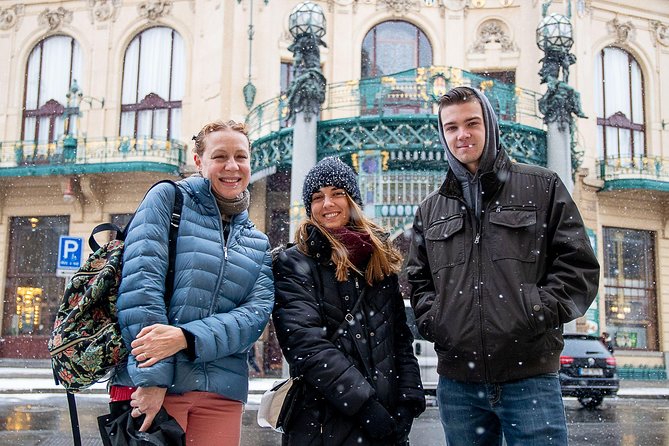
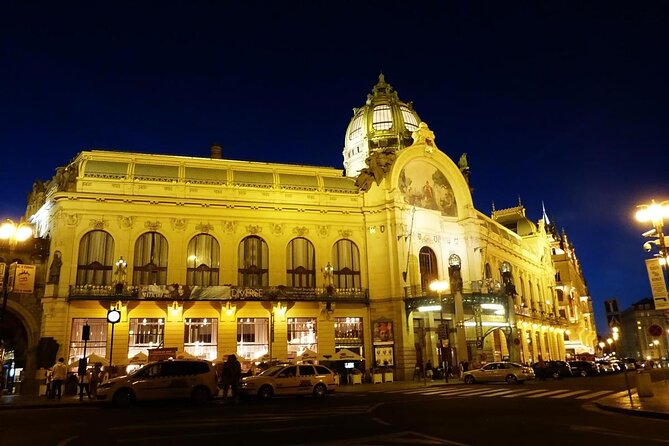
Next comes Obecni Dum, one of Prague’s best-known Art Nouveau landmarks. You have about fifteen minutes to study its elaborate exterior and hear how the building fits into the city’s cultural and national story.
Art Nouveau is more than decoration here. Look for organic shapes, floral patterns, curving lines, and carefully integrated lettering. The design feels unified, with architecture, sculpture, painting, and interior detail working toward one visual idea.
The route then continues to K+K Hotel Central Prague, described as the first Art Nouveau building in Prague. You spend about ten minutes here. This stop is particularly useful if you are staying in the hotel, since one person on the tour returned to look at the building with new eyes after learning how to read its details.
That is one of the pleasant surprises of this experience. It can change how you see a hotel, café, or office building you are already using. You are not limited to famous monuments.
Café Imperial and the technology behind the style
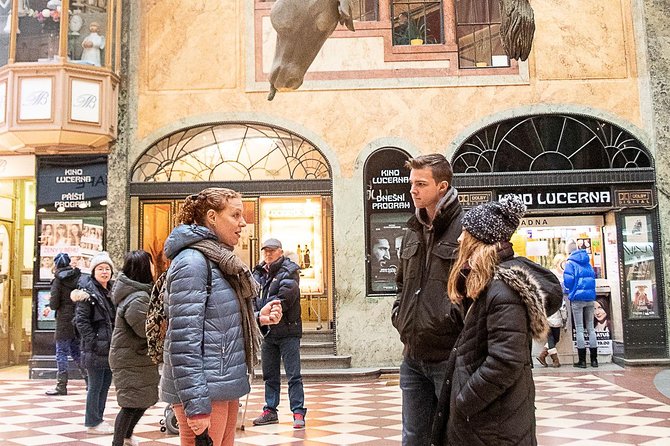
Café Imperial receives a short stop of about five minutes, but its interior gives you a close look at how Art Nouveau worked indoors. The design is not confined to the street façade. Tile, ornament, lighting, and surface pattern help create the period atmosphere.
The tour also explains the technology that made these grand buildings possible. Prague’s new architecture could include central heating, ventilation, drinking water, hydraulic elevators, steam-powered laundry, and intercom systems. Those features are easy to ignore because they are hidden, but they reveal the confidence of the period.
This is one of the strongest parts of the walk for anyone who thinks architecture is only about appearance. The guide places decorative ambition beside practical innovation, showing how modern services helped shape the buildings of a modern city.
Café Imperial is also a useful place to understand the social side of the era. Grand cafés were places to meet, read, argue, and watch city life. The stop is brief, so you should not expect a meal or a long café visit as part of the tour.
Same city, a completely different afternoon:
- Prague: 50-Minute Sightseeing Evening Cruise
★ 4.2 · 33,780 reviews - Prague: Medieval Dinner with Unlimited Drinks
★ 4.4 · 19,847 reviews - Prague: Skip-the-line Castle Ticket and Optional AudioGuide
★ 4.3 · 11,121 reviews - Prague: Castle Tour with Local Guide and Entry Ticket
★ 4.6 · 10,422 reviews
The Legion Bank and the road to Prague Main Station
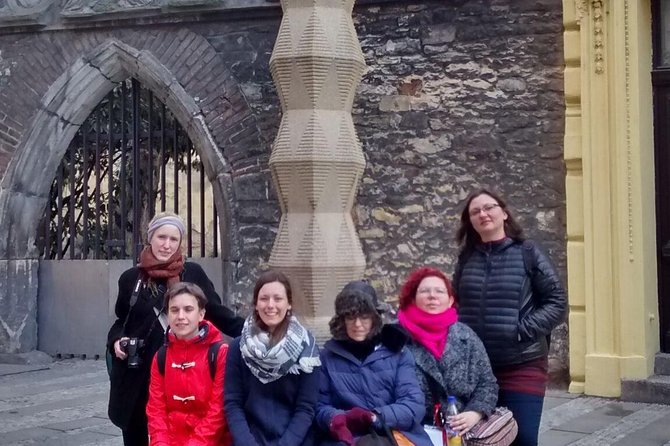
The Czechoslovak Legion Bank is one of the more distinctive stops. Its Cubist architecture and interior connect design with the Czechoslovak Legion and the First World War.
This is where the walk moves beyond a simple Art Nouveau versus Cubism comparison. Buildings reflect public memory and national politics, not only fashion. The bank’s design makes more sense when you understand the period’s interest in national identity and the experiences of Czechs during the war.
You then reach Praha hlavni nadrazi, Prague’s main train station. About ten minutes are set aside for its magnificent Art Nouveau dome and interior details. A guide may also help you understand how to move through the station, which is useful if you plan to use trains later in your trip.
The station can be busy, and this is one place where a guide adds practical value. Instead of treating the building as a quick photo stop, you get help noticing its historic design while also becoming more comfortable with an important transport hub.
One guide even used the station to explain navigation on a rainy day. That sort of help may not be the main purpose of the tour, but it is a nice bonus when the weather is poor or you are still learning Prague’s layout.
Wenceslas Square and the changing city
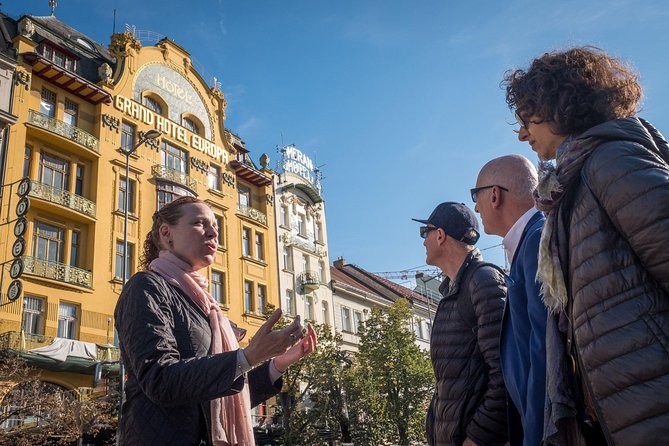
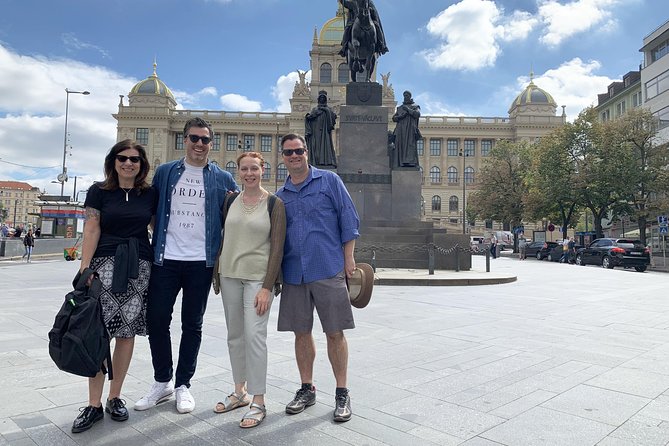
Wenceslas Square gets about fifteen minutes. The guide discusses its Art Nouveau and Art Deco architecture, along with the political and social events that shaped the square.
This is a good place to see how a major urban space changed over time. Art Nouveau curves and decorative details sit alongside later, more streamlined Art Deco elements. The styles are close enough in date to confuse a new observer, so the guide’s comparisons are useful.
The square also helps place architecture within Czech history. National revival, political change, and the impact of fierce European wars all influenced how Prague developed. You are not simply looking at old buildings. You are seeing a city adjust to new ideas, new technology, and new power structures.
The stop is outdoors, so weather matters. Bring a coat or rain protection when needed. The tour continues in light rain, according to the experience details, but comfortable shoes and sensible clothing will make the three hours far easier.
Lucerna, the upside-down king, and Café Louvre
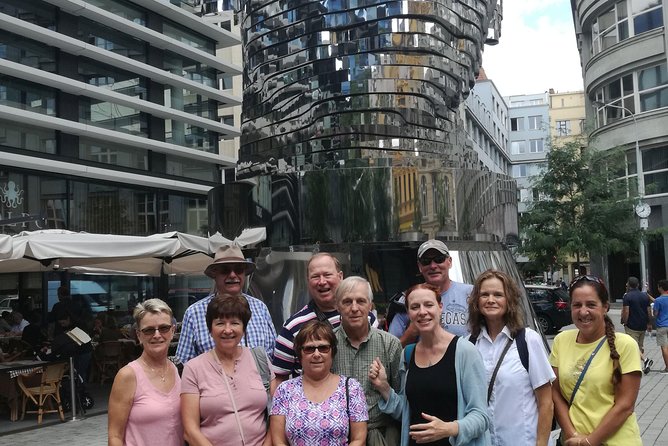
Lucerna Music Bar offers about ten minutes to view one of Prague’s most attractive arcades. Its Art Nouveau interior reflects the optimism and adventurous spirit of the turn of the century, while the building’s cultural life points toward the avant-garde movements that followed.
This is one of the places you may want to revisit later. The tour gives you a brief look, not an evening at the music bar. The interior is worth seeing slowly if your schedule allows.
Nearby, the upside-down statue of King Wenceslas riding a dead horse adds a sharp contemporary contrast. The guide explains its symbolism in relation to Czech history and the Czech national revival. It is an effective final visual lesson: Prague does not preserve the past in a sealed box. New art continues to comment on old symbols.
The walk ends near Café Louvre at Národní 22. The café opened in 1902, and Franz Kafka, Albert Einstein, and T. G. Masaryk were among the figures associated with its historic atmosphere. The tour does not include food or drinks, but this is a sensible place to sit down afterward.
Ending near restaurants and major sights is practical. You can continue exploring, have lunch, or return to one of the interiors that caught your attention.
How the guides shape the experience
The guide is the key variable. Insight Cities uses historian guides, and the named guides connected with this experience include Vadim, Vadim, Betty, Bonita, Matous, and Vitam. Their approach appears to be conversational rather than scripted, with room for questions and changes based on the group.
Vadim is especially associated with linking architecture to politics, economics, and social change. Bonita is described as bringing together artistic detail and the broader story of Prague. Matous focuses on the Art Nouveau period with clear enthusiasm, while Betty has adjusted routes for strong walkers and even used a tram to reach an area farther away.
That flexibility matters. A three-hour walk can feel very different if the guide simply lists dates compared with an experience that lets you ask about Cubism, Art Deco, Czech society, or a particular building.
The group limit of eight is another strong point. You are more likely to hear explanations in busy streets, ask follow-up questions, and enter smaller spaces without blocking the route. It also makes a tailored discussion realistic.
Is $126.71 a fair price?
At $126.71 per person, this tour costs more than a basic city walk. You are paying for a small group, a historian guide, a focused subject, and access to a way of reading Prague that is hard to gain from a guidebook alone.
There are no admissions, meals, or drinks included. You also pay for your own transport, and hotel pickup and drop-off are not part of the experience. The value therefore depends on your interest in architecture and history.
I think the price makes the most sense if you want serious explanation rather than a checklist of landmarks. It is also a good choice for a first or second day in Prague, since the guide can give you a framework for the rest of the city. The tour may feel expensive if you mainly want photographs or prefer to explore at your own pace.
A private-style feel is possible even though the experience is described as a small-group tour. Strong walkers may receive route adjustments, and the guide can focus on Art Deco, Cubism, Art Nouveau, history, or local politics depending on the group.
Who should book this walk?
You should consider it if you enjoy buildings, design, city history, or the story behind national identity. You do not need formal art training. The guide explains how to spot features, so even a newcomer can begin to recognize the difference between Art Nouveau, Cubism, and Art Deco.
It suits couples, families with older children, and mixed-age groups. The experience has worked for an age range from 19 to 76, and the small group makes it easier to keep the pace personal.
It is less suitable if you want a museum tour, a long indoor visit, or a food-focused outing. The route is primarily a walking experience, and some stops are brief. Anyone with mobility concerns should confirm suitability before booking, since the supplied information says most people can participate but gives no detailed accessibility plan.
The tour is offered in English, with a choice of morning or afternoon departure noted in the experience details. The specified meeting time is 10:00 a.m. at Ovocný trh 19, so check the exact departure option when booking.
Free cancellation is available up to 24 hours before the start time. Changes or cancellations inside that window are not accepted for a refund.
My take: a smart choice for design-minded Prague visitors
I would book this walk if I wanted to understand Prague beyond its medieval center. The strongest feature is the connection between architecture, technology, and Czech history. The buildings become evidence of changing ideas, not just backdrops for photographs.
The small group and historian guides also justify the higher price for the right audience. You can ask questions, see details that are easy to miss, and gain practical orientation at places such as the main train station.
Skip it if you want a cheap introduction or dislike extended discussion of buildings and politics. But if you want Prague to look different for the rest of your stay, this is a focused and worthwhile three hours.
FAQ
How long is the Prague Art Nouveau and Cubism Walking Tour?
The tour lasts approximately three hours.
Where does the tour begin?
It begins at Ovocný trh 19 in Prague’s Old Town, near the House of the Black Madonna.
Where does the tour end?
The walk ends at Café Louvre, Národní 22, in Prague’s New Town.
What time does the tour start?
The stated start time is 10:00 a.m. The experience also lists a choice of morning or afternoon departure, so confirm the available option when booking.
How many people can join the tour?
The maximum group size is eight people.
Is food or drink included?
No. Food and drinks are not included unless specifically stated. Hotel pickup and drop-off are also not included.
Can I cancel for a full refund?
Yes. You can cancel at least 24 hours before the experience start time for a full refund. Cancellations or changes made less than 24 hours before the start are not accepted for a refund.
Just added around Prague
- Prague: Historical Walking Tour with Focus on World War 2★ 4.3 · 12 reviews
- WWII and Communism History in Prague’s Old Town Private Tour★ 5.0 · 4 reviews
- World War II 4WD Tour from Prague with Lunch★ 4.4 · 3 reviews
- Unique salt cave in Prague★ 4.9 · 10 reviews
- Walking tour of Prague in French : Nové Město★ 4.9 · 16 reviews
- Walking tour of Prague in french: Old Town & Charles Bridge★ 4.9 · 62 reviews
- Prague: Market Tour and Traditional Czech Cooking Class★ 4.7 · 19 reviews
- Ultimate Unlimited Beer Pong with Czech Beer★ 4.6 · 5 reviews
Walking Tours, compared.
3-Hour Walking Tour of Old Town & Prague Castle
Read our review →
Ghost Walking Tour Where Legends Come To Life
Read our review →
Jewish Quarter Walking Tour with Admission Tickets
Read our review →
Prague Guided Walking Tour and Cruise with Authentic Czech Lunch
Read our review →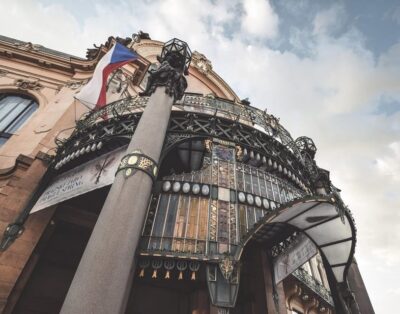
Old Town and Jewish Quarter Guided Walking Tour
Read our review →
Prague Ghost and Legend of Old Town Walking Tour
Read our review →
Prague 3-hour Afternoon Walking Tour including Prague Castle
Read our review →
Ghosts and Legends Nighttime Guided Walking Tour
Read our review →Browse the lists this tour appears in